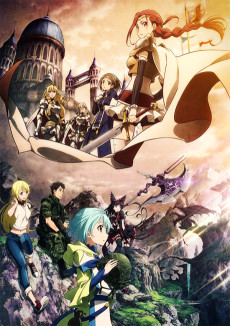
Gate
The military fantasy series begins when a gate appears in Tokyo's Ginza district sometime in the 21st century. From the gate pours out monsters, knights from middle-age Europe, and other fantasy-like beings, and they kill many of the citizens of Tokyo. This event is known as the Ginza Incident.
The government sends a small group of soldiers from the Japanese Self-Defense Forces (a replacement for Japan's military) to the alternate world beyond the gate. Led by otaku soldier Youji, they find that the villages in the world are being attacked by a dragon. An elf girl who is a survivor from the dragon's rampage joins the group in their travels across the dangerous new world.
(Source: Anime News Network)
📺Anime Details
📝Editorial Analysis
The smell of burnt asphalt and ozone hangs thick in the air as a knight in dented plate armor staggers into Ginza—sword dripping black ichor, eyes wide with terror—not at the Japanese soldiers aiming rifles at him, but at the sky, at the impossible grid of skyscrapers, at the deafening, directionless roar of traffic that has no horses, no banners, no war-horn logic. He doesn’t scream. He just stops, breath ragged, helmet visor reflecting neon signs blinking “UNIQLO” and “SHIBUYA SCRAMBLE”. That silence—between steel and signage, between feudal oath and urban anonymity—is where Gate lives.
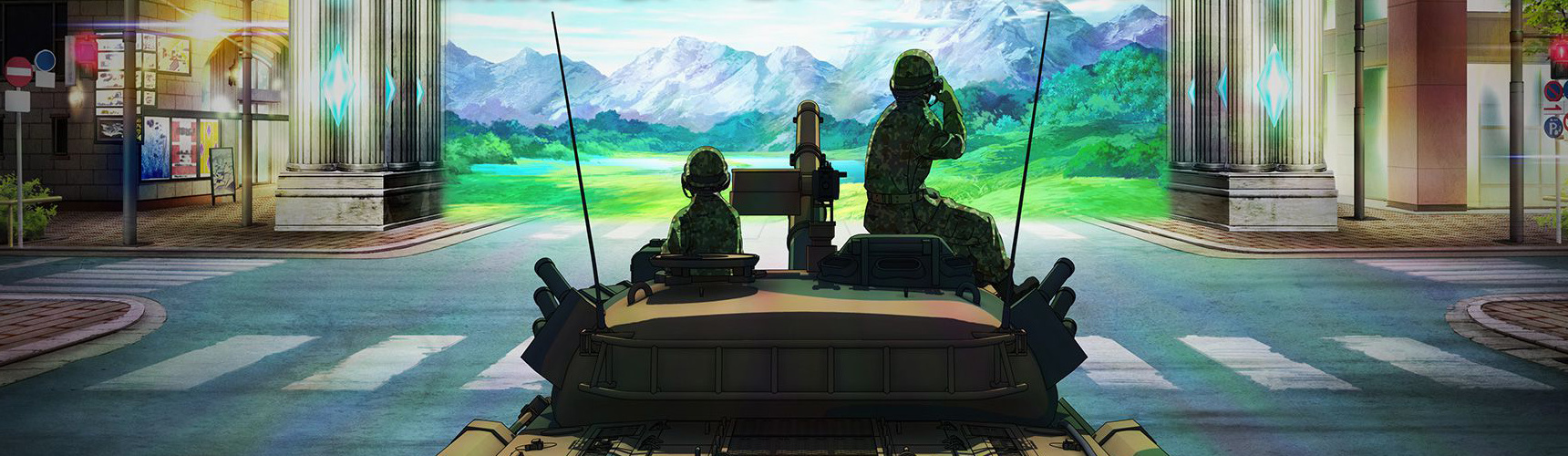
It’s not the magic or the monsters that stick. It’s the weight of translation—linguistic, cultural, tactical. Youji isn’t a chosen hero; he’s an otaku conscript who knows more about Dungeons & Dragons rulebooks than field manuals, yet he’s the only one who grasps how to negotiate with a dragon-riding princess because he’s read three fantasy light novels that treat diplomacy like a skill tree. The atmosphere isn’t wonder—it’s dissonance: the jarring hum of a JSDF generator powering a field hospital beside a campfire lit by fire-mages; the way a lieutenant files a formal complaint about “unauthorized use of divine lightning on civilian-grade comms equipment”; the quiet exhaustion in a medic’s voice as she stitches a goblin’s wound while muttering about triage protocols versus actual biological taxonomy. This is war seen through bureaucratic glass—tense, exhausted, strangely procedural. It makes you think about sovereignty not as flags or borders, but as bandwidth, radio frequencies, and who controls the translation app.
That same dissonant gravity pulses in Assassin's Creed™: Director's Cut Edition—not from its parkour or hidden blades, but from its Political Thriller, Tactical Warfare dimension. Its description calls it a game that “redefines the action genre” through systems, not spectacle—and yes, the models are dated, as one player admits, but what lingers is the texture of occupation: Altaïr moving through Acre not as a liberator, but as an intelligence asset embedded in layered rivalries, filing reports, weighing collateral, parsing factional rhetoric like decrypted cables. Youji’s briefing room scenes echo that same clinical tension—the mission isn’t to win, but to interpret, to map motive onto movement, to treat ideology like terrain. Both ask: What does power look like when it wears a uniform and a translator’s headset?
Then there’s Act of War: Direct Action, scored low but vibrating with something real: “Tomorrow's War Is NOW… ripped from today's headlines.” Its description frames conflict as “geopolitical military conflict”—not mythic, not metaphysical, but press-release urgent. And the player review? They shrug off the “dumb and cringe” dialogue—but call it “like C&C 3”, meaning: it’s about logistics, escalation thresholds, and the brittle friction between policy and platoon-level reality. In Gate, when the JSDF sets up a forward base in the fantasy world and starts issuing permits for elven artisans to export enchanted silk through customs, that’s Act of War’s DNA: war as procurement, as inter-agency memos, as supply chains crossing dimensional seams. The cringe isn’t accidental—it’s the sound of institutions trying, and often failing, to speak the same language.
Who loves this pairing? Not the escapist who wants to become the hero. Not the pure tactician who just wants clean unit counters. It’s the viewer who rewinds the scene where Youji corrects a diplomat’s mistranslation of “treaty” as “temporary truce”—and smiles, not at the win, but at the effort. It’s the player who pauses Assassin’s Creed not to admire the view from the minaret, but to reread the informant’s dossier, cross-referencing names with earlier missions. It’s the person who, after watching a Gate episode where a goblin child draws a JSDF patch in charcoal on palace marble, boots up Act of War, not for the explosions, but for the quiet dread of the command console blinking “Allied Support Delayed — Pending UN Resolution 1872”. They love the grind of understanding, the ache of proximity, the stubborn, unglamorous work of making two worlds fit, even if just for one ceasefire, one shipment, one shared cup of tea brewed with mismatched tea bags and incompatible magic. That’s where the gate truly opens—not with light, but with paperwork, static, and the slow, vital turn of a page.
🎮3 Games That Match the Vibe

Match Dimensions Explained
❓Frequently Asked Questions
Why does Gate feel so much like Assassin's Creed: Director's Cut Edition?
Because both lean hard into the 'Political Thriller' + 'Tactical Warfare' vibe — think tense rooftop chases in Damascus or Jerusalem, stealth takedowns in crowded bazaars, and mission briefings dripping with geopolitical tension. Assassin's Creed’s parkour-and-dagger rhythm and its focus on intel-gathering before strikes mirror Gate’s pacing and tone, even if the graphics are understandably dated now (as one player noted: 'models and textures are quite dated but no issues with me').
Is there a movie or TV adaptation of Gate?
No — and neither is there one for Act of War: Direct Action or Assassin's Creed: Director's Cut Edition, despite all three sharing that gritty, headline-ripped 'Political Thriller' DNA. Act of War even leans into real-time strategy suspense like a Tom Clancy miniseries, but it’s stayed firmly in the game space — just like Gate.
How does Gate compare to Act of War: Direct Action?
Gate shares Act of War’s urgent, 'tomorrow’s war is NOW' energy — both drop you into geopolitical hot zones with military-grade intel, covert ops, and dialogue that’s equal parts cringe and compelling (one player called Act of War’s campaign 'dumb and a bit cringe but... like C&C 3'). But where Act of War is RTS-driven with base-building and unit commands, Gate feels more like Assassin’s Creed: intimate, movement-focused, and grounded in character-level stakes.
What’s the best game like Gate if I want that paranoid, intel-heavy thriller mood?
Assassin's Creed™: Director's Cut Edition — hands down. It nails the same 'Political Thriller' tension: you’re not just fighting soldiers, you’re decoding messages in coded letters, tailing targets through winding alleys, and making tactical choices under pressure (like whether to blend in or strike fast). Even with its dated visuals, players still praise how immersive that slow-burn suspense feels — exactly what Gate fans chase.