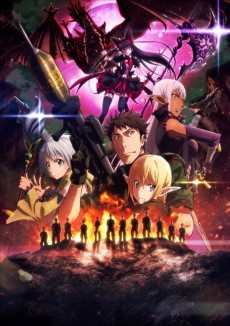
Gate 2
The second half of the Gate: Jieitai Kanochi nite, Kaku Tatakaeri anime which will cover the Fire Dragon Arc.
Several months have passed since the infamous Ginza Incident, with tensions between the Empire and JSDF escalating in the vast and mysterious "Special Region" over peace negotiations. The greed and curiosity of the global powers have also begun to grow, as reports about the technological limitations of the magical realm's archaic civilizations come to light.
Meanwhile, Lieutenant Youji Itami and his merry band of female admirers struggle to navigate the complex political intrigue that plagues the Empire's court. Despite her best efforts, Princess Piña Co Lada faces difficulties attempting to convince her father that the JSDF has no intention of conquering their kingdom. Pressured from both sides of the Gate, Itami must consider even more drastic measures to fulfill his mission.
📺Anime Details
📝Editorial Analysis
The smell of burnt gunpowder hangs thick over the cracked marble steps of the Imperial Palace in Alnus—not from fire, but from the silence after a volley. A JSDF lieutenant lowers his rifle, knuckles white, breath shallow. Around him, imperial guards clutch splintered spears; an elf diplomat watches from a balcony, expression unreadable; a dragon’s shadow blots out the sun for three seconds before vanishing eastward. No music swells. No hero shouts. Just the wind carrying ash—and the weight of a ceasefire that feels less like peace and more like a held breath before the next detonation.
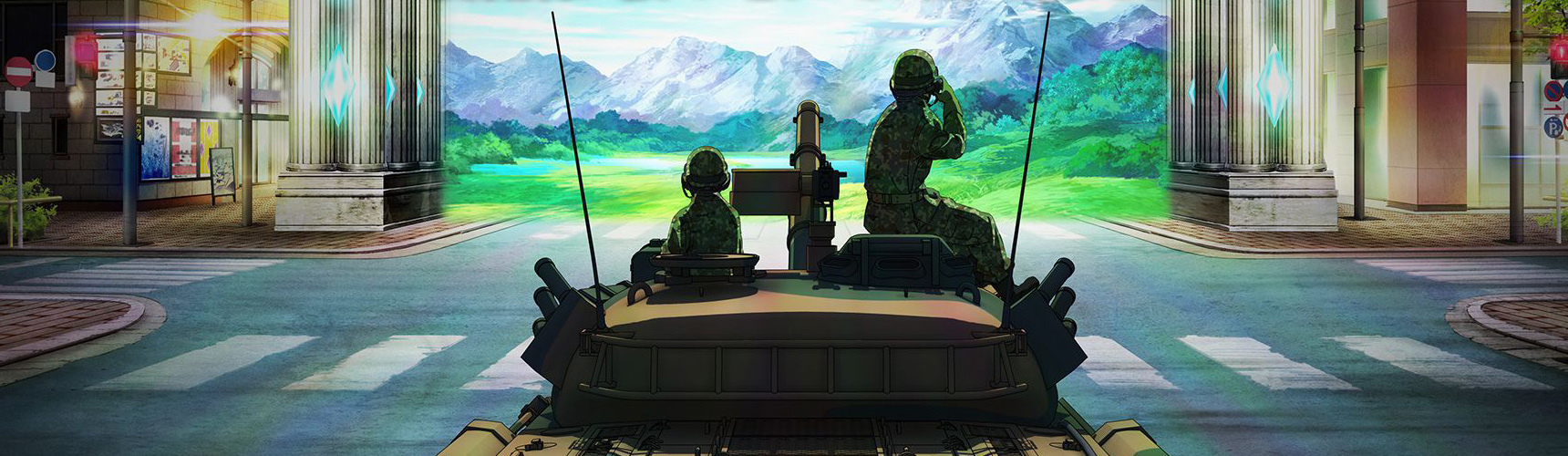
That’s the texture of Gate 2: not spectacle, but pressure. It’s the low hum of geopolitical calculus vibrating beneath every diplomatic exchange, the way a single misphrased clause in a treaty draft carries more tension than a battlefield charge. This isn’t fantasy escapism—it’s bureaucratic dread, dressed in camouflage and elven silk. You feel the exhaustion of soldiers who’ve stopped counting days and started measuring how many translations they’ve had to verify, how many cultural footnotes they’ve memorized to avoid accidental war. It makes you think about sovereignty as infrastructure—how power isn’t seized in grand battles, but maintained in quiet rooms where coffee cools while generals and scholars debate grain tariffs, magical energy thresholds, and the legal status of dragon-riding reconnaissance. The emotional core is fractured responsibility: no one is purely heroic or villainous, only people trying to steer a ship already listing hard to starboard.
That same pressure lives in Assassin's Creed™: Director's Cut Edition, not in its parkour or blade-work, but in its political thriller dimension—the way Altaïr moves through Damascus not as a warrior, but as a node in a collapsing intelligence network, where every assassination reshapes trade routes and shifts alliances overnight. The player review admits the models are dated, but notes “no issues with me”—because what endures isn’t visual fidelity, but the claustrophobic weight of consequence: one wrong step, one misread scroll, and the entire fragile balance unravels. Like Gate 2, it treats ideology as terrain—something you navigate, map, and occasionally bomb—but never truly conquer.
Then there’s Act of War: Direct Action, whose description frames it as “a frightening tale of suspense, international intrigue and geopolitical military conflict.” That phrase—geopolitical military conflict—is the exact frequency Gate 2 vibrates on. The player review calls its dialogue “dumb and a bit cringe,” yet still finds it “like C&C 3”—meaning it works despite its flaws because the systems feel real: supply lines matter, intel leaks change mission parameters mid-flight, and civilian casualties aren’t cutscenes—they’re debriefing slides with redacted casualty counts. In Gate 2, when JSDF engineers retrofit imperial forges with diesel generators, it’s not just tech transfer—it’s economic leverage disguised as aid. Same energy: the machinery of control humming beneath surface-level action.
None of this lands without the adult cast grounding it—no coming-of-age arcs, no chosen-one revelations. Just colonels negotiating water rights with elven elders, linguists cross-referencing draconic dialects against pre-war Japanese field manuals, and a dragon circling overhead not as monster or mascot, but as sovereign airspace. That’s why the resonance clicks: these aren’t stories about winning. They’re about enduring the aftermath—of invasion, of discovery, of realizing your “advanced” world has no monopoly on cruelty or competence.
This pairing sings for the viewer who replays the same five minutes of a negotiation scene—not for plot, but for the micro-tremor in a diplomat’s hand when she signs the third annex; for the player who pauses mid-mission to zoom in on a satellite feed just to count how many refugee camps have appeared since last week’s intel update. It’s for the person who doesn’t want magic swords—they want the logistics report on how many enchanted arrows the elves can produce before their silver mines run dry. Who finds catharsis not in victory, but in the quiet, exhausted nod between two officers who finally agree on the wording of a joint patrol protocol. Not heroes. Not villains. Just people holding the line—with clipboards, codebooks, and the terrible, beautiful weight of what comes next.
🎮3 Games That Match the Vibe


Match Dimensions Explained
❓Frequently Asked Questions
Why does Gate 2 feel so much like Assassin's Creed: Director's Cut Edition?
Because both lean hard into political thriller tension and tactical urban warfare—like how Gate 2’s rooftop chases and intel-driven mission briefings mirror Altair’s Damascus investigations and stealth takedowns from crowded markets. Even the pacing, where quiet infiltration gives way to sudden, high-stakes combat (think Assassin’s Creed’s Templar ambushes or Gate 2’s embassy breach), nails that same gritty, grounded espionage vibe.
Is there a movie or TV adaptation of Gate 2 like there is for Assassin's Creed?
No—not yet, and unlike Assassin’s Creed (which got a 2016 film and multiple animated series), Gate 2 hasn’t been adapted anywhere. That said, fans often say its tone and structure—especially the layered conspiracies and morally gray operatives—would translate *better* to a prestige political thriller series than a big-budget action flick, à la Act of War’s real-world geopolitical dread.
How does Gate 2 compare to Act of War: Direct Action in terms of realism and military detail?
Gate 2 leans more into character-driven espionage with tight third-person action, while Act of War is full-on real-time strategy—think commanding squads, calling in airstrikes, and managing supply lines like in its ‘Black Tower’ campaign missions. Reviews even call Act of War ‘C&C 3 for geopolitics,’ whereas Gate 2’s realism comes from dialogue nuance and tactical cover systems, not RTS resource bars.
What’s the best game like Gate 2 if I want that tense, slow-burn political thriller mood without real-time strategy chaos?
Go straight to Assassin’s Creed: Director’s Cut Edition—it’s the closest match for that deliberate, atmospheric tension: the hushed conversations in shadowy courtyards, the weight of every decision in Jerusalem’s faction wars, and that signature blend of historical texture and modern conspiracy. Act of War’s dialogue is fun but cringe-y; Assassin’s Creed keeps the stakes serious and the pacing tight, just like Gate 2’s embassy siege sequences.