
given
Tightly clutching his Gibson guitar, Mafuyu Satou steps out of his dark apartment to begin another day of his high school life. While taking a nap in a quiet spot on the gymnasium staircase, he has a chance encounter with fellow student Ritsuka Uenoyama, who berates him for letting his guitar's strings rust and break. Noticing Uenoyama's knowledge of the instrument, Satou pleads for him to fix it and to teach him how to play. Uenoyama eventually agrees and invites him to sit in on a jam session with his two band mates: bassist Haruki Nakayama and drummer Akihiko Kaji.
Satou's voice is strikingly beautiful, filling Uenoyama with the determination to make Satou the lead singer of the band. Though reticent at first, Satou takes the offer after an emotional meeting with an old friend. With the support of his new friends, Satou must not only learn how to play guitar, but also come to terms with the mysterious circumstances that led him to be its owner.
(Source: MAL Rewrite)
📺Anime Details
📝Editorial Analysis
The rust on Mafuyu Satou’s guitar strings isn’t just neglect—it’s a physical echo of silence held too long, of breath caught mid-inhale before the first chord. He sits on those cold gymnasium stairs, sunlight cutting a thin rectangle across his knees, eyes closed not in rest but in waiting—for sound, for permission, for someone to notice the weight he carries without naming it. When Ritsuka Uenoyama kneels beside him and plucks a dead string with quiet frustration, the moment doesn’t spark romance or triumph. It sparks recognition: two boys, one holding broken music, the other holding the knowledge to mend it—not perfectly, not instantly, but together, in the fragile grammar of tuning pegs and hesitant finger placement.

This isn’t a story about becoming famous or winning competitions. It’s about the unbearable lightness of relearning how to vibrate. Every scene hums with unspoken grief—Mafuyu’s apartment is dark not because it lacks light, but because it lacks resonance; his voice cracks not from strain, but from disuse. The rock music isn’t loud rebellion—it’s trembling honesty, amplified. You don’t feel uplifted here. You feel held, in the same way you might hold your breath when someone finally says the thing they’ve been swallowing for years. It’s tender, yes—but also heavy, like pressing your palm flat against a speaker vibrating at low frequency: you feel it in your sternum, not your ears.
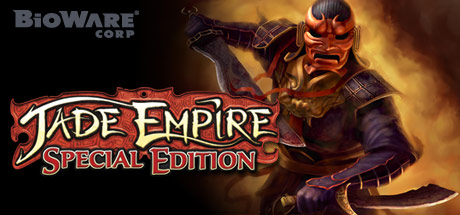
Jade Empire™: Special Edition resonates not through martial arts or moral binaries, but through its Emotional Narrative and Romance & Shoujo dimensions—precisely where given lives. Like Mafuyu learning to play again, the protagonist in Jade Empire rebuilds identity after trauma, guided by mentors who teach not just technique, but how to carry memory without collapsing under it. The Reddit instruction quoted in the player review—“Copy and paste ‘steam.dll’…”—feels oddly symbolic: both works demand careful, almost ritualistic reassembly before meaning can flow. You don’t skip to the climax; you install the foundation first, just as Uenoyama doesn’t hand Mafuyu sheet music—he shows him how to hold the neck, how to press down without flinching.
Persona 5 Royal shares that same stunning soundtrack—not as backdrop, but as emotional scaffolding. Its player review praises “the seamless transition between daily life and inner chaos,” mirroring how given blurs practice room and panic attack, cafeteria banter and silent subway rides home. When Joker adjusts his mask in Shibuya, it’s no different than Mafuyu tightening his grip on the guitar strap before walking into class—both are acts of containment, of performing normalcy while something raw pulses underneath. The game’s social links aren’t just dating sims; they’re slow-motion trust exercises, exactly like the way Uenoyama teaches Mafuyu barre chords without asking why his hands shake.
And then there’s Disco Elysium - The Final Cut, whose player review drops a line about capital subsuming critique—cruel irony, yes, but also resonant despair. Mafuyu’s suicide attempt isn’t framed as plot device; it’s ambient gravity, the unspoken mass bending every interaction. Disco Elysium treats mental collapse with the same granular, non-sensational reverence: thoughts argue with each other in real time, memories surface unbidden, and healing isn’t linear—it’s negotiated, often in hushed tones over lukewarm coffee. Both refuse catharsis-as-resolution. They offer witnessing, not fixing.
This pairing is for the person who rewinds a 30-second scene three times—not to catch dialogue, but to feel the exact pause before Mafuyu says “I want to play”—for the player who saves before every dialogue choice in Persona 5 not out of fear of failure, but out of reverence for how much weight a single “yes” can carry. It’s for anyone who’s ever held an instrument like a lifeline, or stared at a Steam error message like it was a riddle from a god who forgot how fragile hope really is. Not hopeful. Not hopeless. Tuning. Always, quietly, tuning.
🎮5 Games That Match the Vibe


Match Dimensions Explained
❓Frequently Asked Questions
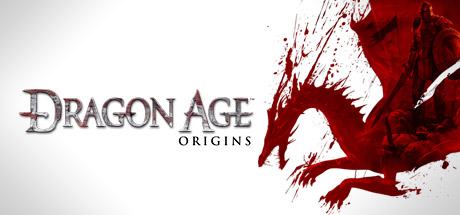
Why does Jade Empire keep showing up in 'games like Dragon Age: Origins' lists?
Because both lean hard into emotionally charged, choice-driven narratives where your moral alignment directly shapes relationships and endings—like Jade Empire’s ‘Open Palm’ vs. ‘Closed Fist’ paths mirroring DAO’s Paragon/Renegade-style reputation system, and both feature deep romance options (e.g., Dawn of the Razor in Jade Empire or Alistair’s arc in DAO) that evolve across long playthroughs. Plus, reviewers explicitly cite ‘Emotional Narrative’ and ‘Romance & Shoujo’ as shared dimensions—and both scored 77 on the match list.
Is there a Persona 5 Royal anime or live-action adaptation?
No official anime or live-action adaptation exists yet—Persona 5 Royal remains a self-contained game experience, though its stylish Tokyo setting, Phantom Thieves aesthetic, and daily life/dungeon loop (like hanging out in Shibuya or fusing Personas in the Velvet Room) have inspired countless fan animations and AMVs. It *does* share ‘Romance & Shoujo’ and ‘Emotional Narrative’ with games like Dragon Age: Origins and Disco Elysium, which *do* have expanded media—but P5R itself stays gloriously, unadapted in its original form.
How does Disco Elysium compare to Dragon Age: Origins for emotional storytelling?
Both hit ‘Romance & Shoujo’ and ‘Emotional Narrative’, but they go about it totally differently: DAO gives you party banter, companion quests (like Morrigan’s morally gray arc), and pause-and-plan combat that lets you savor story beats, while Disco Elysium drowns you in internal monologue—your own detective’s fractured psyche arguing over philosophy mid-investigation (‘Capital has the ability to subsume all critiques…’). DAO’s emotional weight is communal; Disco Elysium’s is isolating, cerebral, and raw—yet both earned matching 77 and 63 scores respectively for delivering deep narrative resonance.
What’s the best game like Dragon Age: Origins if I want something moody, atmospheric, and heavy on quiet character moments?
Disco Elysium — The Final Cut is your strongest match: its rain-soaked city of Revachol, fragmented dialogue trees, and skill-based inner voices (like ‘Logic’ debating ‘Empathy’ during a murder scene) create an unmatched sense of psychological intimacy and melancholy. Unlike DAO’s party banter or Jade Empire’s martial-arts spectacle, Disco leans into silence, hesitation, and existential dread—plus it shares that same ‘Romance & Shoujo’ + ‘Emotional Narrative’ combo, and fans praise how every conversation feels like peeling back layers of a bruised, brilliant mind.