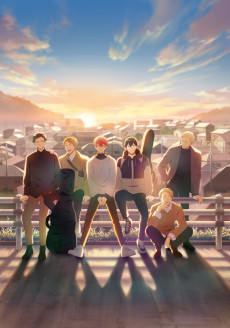
given The Movie: Hiiragi Mix
📺Anime Details
📝Editorial Analysis
The silence after the last chord fades—not the hollow quiet of an empty room, but the thick, suspended kind where breath catches and time bends: Hiiragi’s fingers still hovering over the guitar strings, sweat glistening under the dim stage lights, the crowd’s roar muffled as if heard through water. That moment isn’t about applause. It’s about recognition—a raw, wordless exchange between two boys standing too close in the glare, their shared history humming beneath every note they’ve ever played together. You feel it in your ribs.
This isn’t just drama or romance—it’s resonance. given The Movie: Hiiragi Mix lives in the fragile, luminous space between sound and silence, where teenage longing isn’t shouted but tuned: a glance held a half-beat too long, a lyric rewritten to mean something only one person would understand, the weight of a band name that doubles as a vow. Its urban Tokyo setting isn’t backdrop—it’s texture: rain-slicked streets reflecting neon like broken mirrors, cramped rehearsal rooms smelling of dust and old amps, the way sunlight slants through apartment windows at 4 p.m., golden and fleeting. You don’t watch it—you lean in, because every pause feels charged with unspoken grief, hope, and the quiet, stubborn act of choosing each other anyway. It makes you think about how love can be both a lifeline and a wound—and how music becomes the language when words fail.
That emotional DNA pulses strongest in Baldur’s Gate 3, where romance isn’t just dialogue options but presence: the way a companion’s voice drops when they confess something vulnerable, how their posture shifts when you’re near, how choices echo across weeks of narrative like reverberation in an empty hall. Its 81-score match isn’t accidental—the game shares Hiiragi Mix’s belief that intimacy is built in micro-moments: a hand brushing yours during combat, a shared silence while watching the stars, the devastating weight of a confession made not in grand speeches, but in hushed, trembling honesty. Like Hiiragi and his bandmates, BG3’s relationships deepen not through exposition, but through endurance—showing up, listening, remembering what mattered.
Then there’s Amnesia™: Memories, scoring 79 for its laser focus on emotional narrative—not plot mechanics, but the visceral ache of memory loss reshaping identity and connection. Its structure mirrors Hiiragi Mix’s core tension: what remains when the past fractures? How do you rebuild trust—not with grand gestures, but with small, repeated acts of showing up? The anime’s tragedy isn’t melodramatic; it’s quiet, cumulative—the slow erosion of certainty, the way a song you once knew by heart suddenly feels foreign. Amnesia doesn’t solve amnesia with logic; it leans into the disorientation, letting players sit with the confusion until meaning re-emerges, tender and tentative. That’s the same rhythm Hiiragi lives: learning love all over again, note by careful note.
And Persona 5 Royal, with its 69 score and player review praising its “stunning soundtrack” and “seamless transition between daily life and emotional stakes,” hits the same nerve. The Phantom Thieves don’t just fight shadows—they rehearse, eat cheap ramen, walk home under streetlights, argue about lyrics, and fall in love in stolen moments between deadlines and danger. Like Hiiragi’s band, their power comes from harmony: clashing personalities learning to align, vulnerability becoming strength, rock music as both weapon and lullaby. The review’s emphasis on “daily life” isn’t filler—it’s the ground where everything real takes root. In both, the most intense battles happen offstage: in a hallway, on a train, in the space between two people breathing the same air.
This pairing is for the listener who cries at guitar solos, the player who saves before a confession scene—not out of fear, but reverence. For the teen who’s ever held a lyric sheet like a lifeline, the adult who still replays a voicemail from fifteen years ago. For anyone who knows that longing and loyalty sound identical when sung in a minor key—and that sometimes, the bravest thing you can do is let someone hear you play, even if your hands are shaking.
🎮7 Games That Match the Vibe






Match Dimensions Explained
❓Frequently Asked Questions
Why does Baldur's Gate 3 keep showing up in lists for The Movie: Hiiragi Mix?
Because both lean hard into slow-burn emotional intimacy and romance-as-character-development—like how BG3’s Astarion or Shadowheart arcs mirror Hiiragi Mix’s quiet, tender moments between Hiiragi and her love interest during rainy train station scenes. It’s not about fantasy vs. slice-of-life—it’s how both use dialogue choices, pacing, and unspoken glances to build deep emotional resonance.
Is there a visual novel adaptation of The Movie: Hiiragi Mix?
No official visual novel exists—but Amnesia™: Memories hits that same sweet spot: soft-spoken romance, delicate school-life vignettes, and emotionally charged flashbacks (like the cherry blossom scene where memories literally fade in/out). Fans often say it captures Hiiragi Mix’s gentle melancholy and shoujo warmth better than any anime tie-in game ever could.
How does Persona 5 Royal compare to Persona 3 Reload for Hiiragi Mix vibes?
P5R leans into stylish confidence and playful banter—think Ryuji’s loud energy or Ann’s bold confessions—while P3R mirrors Hiiragi Mix’s quieter, more introspective tone: the midnight train rides, the silent rooftop stares, and that haunting ‘Time’ motif echoing Hiiragi’s internal monologues. Both score 69 and share Romance & Shoujo + Emotional Narrative, but P3R lands closer to the movie’s hushed, contemplative heart.
What’s the best game like Hiiragi Mix if I want that warm, nostalgic, slightly bittersweet school-life feeling?
Amnesia™: Memories is your top pick—it nails the wistful, sun-dappled nostalgia with its soft watercolor aesthetic, seasonal calendar events (like summer festival fireworks mirroring Hiiragi’s beach scene), and slow-unfolding relationships where feelings bloom through shared lunches and library silences. Players consistently call it ‘the most Hiiragi Mix–adjacent game without being an adaptation.’