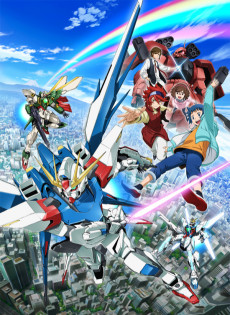
Gundam Build Fighters
📺Anime Details
📝Editorial Analysis
The clack-clack-clack of plastic parts snapping together—sharp, precise, almost musical—fills the garage as Riku’s fingers fly. Sunlight cuts through dusty windows, catching glitter in the glue bottle and the faint blue glow of a holographic build schematic hovering over his workbench. His breath hitches—not from strain, but from recognition: this tiny, trembling moment before the first test run, when the model isn’t just plastic anymore, but alive with intention.
That’s the heart of Gundam Build Fighters: not war, not destiny, not even victory—but the intimacy of creation. It’s the quiet pride in choosing the right joint piece, the shared grin when two kids trade rare runners at a hobby shop, the way a custom paint job becomes a confession of personality no dialogue could match. This isn’t Real Robot grit or Super Robot spectacle—it’s otaku tenderness, wrapped in mecha. You don’t feel adrenaline here; you feel warmth, focus, belonging. It makes you remember how it felt to stay up past midnight sanding a cockpit canopy, how a single well-placed decal could rewrite your entire self-image. It’s deeply childlike, not childish—full of sincerity, unironic passion, and the quiet thrill of being seen for what you built, not who you are.
Hi-Fi RUSH shares that same electric joy-in-craft. Its rhythm-based combat isn’t about damage numbers—it’s about sync, about hitting beats like snapping model joints into place: clack, whoosh, thrum. The game’s world pulses with handmade energy—neon duct tape on robot limbs, jazz records spinning on repurposed servos, characters dancing mid-battle because the music demands it. Like Gundam Build Fighters, it treats mechanics as expression, not abstraction. When Aria spins her guitar-sword in time with a bass drop, it echoes Riku’s first successful combo—a physical manifestation of internal rhythm made external, joyful, shared. The “Music & Idol” dimension isn’t decoration; it’s the emotional grammar both works speak fluently.
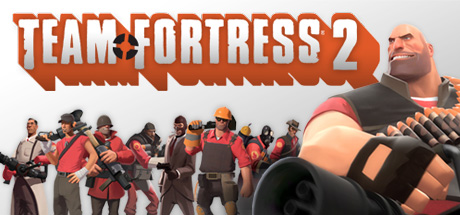
Team Fortress 2 mirrors the anime’s communal chaos. Nine classes aren’t archetypes—they’re personalities forged in play: the Medic’s frantic healing waltz, the Scout’s sprint-and-stumble bravado, the Pyro’s muffled, gleeful incineration. That “love men” line in the player review? It’s not noise—it’s proof. TF2’s community doesn’t just tolerate eccentricity; it curates it, celebrates it with hats, taunts, and absurdly specific loadouts—just like Build Fighters’ tournament booths where kids wear hand-sewn Gundam-themed hoodies and debate servo torque ratios like theology. The “chaotic” gameplay isn’t randomness—it’s collaborative improvisation, the same energy as Riku and his team frantically reconfiguring their Gunpla mid-match, laughing through misfires, trusting each other’s instincts more than any blueprint.
Even Space Quest™ Collection resonates—not through action, but through playful agency. That player review—“you could pretty much do anything you , weather or not there were consequences”—hits the same note as Gundam Build Fighters’ core ethos: rules exist to be bent with love. Space Quest’s parser-driven absurdity (“examine toaster”, “ask alien about tax law”) mirrors how Build Fighters treats canon: Gundam lore isn’t sacred text, but lego bricks—to be reassembled, remixed, and giggled over. The “completely twisted” tone isn’t irony; it’s affectionate irreverence, the same spirit that lets a kid name his custom Gundam “Pudding Bazooka” and win a national qualifier because the judges felt the joy in the naming.
This pairing isn’t for fans of “mecha” as genre—it’s for people who still keep a half-built model on their shelf, who hum theme songs while folding laundry, who get goosebumps watching someone else finally nail a tricky assembly step. It’s for the quiet kid who sketches mecha in math class margins, the adult who buys a $200 limited-edition kit just to savor the weight of the box, the player who spends hours arranging TF2 hats not for stats, but because the blue beret looks right next to the tiny rocket-powered umbrella. They all recognize the same truth: creation is communion, and the best battles aren’t won—they’re built, danced, laughed, and shared, one clack, one beat, one absurd hat at a time.
🎮6 Games That Match the Vibe


Match Dimensions Explained
❓Frequently Asked Questions
Why does Team Fortress 2 feel so much like a Gundam Build Fighters tournament?
Because both thrive on over-the-top character personalities clashing in chaotic, rule-bent combat—like Scout yelling 'I'ma getcha!' while zipping past a Pyro in flamethrower mode, mirroring Riku's cocky speed runs or Ruriko's precise counterattacks. The nine distinct classes (Heavy with his minigun, Spy with his disguises) mirror the show’s fighter archetypes and rivalries, all wrapped in that same irreverent, self-aware parody vibe.
Is there a Gundam Build Fighters anime adaptation of Hi-Fi RUSH?
Nope—Hi-Fi RUSH is its own original IP (developed by Tango Gameworks), but it *does* channel the same high-energy, rhythm-synced mecha action you love from Gundam Build Fighters: think beat-matched combos, flashy camera cuts during boss fights (like against Aria), and that infectious blend of mecha spectacle + musical comedy. It’s not an adaptation—but fans of the show’s vibe often say it ‘feels like Gundam Build Fighters directed by a jazz drummer.’
How does Space Quest™ Collection compare to Cyberpunk SFX for Gundam Build Fighters fans?
Space Quest leans hard into absurdist, fourth-wall-breaking parody—like when Roger Wilco accidentally launches himself into orbit using a toaster—while Cyberpunk SFX trades that retro silliness for neon-drenched, synth-heavy satire of corporate dystopias. Both nail the ‘Mecha & Military Sci-Fi + Comedy & Parody’ combo (just like Gundam Build Fighters), but Space Quest’s goofy interactivity and player-driven chaos ('you could pretty much do anything') matches the show’s improv energy better than Cyberpunk SFX’s tighter, mission-based pacing.
What’s the best game like Gundam Build Fighters if I want that hype, underdog-rivalry, tournament-vibe?
Hi-Fi RUSH is your top pick—it’s got that exact electric tournament pulse: every fight syncs to the soundtrack like a live broadcast, enemies telegraph moves like arena fighters, and the story kicks off with an underdog (Chad) crashing a high-stakes tech showdown—very much like Tatsuya bursting onto the scene with his battered Gunpla. With its 79 Metacritic score and relentless, joyful momentum, it delivers the same rush as watching Round 3 of the Gundam Fight finals.