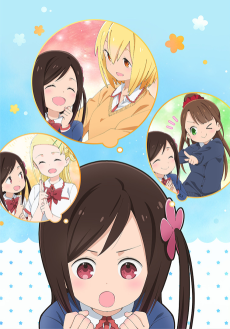
Hitoribocchi no Marumaruseikatsu
Hitori Bocchi suffers from extreme social anxiety, she’s not good at talking to people, takes pretty extreme actions, is surprisingly adept at avoiding people, her legs cramp when she overexerts herself, gets full of herself when alone, will vomit when exposed to extreme tension and often comes up with plans. Now she is entering middle school and her only friend, Yawara Kai, is attending a different school. This leaves Bocchi alone, surrounded by new classmates with whom she must make friends before Kai will talk to her again.
(Source: Doki)
📺Anime Details
📝Editorial Analysis
The hallway stretches—too long, too bright, too full of breathing. Hitori Bocchi presses herself flat against a locker, knees bent, chin tucked, breath held so tight her jaw aches. Her legs cramp—not from running, but from not moving, from the sheer physical labor of vanishing. A classmate walks past, humming. Bocchi doesn’t blink. Her stomach lurches. She counts ceiling tiles. She rehearses a greeting in her head—then discards it, then rewrites it, then imagines vomiting mid-sentence—and finally, when the coast is clear, exhales like she’s surfaced from deep water. That’s not tension. That’s gravity: the quiet, suffocating weight of being seen before you’re ready.
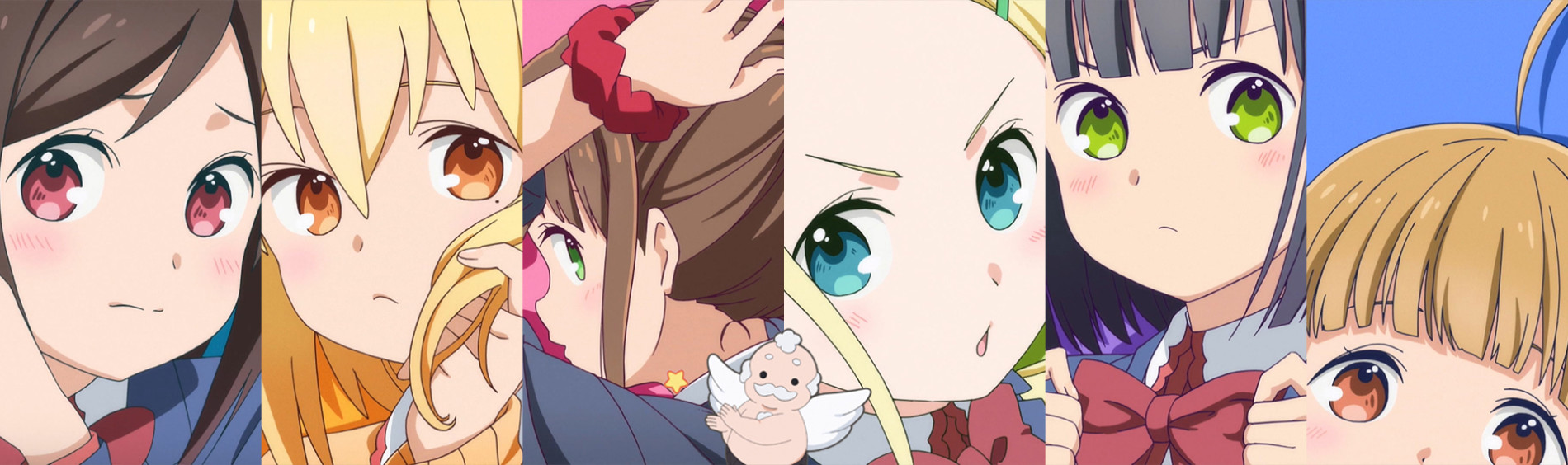
What makes Hitoribocchi no Marumaruseikatsu unlike anything else isn’t its slapstick or its cute-girls premise—it’s how it treats anxiety not as a flaw to overcome, but as a sensory landscape. Every hallway is a terrain to be navigated like a stealth mission; every classroom door, a threshold requiring reconnaissance, contingency plans, and emergency exits. It’s healing not because it soothes, but because it validates—the cramping legs, the overblown internal monologues, the way solitude swells into self-importance only to collapse at the sight of a smile. You don’t watch it to escape life—you watch it to recognize the absurd, tender, exhausting physics of trying to exist inside your own nervous system while surrounded by other people who seem to move through the world unburdened by their own pulse.
That emotional DNA pulses strongest in Prince of Persia, where the franchise’s return lands not in spectacle, but in slowness and healing. The description calls it “an all-new epic journey”—but the player review quietly undermines that grandeur: it’s not about conquest or legacy. It’s about rebooting, starting over, stepping into new lands with no map. Like Bocchi entering middle school without Yawara Kai, the Prince isn’t inheriting a throne—he’s learning how to move again, how to trust his footing, how to fall and recover without shame. The game’s “Healing & Slow Life” dimension mirrors Bocchi’s own rhythm: progress measured in small, deliberate recalibrations—not leaps, but breaths between jumps, pauses before decisions, the quiet dignity of getting up after a stumble.
Then there’s The Sims™ 4, whose description invites you to “Play with life and discover the possibilities”—a phrase that lands with eerie precision on Bocchi’s inner world. She doesn’t just imagine conversations—she rehearses, scripts, casts, blocks, directs them in her head like a one-woman theater troupe. Her loneliness isn’t empty—it’s overfull: stuffed with hypothetical dialogues, alternate endings, costume changes for different social scenarios. The player review complains about DLC dependency and bugs—but what it accidentally reveals is something deeper: the game’s core loop is Bocchi’s coping mechanism. You build homes not for realism, but for control. You tweak personalities not for narrative, but to rehearse how people might respond—to test boundaries, to simulate safety, to practice connection before risking it IRL. Its “Comedy & Parody” tag isn’t just tone—it’s defense. The exaggerated facial animations, the ridiculous failures, the way Sims vomit when stressed? That’s not cartoonish—it’s recognition.
Who loves this pairing? Not just fans of slice-of-life or simulation games—but the person who saves voicemails they never send, who maps subway transfers like battle strategies, who laughs too hard at awkwardness because it’s the only way to keep panic from rising. It’s for the teen rewatching Bocchi’s locker-hug scene while quietly building a Sim version of their ideal first day of school—same lighting, same backpack, same carefully placed potted plant by the front door. It’s for the adult who still feels their legs cramp—not from stairs, but from saying “hi” to a neighbor—and finds solace not in cure, but in company: in a prince learning to land softly, in a Sim choosing tea over small talk, in Bocchi, breathless and grinning, finally whispering “I’m here.” —and meaning it, not as arrival, but as permission to stay.
🎮5 Games That Match the Vibe




Match Dimensions Explained
❓Frequently Asked Questions
Why does Prince of Persia keep showing up in 'Games Like Hitoribocchi no Marumaruseikatsu' lists when it’s an action-adventure game?
Great question—it’s not about combat! The match comes from its 'Healing & Slow Life' and 'Comedy & Parody' dimensions: the new Prince spends quiet, reflective moments tending gardens, chatting with quirky NPCs like Zora (a sarcastic, tea-obsessed scholar), and stumbling into absurd, slice-of-life gags—like accidentally turning a royal banquet into improv comedy. That tonal blend of gentle pacing, self-aware humor, and low-stakes personal growth mirrors Marumaruseikatsu’s cozy chaos.
Is there an anime or manga adaptation of The Sims 4 that captures the same vibe as Hitoribocchi?
No official anime or manga adaptation exists—but fans *have* drawn direct parallels between TS4’s unscripted, character-driven vignettes and Marumaruseikatsu’s charm. Think of how your Sim might nervously attempt baking (burning three batches), then bond with a neighbor over shared failure—just like Hitori’s disastrous but heartwarming attempts at making bento boxes. That ‘imperfect, joyful smallness’ is why players call TS4 ‘the Sims 4: Marumaruseikatsu Edition’ in fan forums.
How is The Sims 4 different from Prince of Persia in delivering that ‘Hitoribocchi’ feeling?
TS4 gives you total control over mundane magic—naming your Sim ‘Hitori’, having them nap under a cherry tree for 3 hours straight, or awkwardly practicing small talk with a mailbox—while Prince of Persia offers scripted, poetic slowness: the Prince silently watching sunset over Babylon’s rooftops, or sharing dry banter with Zora while repairing a broken fountain. One’s open-ended simulation; the other’s curated, cinematic calm—but both nail the ‘healing + gentle absurdity’ combo reviewers praised in Marumaruseikatsu.
What’s the best game like Hitoribocchi if I just want to feel quietly happy and slightly silly?
Go straight to The Sims 4—even with its DLC frustrations, the base game’s core loop nails it: create a shy, soft-spoken Sim, set them loose in a quiet neighborhood, and watch them giggle while watering plants, blush during a failed karaoke attempt, or fall asleep mid-conversation on a park bench. That exact blend of tender vulnerability and lighthearted parody (like the ‘Dance Fever’ social interaction) is why players say it’s ‘Hitoribocchi in Sim form’—and why it scores 83 in Healing & Slow Life *and* Comedy & Parody.