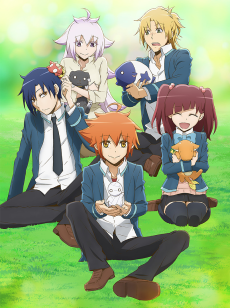
How to Keep a Mummy
📺Anime Details
📝Editorial Analysis
The first time Mokku wraps his tiny, bandaged fingers around the edge of Sora’s desk—just to watch the sunlight catch the gold thread woven into his wrappings—it isn’t plot. It’s breath held, then softly released. No dialogue. Just the quiet shush of paper turning, the hum of classroom light, and the faint, warm scent of incense drifting from the small shrine Sora keeps tucked beside his pencil case. That moment isn’t about mummies or magic. It’s about safety—the kind that settles in your ribs like warm tea.
How to Keep a Mummy doesn’t build its world with stakes or spectacle. It builds it with texture: the weight of a dragon egg cradled in both hands, the careful way Sora adjusts the scarf over Kuro’s horns so no one at school notices, the soft thump of a tiny youkai curling up against his thigh during lunch. This is iyashikei not as aesthetic but as philosophy—slow, tactile, deeply tender. It makes you feel held. Not rescued, not transformed, but gently witnessed, exactly as you are: tired, tender, quietly trying. It asks nothing grand of you—only presence, patience, and the willingness to notice how light falls across bandages, how a shy smile blooms when someone remembers your favorite snack, how belonging isn’t declared—it’s stitched, day by day, in small, unassuming acts.
That emotional DNA pulses in Chains, the match-3 game where linking three bubbles isn’t about speed or score—it’s about rhythm, repetition, and gentle cause-and-effect. The description calls it “relaxing,” and the player review nails its quiet intimacy: “Reminds me of connect 4 in nutshell.” Not chaos. Not escalation. Just clean, deliberate connection—color meeting color, chain forming, space clearing—not to win, but to breathe. Like watching Mokku carefully re-wrap his own arm after a minor tear, or Sora patiently guiding a nervous kappa through origami—it’s healing through repetition, through small, satisfying completions that accumulate into calm. No urgency. No penalty for pausing. Just the soft pop of alignment, mirroring the anime’s quiet affirmations: you are enough, right here, right now.
Then there’s Baldur’s Gate 3, rated high on JRPG Narrative and Emotional Narrative—but not for its battles or lore dumps. Its resonance lies in how deeply it honors choice-as-tenderness: letting a goblin sit at your campfire, choosing to kneel beside a wounded companion instead of rushing forward, learning someone’s name before their title. Like Sora learning not just how to care for a mummy, but who Mokku is—their stubbornness, their love of pickles, their fear of thunder—it’s narrative that treats vulnerability as sacred ground. The anime and the game both understand that emotional weight isn’t in grand sacrifices, but in staying: staying present, staying curious, staying kind when no one’s watching.
And Undertale, tagged with Body Horror & Occult yet scoring high on Emotional Narrative, shares something quieter but sharper: the radical insistence that care matters, even—or especially—when the world seems built on harm. Sans’s jokes aren’t just levity; they’re armor worn so gently you almost forget it’s there. Mokku’s bandages aren’t concealment—they’re soft boundaries, lovingly maintained. Both works treat the supernatural not as threat, but as invitation: to see past the surface, to ask what hurts, to offer jam instead of judgment. That same quiet courage lives in every scene where Sora chooses empathy over explanation, where the ensemble gathers not to fix each other—but to exist, together, in soft, unguarded light.
This pairing isn’t for people who crave catharsis or climax. It’s for the ones who save voicemails just to hear a friend laugh, who trace the grain of wood on a favorite mug, who feel relief—not excitement—when the screen dims and the music swells softly, warmly, like sunlight pooling on tatami. It’s for the reader who underlines sentences about kindness in novels, the player who lingers in towns just to listen to NPCs chat about their gardens, the watcher who cries not at farewells—but at the sight of someone finally, finally, being known. They don’t need fireworks. They need this: the steady pulse of gentle things, the quiet certainty that care, repeated, becomes home.
🎮36 Games That Match the Vibe















Match Dimensions Explained
❓Frequently Asked Questions
Why does Chains keep coming up when I search for games like How to Keep a Mummy?
Chains matches because it shares that same gentle, healing vibe—like tending to your mummy in the morning with soft music and quiet routines. Its bubble-chaining mechanic feels like a low-stakes, meditative ritual (think: arranging snacks or cleaning the mummy’s little shrine), and players consistently call it ‘relaxing’ and ‘emotionally soothing’—exactly the tone fans love about How to Keep a Mummy.
Is there an anime or visual novel adaptation of How to Keep a Mummy?
No official anime or visual novel adaptation exists yet—but Burning Horns: A Bara Isekai JRPG nails that same warm, character-driven intimacy. You’ll bond with quirky, vulnerable monsters through heartfelt dialogue choices and slice-of-life moments (like sharing tea or helping them adjust to human world quirks), mirroring how you nurture your mummy in daily vignettes.
How does Undertale compare to How to Keep a Mummy in terms of monster relationships?
Both lean hard into emotional bonds with non-human characters—but Undertale goes darker and more morally complex. Instead of cozy care, you’re choosing whether to spare or fight monsters like Sans or Undyne, with consequences that reshape the world; it’s got that same heart-tugging weight, just wrapped in body horror and existential stakes instead of plushy bandage rolls.
What’s the best game like How to Keep a Mummy if I want something calming but still story-rich?
Chains is your top pick—it’s not just match-3 fluff. Reviewers describe its progression as ‘like slowly unraveling a quiet story’, with each cleared level revealing tender environmental storytelling (soft lighting, tiny animations of bubbles drifting like dust motes in sunbeams). With its 84 score and ‘Healing & Slow Life’ dimension, it delivers narrative warmth without pressure—perfect for unwinding after a long day of mummy care.