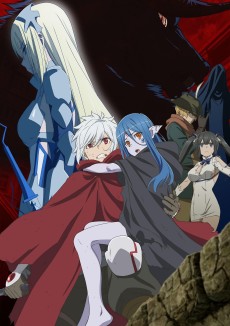
Is It Wrong to Try to Pick Up Girls in a Dungeon? III
The third season of Dungeon ni Deai wo Motomeru no wa Machigatteiru Darou ka.
When Bell encounters a frightened little girl in the dungeon, he doesn’t think twice to help. But this simple act of kindness has consequences. The girl is a monster and proof that monsters can be eerily human. And not everyone can accept this...
(Source: HIDIVE)
📺Anime Details
📝Editorial Analysis
The flicker of torchlight on damp stone. Bell’s hand—still trembling, still warm from the fight—reaching not for his sword, but down, palm open, toward a small, bare foot curled beneath tattered cloth. The girl doesn’t flinch. She just watches him, eyes wide and wet, pupils slit like a serpent’s, yet her breath hitches the same way any child’s would after being cornered in the dark. That silence—not the roar of battle or the clatter of loot—but the weight of that shared breath in the dungeon’s throat, where myth bleeds into muscle and mercy feels dangerous. That’s where Is It Wrong to Try to Pick Up Girls in a Dungeon? III lives.

It’s not the spectacle that lingers—it’s the tremor. This season doesn’t ask whether gods are real; it asks what happens when divinity wears a child’s face and a monster’s skin. The air hums with reverence and dread, not because of grand prophecies, but because every corridor smells faintly of iron and incense, every guild hall echoes with gossip that curdles into judgment, and every act of kindness risks unraveling the rigid theology everyone depends on to feel safe. You don’t just watch Bell choose compassion—you feel the vertigo of it: how fragile order is when empathy refuses to stay in its lane. It makes you think about the stories we tell to justify exclusion—and how easily “monster” becomes shorthand for what we refuse to understand. There’s warmth here, yes—laughter over shared meals, the easy rhythm of an ensemble cast stitching itself tighter—but it’s always edged with something sharper: uncertainty, consequence, tenderness as rebellion.
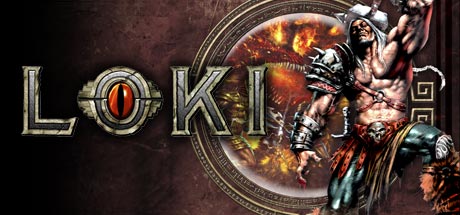
That emotional architecture—the sacred meeting the scaly, myth made intimate and immediate—resonates in ways few games replicate. Take Loki, with its stated focus on Mythology & Folklore and Action Spectacle. Its description promises a “fantasy voyage through the great mythologies,” letting players embody heroes drawn from distinct pantheons—exactly the layered divine hierarchy that shapes every faction, prayer, and power dynamic in Dungeon ni Deai. But the player review cuts deeper: “Good, similar to Diablo… but filled with annoying glitches and game crashes.” That dissonance—between soaring mythic ambition and jarring, human-made fragility—mirrors the anime’s own tension. Bell’s idealism isn’t polished; it stumbles, backfires, strains relationships. Like Loki, the world feels alive with legacy, yet constantly threatening to glitch under the weight of its own contradictions.
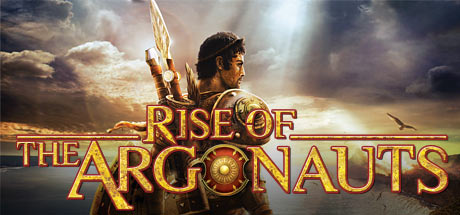
Then there’s Rise of the Argonauts, also scoring 84 on Mythology & Folklore and Action Spectacle. Its description centers Jason’s vow to restore his murdered fiancé—a grief so potent it bends history, empire, and divine law. That’s the same emotional gravity anchoring Dungeon ni Deai III: love isn’t background romance—it’s the engine of moral crisis. When Bell shelters the girl, he isn’t chasing affection; he’s answering a vow older than any guild charter—to protect what’s vulnerable, even when the gods themselves look away. The player review notes, “If you love games based on ancient history this one does it right…”—and that’s key. It’s not about accuracy, but texture: the weight of oaths sworn before altars, the politics of patron deities, the way belief shapes swordplay and sacrifice. Both Rise of the Argonauts and Dungeon ni Deai III treat mythology not as costume, but as infrastructure—the invisible beams holding up every choice.
Who leans into this? Not just fans of fantasy or harem tropes—but people who ache for stories where devotion has teeth, where gods whisper in taverns and monsters cry in basements, where a single act of kindness lands like a dropped chalice in a silent temple. They’re the ones who replay cutscenes not for the swordplay, but for the pause before Bell speaks—when the camera holds on his knuckles, white around his hilt, not because he’s about to strike, but because he’s choosing not to. They want myth that breathes, not recites. They want action that aches. They want worlds where every god has a name, every monster a story, and every “wrong” question—like trying to pick up girls in a dungeon, or sheltering a child who shouldn’t exist—might just be the first tremor of something true.
🎮2 Games That Match the Vibe
Match Dimensions Explained
❓Frequently Asked Questions
Why is Rise of the Argonauts listed as similar to Is It Wrong to Try to Pick Up Girls in a Dungeon? III?
Because both lean hard into mythic worldbuilding with charismatic, quest-driven heroes navigating layered pantheons—Jason’s grief-fueled hunt for the Golden Fleece mirrors Bell’s dungeon ascents fueled by devotion and growth. The game’s dialogue choices, faction reputation system (like with Hera’s cult or the Oracle), and cutscenes where Medea debates fate vs. free will hit that same blend of romantic tension and divine stakes you love in DanMachi.
Is there a visual novel or RPG adaptation of Is It Wrong to Try to Pick Up Girls in a Dungeon? III?
No official game adaptation exists for Season III specifically—but Loki and Rise of the Argonauts are the closest *spiritual* matches in gameplay and tone. Loki’s four-mythology hero roster (including its trickster Norse protagonist) echoes the series’ ensemble charm, while Rise of the Argonauts’ branching romance paths with Medea and Kyra mirror Bell’s evolving bonds with Ais and Hestia.
How does Rise of the Argonauts compare to Loki for DanMachi fans?
Rise gives you richer character writing and emotional weight—like Jason’s raw, voice-acted confrontation with Pelias in the throne room—while Loki leans into flashy, Diablo-style combat but stumbles with bugs (one player called its ending 'anticlimactic since nothing happens'). If you want DanMachi’s heartfelt party dynamics and lore-dense quests, go with Rise; if you’re after myth-hopping action spectacle with chaotic energy, try Loki—but save your progress often.
What’s the best game like DanMachi III if I want that ‘hopeful underdog in a god-filled world’ vibe?
Rise of the Argonauts nails it: Jason starts broken but determined, earns divine boons through loyalty (not just power), and rebuilds trust with allies like the stoic warrior Atalanta—just like Bell earning Hestia’s quiet pride after each near-death crawl. Its score of 84 and player praise for ‘getting ancient history right’ proves it delivers that earnest, myth-tinged hope without losing grit.