
Makeine: Too Many Losing Heroines!
Kazuhiko Nukumizu is a high school boy content to blend in with the background mob, until he witnessed his more popular classmate Anna Yanami get dumped by her childhood friend. He felt like he had to try to comfort Yanami, but this led him to become entangled with other girls who have met defeat at love?
📺Anime Details
📝Editorial Analysis
The fluorescent hum of the school hallway after class—shoes scuffing linoleum, lockers clicking shut, a half-eaten melon soda sweating in Kazuhiko Nukumizu’s hand as he stands frozen, watching Anna Yanami wipe her eyes with the heel of her palm while staring blankly at her phone. Not crying loudly. Not collapsing. Just still, like gravity forgot to pull her down. That’s the moment everything tilts: not because something huge happens, but because something doesn’t—no grand confession, no dramatic interruption, just quiet erosion. He steps forward—not to fix it, not even to speak—but because his chest tightens in a way that feels less like courage and more like reflexive gravity pulling him toward the hollow where someone else’s heart used to be.
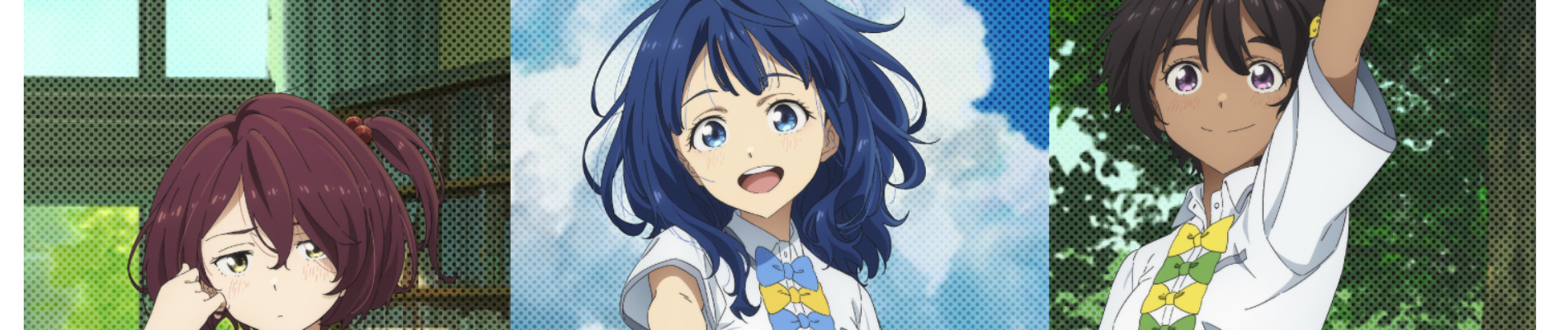
That’s the atmosphere: unfilled space. Not angst, not despair, but the low-frequency resonance of love that lands just short—of timing, of attention, of mutual recognition. It’s the weight of a glance held half a second too long, then dropped; the way a clubroom door stays open just long enough for you to hear laughter you weren’t invited into; the way Kazuhiko’s internal monologue never swells into heroism—it just keeps listing reasons why he shouldn’t say anything, why he shouldn’t stay, why he probably won’t matter. There’s no villain, no cosmic injustice—just the soft, persistent ache of being adjacent to feeling, surrounded by people who are all, in their own ways, learning how to hold space for loss without naming it. It’s melancholic exploration, yes—but exploration of the interior geography of near-misses, not ruins.
Prince of Persia shares that same quiet gravity. Its description calls it “an all-new epic journey” built on “new lands and a brand new story”—but the player review cuts deeper: it’s the third reboot, a lineage defined not by continuity but by recurrence—the same core tension reimagined across generations. Like Kazuhiko walking past the same bench where Anna cried, or rejoining the same club meeting where another girl quietly folds her hands after mentioning his name in passing—nothing resets, but nothing truly resolves either. The prince doesn’t conquer time; he negotiates it, slipping, falling, rewinding—not to win, but to witness the moment just before collapse. That’s Kazuhiko’s rhythm too: pausing, replaying a line in his head, stepping back, trying again—not to change the outcome, but to understand the shape of the fall.
Disco Elysium - The Final Cut resonates in its structural honesty about emotional saturation. Its description positions it as a “groundbreaking role playing game” where you “carve your path across” a whole city—but the player review nails the emotional architecture: “Capital has the ability to subsume all critiques into itself. Even those who would critique capital end up reinforcing it instead.” That’s the exact texture of Kazuhiko’s world: the school isn’t evil, the romance tropes aren’t mocked—they’re breatheable air, ambient pressure. Every love triangle, every club activity, every “almost” confession functions like ideology: invisible, inescapable, shaping desire before anyone names it. Kazuhiko doesn’t rebel against the system—he stumbles through it, misreads cues, misplaces empathy, gets gently corrected by girls who’ve already mapped its contours. His growth isn’t defiance—it’s recognition: realizing he’s not outside the pattern, but inside its grammar, learning how to parse its syntax without losing himself.
Who loves this pairing? The person who watches Kazuhiko hand Anna a tissue and feels their throat tighten—not because they want him to win her, but because they remember handing one to someone who didn’t look up. The player who spends twenty minutes in Disco Elysium debating whether to comfort a grieving cop or steal his lunch, not for points, but because the choice hurts. The one who walks through Prince of Persia’s ruined gardens not hunting trophies, but tracing the ghost of where a fountain used to flow. They don’t crave victory. They crave accuracy: the precise weight of a sigh, the exact shade of light in a hallway right after someone leaves, the way unrequited love doesn’t scream—it settles, like dust on an unused desk. They love stories where healing isn’t a destination, but the slow, stubborn act of staying present inside the echo.
🎮3 Games That Match the Vibe
Match Dimensions Explained
❓Frequently Asked Questions
Why does Prince of Persia keep coming up in Makeine comparisons when it’s not even a dating sim?
Great question—it’s all about that shared melancholic exploration vibe and quiet, yearning romance. Like when the Prince silently watches Farah from a sunlit balcony in the palace gardens (a scene dripping with unspoken tension), it mirrors how Makeine lingers on quiet, emotionally charged moments between the hero and heroines—not through dialogue trees, but through atmosphere and gesture. Both lean hard into ‘Romance & Shoujo’ as mood, not mechanics, which is why Ubisoft’s reboot scores an 83 here despite zero dating sim systems.
Is there an anime or manga adaptation of Makeine: Too Many Losing Heroines!?
No official anime or manga adaptation exists yet—unlike some visual novels that get rapid adaptations, Makeine’s still flying under the radar for licensors. That said, fans often point to Disco Elysium’s tone as a loose spiritual cousin: both dive deep into self-doubt and fractured identity, like when Harry’s inner voices argue over whether to confess feelings—or just pour another drink in the rain-soaked alley behind the Whirling-in-Rags tavern. Its 67 score in ‘Romance & Shoujo, Melancholic Exploration’ reflects that same bruised, poetic intimacy.
How does Disco Elysium compare to Makeine in terms of romantic payoff?
Disco Elysium doesn’t do ‘romantic payoff’ like Makeine—it trades confession scenes for existential ambiguity. Where Makeine lets you choose *which* heroine walks away with you after the final festival lantern release, Disco Elysium makes you negotiate love through skill checks: a failed ‘Empathy’ roll might leave Kim Kitsuragi standing politely at arm’s length while you ramble about capitalism, echoing that bittersweet ‘almost but not quite’ ache fans love in Makeine’s losing heroines. It’s the same emotional dimension—just filtered through a rain-slicked, noir-drenched lens.
What’s the best game like Makeine if I want that wistful, late-night-feeling-of-missing-someone-who-wasn’t-even-yours vibe?
Prince of Persia (2023) nails that exact feeling—especially during the ‘Echoes of the Past’ sequences where the Prince wanders ruined courtyards, hearing fragmented whispers of Farah’s voice as golden light fades. It’s not about who you end up with; it’s about the weight of almosts and near-misses, just like Makeine’s ‘losing heroine’ routes where you hold her scarf long after she’s boarded the train. With its 83 score in ‘Romance & Shoujo, Melancholic Exploration’, it’s basically the gameplay equivalent of re-reading a text you never sent.