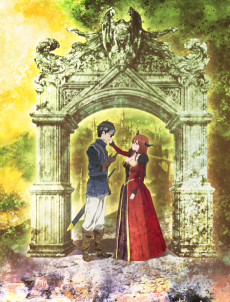
Maoyu: Archenemy & Hero
After a long and treacherous journey, our Hero finally arrives at the Dark Lady's castle only to find himself being asked for help. The Hero explains how the war that the demons have brought upon the humans have killed thousands and put more in misery. The queen of demons however argues that this war has made the human society band together as one and showed empirical evidence how it has increased population, increased production, boosted economy and improved society overall. Furthermore, she explains to the Hero that ending this war will result in a civil war that will produce more bloodshed than there ever was. The Hero, convinced that the only way to bring peace, relatively speaking, is to join forces with the Dark Lady, agrees to help with her plans!
📺Anime Details
📝Editorial Analysis
The Hero stands in the throne room—not with sword drawn, but with a ledger open in his hands. Dust motes hang in the slanted light from high arched windows. The Dark Lady doesn’t rise. She gestures to a map pinned beside her—lines of trade routes, grain yields, tax receipts inked in precise script across demon-ruled provinces. Her voice is calm, unflinching: “Your war killed ten thousand. But it also doubled wheat exports from the Southern Marches—and halved infant mortality in three human duchies.” There’s no villainy in her eyes. Only calculation. Only consequence.
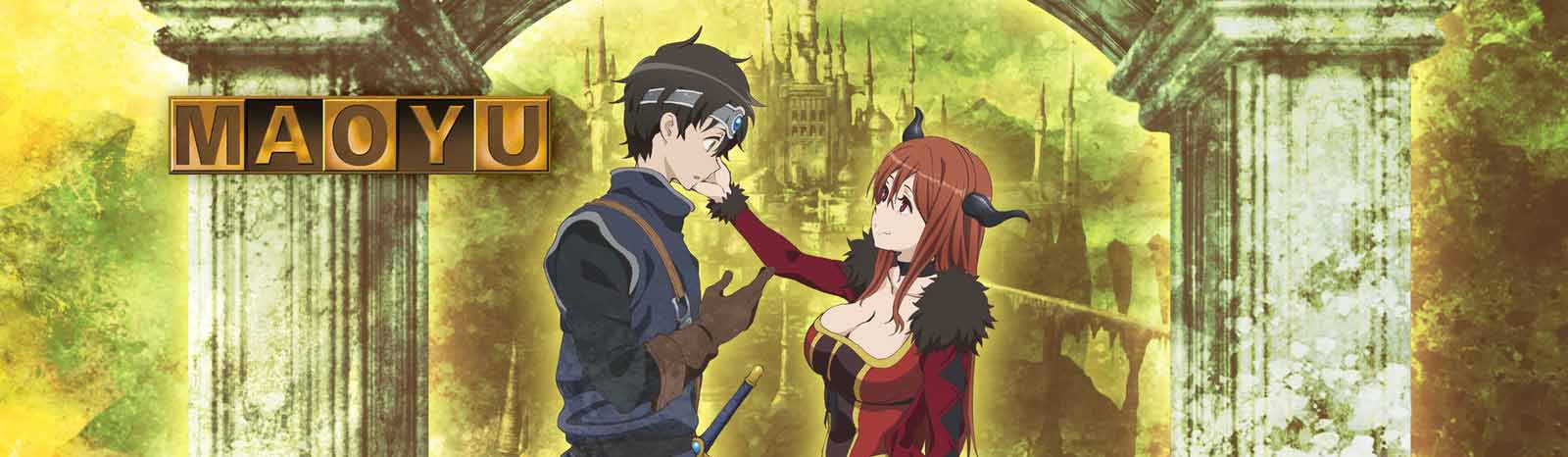
That moment isn’t fantasy escapism—it’s weight. Not the weight of magic or muscle, but the quiet, grinding pressure of cause and effect. Maoyu: Archenemy & Hero makes you feel the friction between moral certainty and systemic reality. It’s the ache of realizing that peace isn’t just the absence of war—it’s the presence of infrastructure, credit systems, crop rotation schedules, and labor laws. You don’t fall in love with grand speeches; you fall in love with shared spreadsheets, with the way the Hero’s calloused thumb smudges ink on a land-reform draft, with how the Dark Lady’s crown rests slightly askew after a twelve-hour negotiation on textile tariffs. This isn’t idealism—it’s pragmatism with tenderness, where romance blooms not in moonlit gardens but in joint audits and cross-border irrigation treaties. It makes you think—not about good vs. evil—but about what happens after the last battle ends, when the real work begins.
Assassin's Creed™: Director's Cut Edition shares that same gravitas of governance disguised as action. Its description calls it a “Political Thriller, Tactical Warfare”—and yes, Altaïr leaps across rooftops, but the game’s spine is intelligence gathering, faction leverage, and destabilizing power structures through economic sabotage and ideological infiltration. Player reviews note its dated visuals but praise its substance: “no issues with me but I can…”—that trailing thought mirrors Maoyu’s own quiet insistence that surface flaws (stilted animation, early-2010s pacing) vanish once you sink into its layered logic. Both treat empire not as backdrop but as living organism—one you must diagnose, adjust, and sometimes grieve when reforms fail.
Act of War: Direct Action, too, resonates—not in spectacle, but in urgency. Its description frames it as “a frightening tale of suspense, international intrigue and geopolitical military conflict,” rooted in “today’s headlines.” Like Maoyu, it refuses abstraction: war here has names, budgets, supply chain bottlenecks, and diplomatic fallout. A player review admits the campaign dialogue is “dumb and a bit cringe”—yet still compares it to C&C 3, a title famed for its granular resource management and faction-specific economic asymmetries. That’s the link: both Act of War and Maoyu force you to hold two truths at once—the horror of violence and the cold arithmetic of survival. Neither lets you off the hook with catharsis. They make you sit with the spreadsheet after the explosion.
What binds them isn’t genre—it’s maturity of consequence. These aren’t stories where choices resolve cleanly. They’re about the long, unglamorous labor of rebuilding trust, recalibrating incentives, and measuring progress in bushels per acre—not body counts. The emotional DNA is responsibility, not destiny.
This pairing sings to the viewer who rewatches council scenes just to catch how many times the Dark Lady adjusts her sleeve while deflecting a tax reform objection. To the player who pauses mid-mission in Act of War not to reload, but to reassign logistics convoys because fuel reserves dipped below 17%. To the person who reads real-world policy papers for fun—and feels a jolt of recognition when the Hero cites inflation data from the Free City of Lurien like it’s scripture. They don’t crave heroes who save the world. They crave thinkers who stitch it back together, one imperfect, necessary compromise at a time.
🎮6 Games That Match the Vibe

Match Dimensions Explained
❓Frequently Asked Questions
Why is Assassin's Creed: Director's Cut Edition listed as similar to Maoyu: Archenemy & Hero?
Because both lean hard into political thriller tension and tactical warfare—like Maoyu’s council-room negotiations with the Demon Lord and human generals, Assassin’s Creed drops you into tense, dialogue-driven power struggles in Jerusalem’s factions. The stealth-and-strike combat loops also mirror Maoyu’s emphasis on calculated, high-stakes decision-making over brute force.
Is there a Maoyu: Archenemy & Hero game adaptation?
No—there’s no official video game adaptation of Maoyu: Archenemy & Hero (it’s only an anime and light novel series). But fans seeking that same vibe of strategic diplomacy + morally grey alliances should jump straight into Assassin’s Creed: Director’s Cut Edition or Act of War: Direct Action, both of which nail the geopolitical maneuvering and faction-based tension Maoyu fans love.
How does Act of War: Direct Action compare to Assassin’s Creed: Director’s Cut Edition for Maoyu fans?
Act of War leans more into real-time strategy and modern military intrigue—think Maoyu’s ‘war council’ scenes but with satellite intel briefings and armored convoy takedowns—while Assassin’s Creed delivers tighter narrative pacing and parkour-fueled espionage closer to Maoyu’s intimate, character-driven political duels (e.g., the Demon Lord debating grain policy with the Hero while perched on a rooftop). Both score well for 'Political Thriller' and 'Tactical Warfare', but AC’s storytelling feels more Maoyu-adjacent.
What’s the best game like Maoyu for when I want slow-burn political scheming and quiet tension?
Go with Assassin’s Creed: Director's Cut Edition—it nails that hushed, high-stakes vibe: picture yourself eavesdropping on Templar council meetings in Acre’s shadowy alleys, just like Maoyu’s library debates between the Hero and Demon Lord about trade tariffs and magical infrastructure. The player review even notes how its dated textures don’t distract from the gripping, dialogue-heavy political core—exactly what Maoyu fans crave.