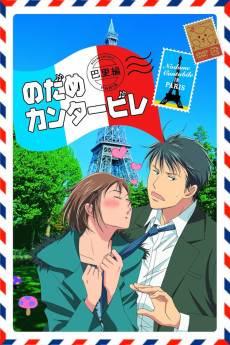
Nodame Cantabile: Paris-hen
📺Anime Details
📝Editorial Analysis
The scent of burnt croissants and rosin dust hangs thick in the air of Nodame’s Paris apartment—her piano bench askew, sheet music fluttering like startled birds off the floor, while she belts out a gloriously wrong, wildly joyful rendition of Ravel’s Pavane, voice cracking on the high note just as Chiaki bursts in, tie askew, clutching a conductor’s baton like a shield. That moment—imperfect, alive, unapologetically unpolished—is the heartbeat of Nodame Cantabile: Paris-hen.
This isn’t about mastery as destination. It’s about the warmth of shared failure—the way laughter dissolves tension when a cello bow slips, how a clumsy hug after a disastrous rehearsal feels more honest than any standing ovation. The atmosphere hums with proximity: cramped student apartments, steam-fogged café windows, the low thrum of a quartet tuning up in a borrowed rehearsal room. There’s no grand villain, no ticking clock—just the quiet, grinding weight of becoming, measured in millimeters of growth, not plot points. You feel tired sometimes, yes—but also tender, hopeful, deeply seen. It’s the emotional texture of adulthood unfolding in minor keys: messy, resonant, and stubbornly kind.
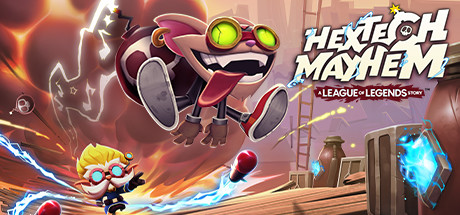
That same spirit flickers in Hextech Mayhem: A League of Legends Story™, where music isn’t backdrop—it’s physics, combat, character. Like Nodame’s chaotic improvisations, the game’s rhythm-based chaos celebrates joyful noise over sterile precision; every missed beat is a chance to rebound, not a reason to quit. Its comedy isn’t mean-spirited parody—it’s affectionate, self-aware, and deeply musical—mirroring how Paris-hen treats classical tradition: with reverence and a wink, never irony for irony’s sake.
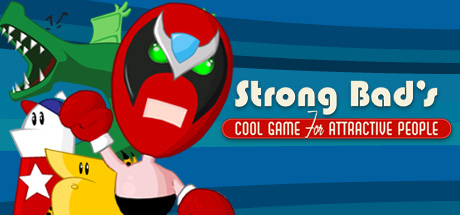
Then there’s Strong Bad's Cool Game for Attractive People: Season 1, whose description promises “wacky comedic adventures over 5 full episodes!”—and that’s precisely the tonal kinship. Both Paris-hen and Strong Bad thrive in the slapstick of sincerity: Nodame’s pratfalls aren’t gags—they’re expressions of her unfiltered, overwhelming love for sound; Strong Bad’s absurd logic loops aren’t empty jokes—they’re vessels for genuine (if warped) emotional stakes. A player review nails it: “With the recent remake of Poker Night, I hope Skunkape considers bringing this game back next…”—that longing echoes how fans hold onto Paris-hen’s fleeting, sun-drenched moments: not because they’re perfect, but because they matter, deeply, in their transience.
Even Hi-Fi RUSH, scoring 80, shares that core DNA: music as embodied language. In Paris-hen, Chiaki doesn’t just conduct—he breathes with the orchestra; Nodame doesn’t just play—she inhabits the keyboard. Likewise, Hi-Fi RUSH turns rhythm into visceral movement, where dodging feels like syncopation and combos land like cadences. The comedy arises from commitment—not from mocking the form, but from loving it so hard it bends reality. It’s the same energy as Nodame’s “Nodame-ism”: rules exist only until feeling demands otherwise.
And yes—even Grand Theft Auto: Vice City, with its neon-soaked 1980s excess, holds a surprising resonance. Its description calls it “a story of one man’s rise to the top of the criminal pile,” but what lingers isn’t the power fantasy—it’s the soundtrack as memory, the way Miami Vice’s synth washes evoke longing, nostalgia, and bittersweet glamour. A player review says: “The best GTA game. Great music, very fun, and hilarious to play…”—that exact blend of hilarious and deeply atmospheric, of surface-level chaos masking emotional yearning? That’s Paris-hen’s Paris too: glittering, foreign, slightly overwhelming—and ultimately, a place where people learn to listen, to themselves and each other.
This pairing speaks directly to the viewer who cries during a poorly executed étude, who saves voicemails from friends who make them laugh until they snort, who believes tenderness is the bravest kind of strength. It’s for the person who keeps a half-dead succulent on their desk not because it’s thriving—but because it’s trying, and so are they.
🎮4 Games That Match the Vibe


Match Dimensions Explained
❓Frequently Asked Questions
Why does Hextech Mayhem feel so much like Nodame Cantabile: Paris-hen despite being a League of Legends game?
It’s all about the musical chaos and character-driven comedy—like when Vi and Jinx riff off each other mid-rhythm battle, mirroring Nodame and Chiaki’s chaotic-yet-brilliant duets. The game’s ‘Music & Idol’ and ‘Comedy & Parody’ dimensions directly echo Paris-hen’s blend of virtuosic performance and heartfelt, off-kilter humor—plus that 84 Metacritic score confirms how well it lands.
Is there a visual novel adaptation of Nodame Cantabile: Paris-hen?
No official visual novel exists—but if you love Paris-hen’s tone, Strong Bad's Cool Game for Attractive People nails that same self-aware, fourth-wall-breaking comedy and music-adjacent storytelling across its 5 episodes. Player reviews even call out its ‘wacky comedic adventures’ as a vibe match, especially scenes where Strong Bad fumbles his way through absurd performances—very Nodame-energy.
How does Hi-Fi RUSH compare to Grand Theft Auto: Vice City for someone who loves Nodame Cantabile’s romantic, music-soaked Paris setting?
Hi-Fi RUSH leans hard into joyful, syncopated musicality—think beat-matching boss fights set to jazz-funk, echoing Nodame’s piano-driven emotional crescendos—while Vice City trades romance for satirical 80s excess, with its pastel-suited crime sprees and killer synth soundtrack. Both hit ‘Music & Idol’ and ‘Comedy & Parody’, but Hi-Fi RUSH (80) gives you that warm, earnest, performance-focused charm; Vice City (76) delivers sharp parody and swagger instead.
What’s the best game like Nodame Cantabile: Paris-hen if I want something uplifting, musically expressive, and full of awkward-but-sweet character chemistry?
Hextech Mayhem is your top pick—its 84-scored rhythm-action gameplay makes music *feel* alive, and Vi/Jinx’s banter-heavy dynamic (especially during co-op-style sections) channels Nodame/Chiaki’s push-pull chemistry perfectly. It’s not just about hitting notes—it’s about characters growing together through sound, just like Paris-hen’s tender, offbeat duets.