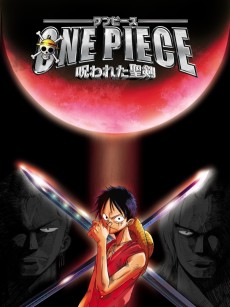
One Piece: The Curse of the Sacred Sword
📺Anime Details
📝Editorial Analysis
The salt-sting of wind whips across the deck as Luffy’s straw hat tilts back, his grin wide and unbroken even as the Thousand Sunny bucks beneath him—sails straining, timbers groaning—not from storm, but from the sheer, reckless aliveness of motion. A cult’s black banners snap like teeth against the sky; a sacred sword hums with forbidden magic; and somewhere below deck, Nami’s voice cuts sharp with worry while Usopp’s story spirals into absurd, heartfelt bravado. This isn’t just adventure—it’s kinetic warmth, the kind that lives in the gap between danger and devotion, where every sword slash carries weight not because it’s flashy, but because someone chose to stand there.
What makes One Piece: The Curse of the Sacred Sword vibrate at this particular frequency isn’t its pirate trappings or super-powered fights—it’s how deeply it trusts connection as both engine and anchor. The ensemble cast doesn’t just share screen time; they breathe the same air, interrupt each other’s speeches, misinterpret each other’s intentions, and still move together. There’s no grand prophecy driving them—just loyalty forged in shared meals, shared silences, shared panic when the ship hits a rogue wave. It feels human-scaled, even amid mythic stakes. You don’t watch it to escape reality—you watch it to remember how good it feels to be part of something stubbornly, joyfully alive, even when the world tries to curse your sword—or your soul.
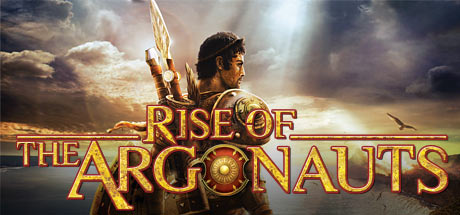
That same pulse thrums through Rise of the Argonauts, where Jason’s grief isn’t abstract tragedy but the raw, tactile ache of a wedding day shattered—“a prosperous kingdom, the respect of his peers, and a beautiful fiancé”—all gone in an instant. His quest isn’t about conquest or destiny; it’s about restoring what was lost, one fragile, human choice at a time. Like Luffy refusing to let go of his crew’s trust, Jason refuses to let go of love’s gravity—even when gods test it. And the player review nails it: “If you love games based on ancient history this one does it right…” — not because it’s historically accurate, but because it treats myth like lived experience, not lore-dump. That’s the same reverence The Curse of the Sacred Sword holds for its own world: magic isn’t spectacle first—it’s consequence, memory, inheritance.
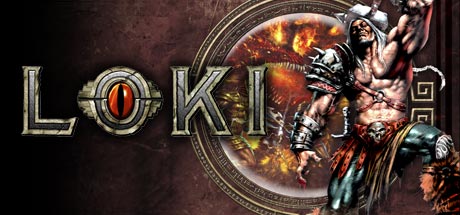
Then there’s Loki, whose premise—“a fantasy voyage through the great mythologies”—mirrors the anime’s own layered cosmology: cults whispering old rites, swords humming with forgotten power, pirates navigating seas where belief bends physics. Both treat mythology not as backdrop, but as breathing terrain. Yet the player review cuts deep: “Ending is also anticlimactic since nothing happens…”—which ironically highlights why The Curse of the Sacred Sword lands so differently. Its emotional payoff isn’t in world-shattering revelation, but in quiet moments: Zoro adjusting his bandana before a duel, Sanji lighting a cigarette mid-battle just to steady his breath, Robin’s rare, soft laugh echoing off temple stones. The anime rejects hollow spectacle—its power lives in presence, not plot resolution.
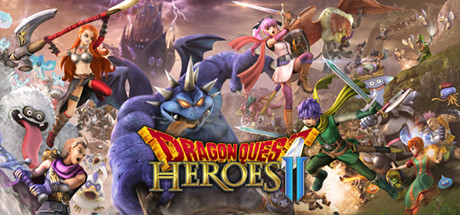
And DRAGON QUEST HEROES™ II, with its “Action Spectacle, JRPG Narrative” dimensions, shares that same generous spirit—where combat isn’t just damage numbers, but choreography rooted in character: a healer’s staff swings with gentle authority, a warrior’s charge carries years of quiet discipline. Like the Straw Hats, its party fights as a unit, not just side-by-side. Their victories feel earned not by gear upgrades alone, but by how well they listen—to each other’s rhythms, their limits, their unspoken promises. That’s the DNA: action that serves affection, not adrenaline alone.
This pairing sings loudest for the viewer who cries during a cooking montage, who replays a dialogue exchange three times just to hear the pause before someone says “I’ll protect you,” who believes a ship’s name matters more than its speed—and who, after finishing a game, doesn’t immediately check achievements, but sits quietly, remembering who they fought beside. Not the hero who wins—but the one who stays.
🎮14 Games That Match the Vibe

Match Dimensions Explained
❓Frequently Asked Questions
Why is Rise of the Argonauts listed as similar to One Piece: The Curse of the Sacred Sword?
Because both lean hard into mythic adventure with cinematic swordplay and a revenge-driven hero journey—Jason’s quest to resurrect his fiancée mirrors Luffy’s urgent, emotionally charged mission to save his crew from the cursed sword’s effects. Like Curse of the Sacred Sword, Rise of the Argonauts features real-time combat with combo-heavy sword strikes, boss fights inspired by Greek legends (like Medusa), and cutscenes where characters react dynamically to plot twists.
Is there a One Piece anime adaptation that plays like The Curse of the Sacred Sword?
No—the anime isn’t playable, and no official One Piece game replicates *exactly* how *Curse of the Sacred Sword* blends over-the-top action spectacle with JRPG-style party banter and pirate-themed setpieces (like fighting Crocodile on a crumbling desert temple). But *DRAGON QUEST HEROES™ II* comes closest: it’s got that same energetic, co-op-friendly hack-and-slash feel, with Zoma-style bosses and cameos from beloved characters—including a very Luffy-esque ‘heroic charge’ mechanic.
How does Loki compare to One Piece: The Curse of the Sacred Sword in terms of combat and story?
Loki’s combat is flashier but less polished—think rapid-fire combos and myth-based special moves (like Thor’s hammer slam), but plagued by crashes and an anticlimactic ending, unlike *Curse*’s tightly paced, character-driven arc with scenes like Luffy vs. Shura atop the sacred shrine. While both tap into folklore, *Curse* nails the One Piece tone—funny, heartfelt, and chaotic—whereas Loki feels more like a glitchy *Diablo* clone with Norse skin.
What’s the best game like One Piece: The Curse of the Sacred Sword if I want that same ‘epic pirate crew vibe’ but with deeper hunting mechanics?
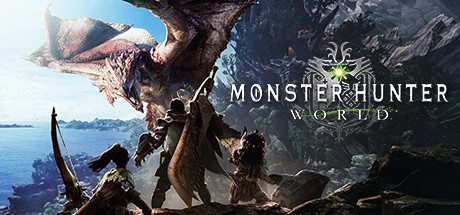
Go with *Monster Hunter: World*—it swaps pirate banter for hunter camaraderie (like your Palico cheering you on mid-fight), and replaces *Curse*’s sword-swinging spectacle with tactical weapon-switching and monster-hunt pacing that still delivers that ‘big adventure’ rush. You’ll get the same thrill of chasing legendary threats across vast, vibrant zones—just swap Shanks’ dramatic entrance for riding atop an Anjanath while blasting a Rathalos out of the sky.