
Otomege Sekai wa Mob ni Kibishii Sekai desu 2
📺Anime Details
📝Editorial Analysis
The cafeteria’s fluorescent lights hum like a dying wasp as Kaito—hair askew, uniform untucked, lunch tray trembling—backs into a pillar while three heroines simultaneously demand his attention: one brandishes a glowing spellbook, another revs a miniature mecha’s turbine with her bare hands, and the third just materialized mid-air, cross-legged, sipping tea like gravity’s a suggestion. A rogue servo-arm from a malfunctioning school maintenance bot clatters down the hallway behind him. No one blinks. Not even the janitor, who’s calmly welding a floating toaster back together with a plasma torch. This isn’t chaos—it’s routine.
What makes Otomege Sekai wa Mob ni Kibishii Sekai desu 2 vibrate at this particular frequency isn’t its isekai setup or harem scaffolding—it’s the exhausted absurdity of existing inside a world that treats emotional labor, magical physics, and military-grade robotics as interchangeable school subjects. You don’t feel awe here. You feel vertigo, then a weird, low-grade euphoria—the kind that comes when your brain stops fighting the premise and starts navigating it like subway transfers. It’s not satire that winks; it’s parody that breathes, where every romantic confession arrives alongside a firmware update notification, and every heartfelt confession is interrupted by a class-wide emergency drill involving sentient vending machines. The tone doesn’t mock the tropes—it lives in their seams, stitching magic spells to mecha schematics with duct tape and sheer bureaucratic inertia.
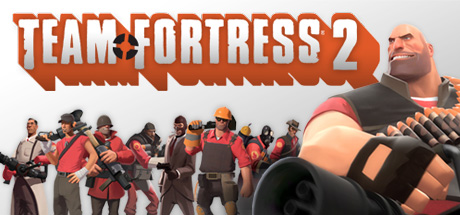
That exact same energy lives in Team Fortress 2. Its description calls out “nine distinct classes” and “constantly updated… hats!”—not weapons, not lore, but hats. The player review? A glorious, contradictory mess: “The community is gay, racist, sexist, gay, artistic, gay, furries, and love men.” That’s not dissonance—it’s layered sincerity. Like Kaito trying to choose between a love confession and recalibrating a destabilizing reactor core, TF2 forces you to hold irreconcilable truths at once: slapstick and strategy, toxicity and tenderness, absurdity and deep tactical investment. Both worlds run on the same unspoken rule: seriousness is optional, but competence is mandatory—even if your ‘tool’ is a flaming baseball bat wielded by a pyro who thinks pigeons are spies.
Then there’s Space Quest™ Collection, described as “a blast from the past with the complete, completely twisted” experience—and the player review nails it: “you could pretty much do anything you , weather or not there were consequences….” (Yes, the typo’s real. So is the feeling.) That ellipsis isn’t laziness—it’s recognition. Like Kaito accidentally summoning a dragon during homeroom because he misread a love letter as a summoning incantation, Space Quest rewards curiosity over correctness. There’s no “right path”—just cause-and-effect so unhinged it loops back into poetry. When Kaito uses a dating sim tutorial to bypass a security drone’s AI (by selecting “Compliment Sensor Array” as dialogue option), it’s pure Space Quest logic: the system’s rules are brittle, hilarious, and yours to reinterpret. Both treat narrative as a sandbox—not for building stories, but for testing how many ways reality can politely implode.
And yes—Otomege Sekai wa Mob ni Kibishii Sekai desu 2 shares DNA with both, not because they’re “funny” or “sci-fi,” but because they weaponize cognitive whiplash as emotional grammar. They trust you to hold multiple registers at once: the tender and the ridiculous, the urgent and the trivial, the heroic and the utterly, gloriously inconsequential.
This pairing isn’t for people who want clean genre boundaries. It’s for the ones who’ve spent hours debating whether a character’s blush is genuine or a side effect of faulty emotion-simulating nanobots. For players who restart a TF2 round just to see if the Heavy’s sandwich will actually distract a Spy mid-backstab. For viewers who pause Otomege Sekai wa Mob ni Kibishii Sekai desu 2 not to catch plot points—but to count how many floating UI elements blink in the background during a kiss scene. It’s for the chronically online, the terminally curious, the ones who find relief in systems so overloaded they stop pretending to make sense—and start making music out of the noise.
🎮2 Games That Match the Vibe

Match Dimensions Explained
❓Frequently Asked Questions
Why does Otomege Sekai wa Mob ni Kibishii Sekai desu 2 match with Team Fortress 2?
Because both lean hard into absurdist, self-aware parody—even though one’s a romantic comedy visual novel and the other’s a chaotic team-based shooter. TF2’s nine wildly over-the-top classes (like the pyro with his flamethrower and mysterious identity) mirror how Otomege 2 satirizes otome tropes by making the 'mob' protagonist constantly misread situations in hilariously disproportionate ways—just like TF2 players misreading enemy intent mid-chaos. The shared 'Comedy & Parody' + 'Mecha & Military Sci-Fi' dimensions explain why fans of Otomege 2’s tone love TF2’s relentless, fourth-wall-breaking humor.
Is there an anime or manga adaptation of Otomege Sekai wa Mob ni Kibishii Sekai desu 2?
No—there’s no official anime, manga, or live-action adaptation yet. Unlike many popular otome titles, Otomege 2 remains exclusively a visual novel, which is part of why its matches skew toward tonally similar but structurally different experiences like Space Quest™ Collection (a retro point-and-click adventure series that also avoids adaptation but nails absurd, consequence-free storytelling). Fans hoping for animation might enjoy how Space Quest lets you ‘pretty much do anything you [want], weather or not there were consequences’—matching Otomege 2’s playful narrative irreverence.
How does Otomege Sekai wa Mob ni Kibishii Sekai desu 2 compare to Space Quest™ Collection?
Both are deeply committed to parodying their genres—Otomege 2 mocks otome clichés (like the 'perfect love interest' trope via characters who treat the mob protagonist as background noise), while Space Quest lampoons sci-fi tropes with slapstick and meta-humor (e.g., Roger Wilco getting vaporized for walking into a wrong door). They share identical dimension scores (54 in Mecha & Military Sci-Fi + Comedy & Parody) and even similar player sentiment: Space Quest’s review mentions ‘consequences… or not,’ echoing how Otomege 2’s choices often loop back to ironic, consequence-defying gags rather than serious branching paths.
What’s the best game like Otomege Sekai wa Mob ni Kibishii Sekai desu 2 if I want something absurd, low-stakes, and full of chaotic charm?
Team Fortress 2 is your perfect match—it’s pure, unfiltered chaotic charm where nothing’s sacred (not even your own class’s dignity), just like Otomege 2’s protagonist stumbling through romance plots he’s utterly unqualified for. You’ll get the same vibe from TF2’s ‘hats’ obsession and community-driven absurdity (‘the community is gay, racist, sexist, gay, artistic, gay, furries, and love men’) mirroring Otomege 2’s tone: relentlessly silly, affectionately mocking, and never taking itself seriously—even during intense moments like the Spy pretending to be a Medic mid-battle.