
Petals of Reincarnation
📺Anime Details
📝Editorial Analysis
The first time he sees his own face in the mirror—not his, but hers, smooth and unfamiliar, framed by hair that wasn’t there yesterday—he doesn’t scream. He blinks. Then he presses two fingers to his throat, feeling the pulse beneath skin that remembers another life’s rhythm. That silence—thick, suspended, vibrating with unspoken violation—is Petals of Reincarnation.
It’s not the spectacle of power or the clash of eras that lingers. It’s the weight of memory as architecture—walls built from fragments you didn’t choose, doors you can’t close, rooms where past selves whisper in dialects your tongue hasn’t relearned. This anime doesn’t trade in nostalgia; it trades in dislocation. Every historical setting feels like a stage set someone else designed, every superpower like borrowed muscle twitching without consent. You don’t root for triumph—you hold your breath waiting for the next fracture in identity, the next moment when “I” becomes grammatically unstable. It’s haunting, yes—but more precisely, it’s unmoored. Not tragic, not heroic—just profoundly, quietly unanchored.
That feeling—the vertigo of time and memory as unstable terrain—finds its echo in BioShock Infinite, where Booker DeWitt walks Columbia not as a man returning home, but as a ghost haunting his own causality. The description names him “indebted,” “hired gun,” “veteran”—labels that stick like burrs, yet crumble under Elizabeth’s gaze. The player review admits the game’s bitterness—not about plot twists, but about what memory refuses to release: “the Bioshock Infinite we could have gotten.” That ache mirrors Petals of Reincarnation’s core tension: not whether the protagonist will reclaim his past, but whether reclamation is even possible when memory is weaponized, edited, or grafted onto another body. Both force you to question whose trauma you’re witnessing—and whether empathy requires continuity, or just proximity to pain.
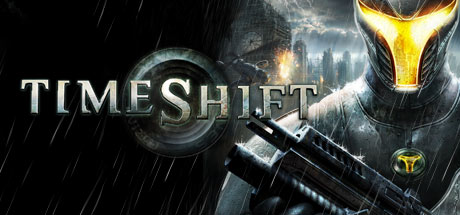
Then there’s TimeShift™, where Dr. Aiden Krone’s “reckless act” births a “disturbing alternate reality.” Not dystopia as backdrop, but as aftermath—a world warped not by ideology or war, but by the physics of self-erasure. The description doesn’t say “he loses himself”; it says the reality changes—and that shift is inseparable from his choice. Like Petals of Reincarnation, this isn’t time travel as adventure. It’s time as contamination. The player review calls it “a blast,” but notes it “takes a little work to get it into a playable state”—a telling aside. The friction isn’t technical; it’s ontological. Just as Petals of Reincarnation forces its protagonist (and viewer) to recalibrate perception mid-scene—gender, era, allegiance—the game demands players relearn how to move through time itself, because the rules are no longer stable. Both treat temporal rupture not as plot device, but as sensory deprivation: you lose the floor before you realize it was never solid.
Even The Last of Us™ Part II Remastered, tagged alongside cyberpunk and tactical warfare, resonates—not through action, but through its dim: Cyberpunk & Dystopia. Not as neon-lit cities, but as psychic infrastructure. The game’s world isn’t ruined by machines—it’s hollowed out by grief so total it rewires morality. That same hollowness pulses through Petals of Reincarnation: the historical settings aren’t backdrops—they’re pressure chambers, each era tightening the vise on identity until gender, name, and even biological certainty become negotiable. The 66-score alignment isn’t about combat systems or lore density. It’s about the shared airlessness of consequence—where every choice lands not with a bang, but with the slow, cold settling of irreversible loss.
This pairing isn’t for fans of “cool powers” or “epic battles.” It’s for the ones who pause mid-episode—not to check Twitter, but to stare at their own reflection, wondering what would happen if that face blinked back with different eyes. For players who replay BioShock Infinite’s final moments not to solve the puzzle, but to sit with the silence after “Would you kindly?” fades. For anyone who’s ever felt their biography slip sideways—and found, not horror, but a strange, aching recognition in the dissonance.
🎮8 Games That Match the Vibe




Match Dimensions Explained
❓Frequently Asked Questions
Why does BioShock Infinite keep showing up in 'Games Like Petals of Reincarnation' lists?
Because both lean hard into fractured timelines and memory-as-plot-device—like when Booker’s baptism scene rewinds reality just like Petals’ reincarnation loops. The shared 'Time & Memory' dimension (plus 'Cyberpunk & Dystopia') makes it a tonal and structural twin, especially with Elizabeth’s tears revealing alternate realities mirroring Petals’ layered past-lives.
Is there an anime or manga adaptation of Petals of Reincarnation?
No official anime or manga exists yet—but if you’re craving that same vibe, TimeShift™ delivers a tight, 4-hour cyberpunk time-jump story with Dr. Aiden Krone warping through distorted realities, complete with glitchy visuals and moral ambiguity that fans of Petals’ existential twists tend to love.
How does The Last of Us Part II Remastered compare to Petals of Reincarnation?
They’re worlds apart tonally—Petals is metaphysical and cyclical, while TLOU2 is grounded, visceral, and relentlessly linear—but both share the 'Cyberpunk & Dystopia' + 'Tactical Warfare' dimensions. Think Ellie’s stealth takedowns in Seattle’s ruined streets versus Petals’ quiet, intimate confrontations across lifetimes: same oppressive weight, different weapons.
What’s the best game like Petals of Reincarnation if I want something melancholic but hopeful, not gritty or violent?
BioShock Infinite—especially its quieter moments like walking with Elizabeth through Columbia’s sun-dappled gardens or hearing her hum while solving tear-based puzzles—hits that bittersweet, lyrical tone. It’s got the same emotional weight and time-bending poignancy as Petals, just wrapped in sky-island grandeur instead of ink-washed stillness.