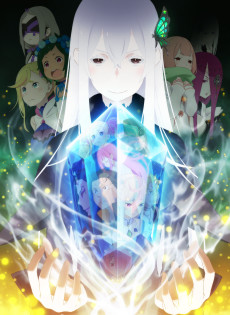
Re:ZERO -Starting Life in Another World- Season 2
Even after dying countless times, Subaru finally ended the threat of the White Whale and defeated the Witch Cult's Sin Archbishop representing sloth, Petelgeuse Romaneeconti. But only shortly after overcoming a tragic ending and reuniting with his beloved Emilia, Subaru learns that Rem has been erased from this world, having fallen victim to the White Whale's Fog of Elimination in the midst of Subaru's death loop. With the White Whale now gone, Subaru and Emilia are forced to confront a reality they never dreamed would happen.
(Source: Crunchyroll)
📺Anime Details
📝Editorial Analysis
The silence after Rem’s name vanishes from Emilia’s lips—that silence. Not the roar of the White Whale’s Fog, not the crackle of Petelgeuse’s illusions snapping under Subaru’s resolve, but the hollow, suffocating quiet when Emilia blinks, tilts her head, and asks, “Who is Rem?” Her voice isn’t cruel or confused—it’s clean, unburdened, empty. That moment doesn’t land like a punch. It lands like gravity failing: your stomach drops, your breath catches, and the world doesn’t shatter—it just… stops holding you up.
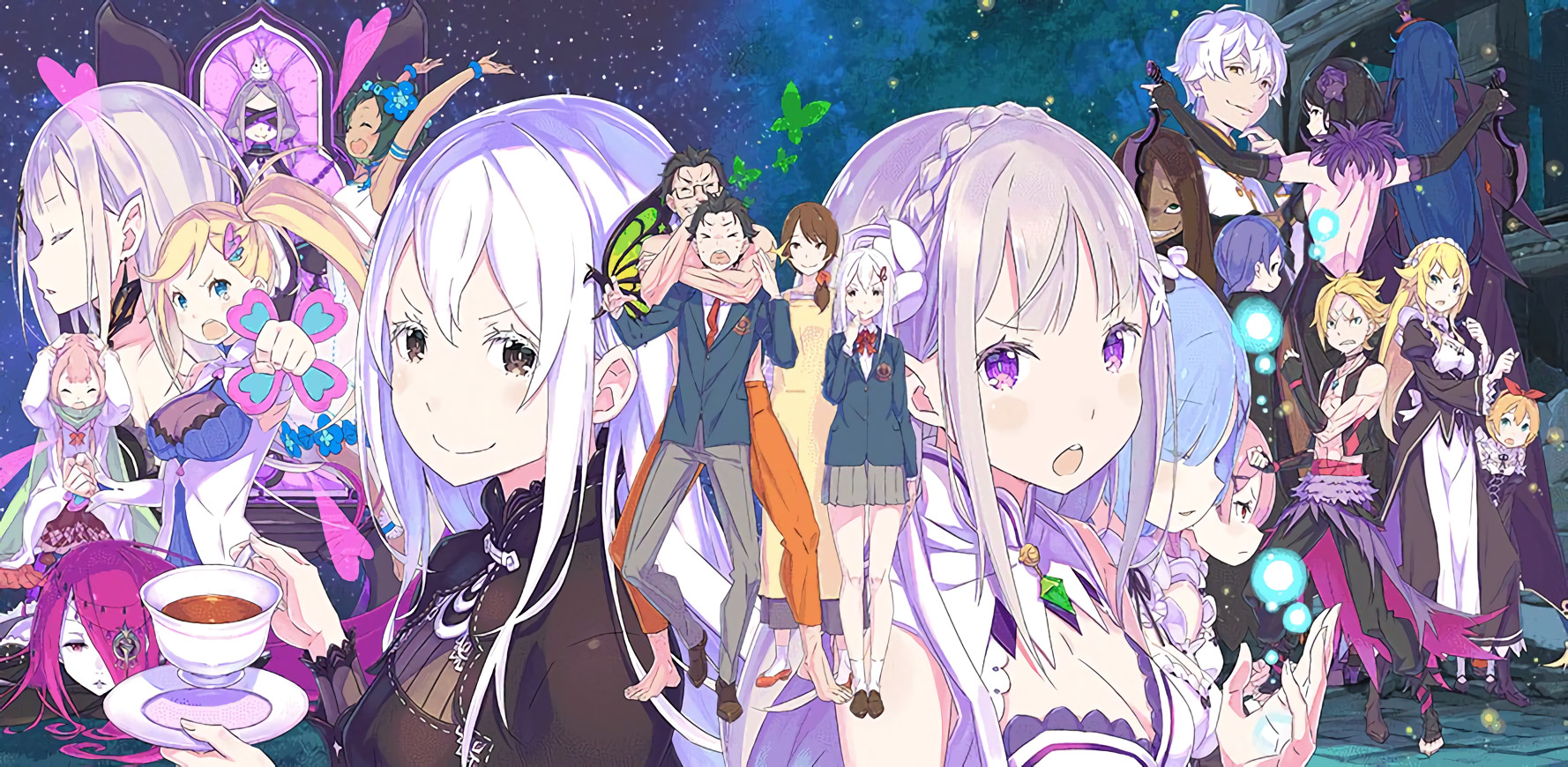
What makes Re:ZERO -Starting Life in Another World- Season 2 ache so deeply isn’t its time loops or its witches—it’s how relentlessly it withholds. It withholds memory, withholding safety; it withholds recognition, withholding belonging; it withholds continuity, withholding identity. You don’t watch Subaru relive trauma—you inhabit the erosion of his certainty, second by second. The atmosphere isn’t dark fantasy as spectacle—it’s dark fantasy as residue: the lingering smell of burnt incense after a failed ritual, the chill in a sunlit hallway where someone should be standing, the way a character’s smile stays just half-a-beat too long because their brain hasn’t caught up to the horror their mouth just spoke. It makes you question not just what happened—but whether you remember correctly, whether your grief is real if no one else feels it, whether love persists when its object has been unwritten.
That emotional DNA pulses strongest in two games that share its grim, narrative-weighted architecture—games where consequence isn’t abstract, but textural, where loss isn’t a checkpoint, but a permanent scar on the world-state. Disciples II: Gallean's Return, described as a compilation including Disciples II: Dark Prophecy plus expansions Guardians of the Light and Disciples, earns its praise for “awesome atmosphere and gameplay!”—and that atmosphere isn’t built on flashy spells or overworld maps. It’s built on the weight of fallen banners, the slow decay of morale across campaigns, the way units you’ve named and leveled vanish from your roster—not just in battle, but from your campaign log—because the game remembers their death as erasure, not reset. A player review calls it “Best Disciples ever”—not for polish, but for integrity: every choice corrodes or fortifies something irreplaceable, just like Subaru’s loop doesn’t reset the world—it resets his burden, heavier each time.
Then there’s Disciples III: Reincarnation, explicitly framed as a “revamped and enhanced version of Disciples III: Renaissance” with the addon “Resurrection” and “all new features, a revised battle system.” Its player review is damning—“DO NOT BUY. Games will not save on systems with Windows 10 or 11. The file path it looks for no longer exists…”—but that brokenness mirrors Season 2’s core tension: a system designed to preserve continuity, now fundamentally incompatible with the world it’s meant to run in. Like Subaru trying to navigate a reality where Rem’s existence was deleted from the source code, the game fails not from poor design, but from ontological mismatch—a world that refuses to hold its own memory. The glitch isn’t a bug. It’s the feeling of reaching for a hand that’s no longer there—and finding only static where warmth used to be.
These pairings aren’t for players who want power fantasies or clean catharsis. They’re for the ones who replay a boss fight not to win faster, but to relearn the rhythm of their own despair. For viewers who pause mid-episode—not to check Twitter, but to stare at the floor, wondering how long they’d last before breaking under the weight of a single erased name. For people who don’t flinch at tragedy, but lean in when the story asks, “What do you keep when everything else is taken—not stolen, not hidden, but unmade?” That is the shared pulse: the quiet, grinding horror of irreversibility, the fragile, defiant warmth of choosing to care anyway. Not hope as light—but hope as tremor, as refusal to stop breathing, as the act of saying a name aloud into a room that no longer answers.
🎮2 Games That Match the Vibe
Match Dimensions Explained
❓Frequently Asked Questions
Why does Disciples II: Gallean's Return feel so much like Re:ZERO Season 2’s darker tone?
Because its grim worldbuilding—like the despair-soaked siege of Vidian Keep and Gallean’s tragic, morally ambiguous arc—mirrors Season 2’s psychological weight and themes of sacrifice. The turn-based tactical combat forces tough choices under pressure, just like Subaru’s repeated, high-stakes gambits in the Sanctuary arc.
Is there a Re:ZERO Season 2 visual novel or RPG adaptation?
No—there’s no official Re:ZERO Season 2 game adaptation. Fans looking for that intense narrative pacing and emotional gut-punches turn to Disciples II: Gallean's Return instead, which nails the dark fantasy JRPG storytelling vibe with its layered character arcs and oppressive, consequence-heavy world.
Disciples II vs Disciples III: which one actually captures Re:ZERO Season 2’s vibe better?
Disciples II: Gallean's Return wins hands-down—it’s got the atmospheric cohesion, melancholic score, and morally gray storytelling that echo Rem’s quiet devotion and Subaru’s breaking point in the Sanctuary. Disciples III: Reincarnation, while updated, suffers from broken saves on modern Windows and lacks the same tonal consistency; reviewers even call it 'unplayable' on current systems.
What’s the best game like Re:ZERO Season 2 if I want that ‘trapped-in-a-loop-but-losing-every-time’ tension?
Disciples II: Gallean's Return—it’s built on iterative, consequence-driven campaigns where you replay battles with adjusted tactics after devastating losses, just like Subaru’s Trial of the Sanctuary. Every failed assault on the Shadow Citadel or botched negotiation with the Dark Elves echoes that crushing, learn-from-failure rhythm fans love.