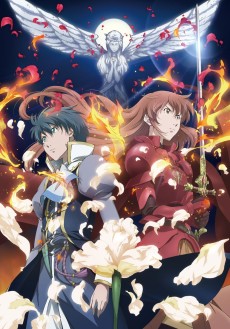
Romeo x Juliet
In the floating continent of Neo Verona, the Montague family seized control and murdered every member of the Capulet family with the exception of Capulet's daughter, Juliet Fiammata Asto Capulet. 14 years later, Juliet and the remnants of Capulet's retainers live hidden from the iron fist of the Montague family. Juliet has long forgotten the murder of her family or her identity, and cross dresses as Odin and the town's hero of justice, "Red Whirlwind". A sudden escape in her daily escapades leads her to meet Romeo Candorebanto Montague, the kind son of the tyrannical Montague. Destiny has been set as these two individuals soon to be "star-crossed lovers" are cruelly toyed with by fate in the midst of war. Loosely based on the play by William Shakespeare.
📺Anime Details
📝Editorial Analysis
The wind whips Juliet’s crimson scarf as she leaps from the crumbling clocktower balcony—boots skidding on rain-slicked stone, sword drawn, breath sharp with the metallic tang of fear and resolve. Below, Neo Verona floats suspended in bruised twilight, its gilded spires glinting like false promises over a city built on blood-soaked levitation crystals. She doesn’t land as Juliet. She lands as Odin—a name carved into the city’s whispered legends, a boy-hero who strikes from shadows, whose laughter is rare and whose silence carries the weight of a buried dynasty. In that suspended second mid-air, gravity feels optional—but grief isn’t. It’s there, coiled tight beneath the cross-dressing, the swordplay, the kuudere stillness: not just loss, but erasure, enforced and daily.

That’s what Romeo x Juliet makes you feel—not tragedy as spectacle, but tragedy as atmosphere. It’s the quiet dread of walking past a mural of Montague heraldry while your own family crest burns unseen inside your chest. It’s the political exhaustion of living under surveillance disguised as order, where justice is performance and loyalty is measured in withheld names. The floating continent isn’t whimsy—it’s pressure: every inch of sky a reminder that stability is artificial, fragile, and violently maintained. You don’t just watch Juliet navigate romance—you watch her relearn how to breathe as a girl in a world that punished her gender with genocide, then demanded she vanish it entirely to survive. Her stoicism isn’t coldness—it’s armor, forged in the 14 years she spent forgetting her own face.
Which is why Disco Elysium - The Final Cut resonates so fiercely—not because it’s about star-crossed lovers, but because it shares that same suffocating political gravity. Its description calls it a “Political Thriller, Emotional Narrative,” and the player review nails the core ache: “Capital has the ability to subsume all critiques into itself. Even those who would critique capital end up reinforcing it instead.” That’s Neo Verona in a sentence—the Montagues didn’t just win; they rewrote reality so thoroughly that dissent risks becoming complicity. Like Juliet pretending to be Odin, the detective in Disco Elysium must negotiate systems so totalizing they colonize his own thoughts. His skill checks aren’t dice rolls—they’re internal civil wars, echoing Juliet’s silent reckonings when she chooses not to reveal herself, not to strike, not to remember—each restraint a tiny surrender to the architecture of power.
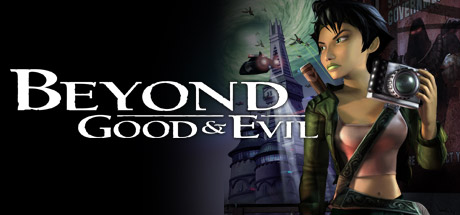
Then there’s Beyond Good and Evil™, also tagged “Political Thriller, Emotional Narrative,” where you play Jade—a young investigative reporter exposing “a terrible government conspiracy” alongside her loyal pig friend Pey’j. The player review shouts “Crazyyy game!”, but what’s electric isn’t just the energy—it’s the embodied resistance: Jade isn’t a noble exile hiding in plain sight; she’s a journalist with a camera, a comms device, and a moral compass calibrated to truth in a world actively erasing it. Like Juliet’s Red Whirlwind persona, Jade’s heroism lives in the margins—in stolen footage, in coded messages, in the stubborn act of witnessing. Both women operate under assumed roles (reporter / boy-hero), both weaponize perception, and both carry trauma that doesn’t scream—it settles, like dust in Neo Verona’s lower districts or the static hum beneath Jade’s satellite feed.
These aren’t pairings of genre—they’re echoes of emotional syntax. They share the same grammar of resistance as quiet endurance, of love blooming not despite oppression but within its cracks, of identity as something you guard, perform, and slowly, painfully, reclaim.
You’d love this pairing if you’ve ever paused a scene—not to admire the animation, but to sit with the weight behind a character’s blink. If you’ve replayed a dialogue tree in Disco Elysium not to optimize stats, but to hear how differently grief sounds when spoken by a different skill voice. If you’ve watched Juliet adjust her collar after a fight—not to hide sweat, but to re-anchor herself in a body that’s been both shield and disguise. This is for people who feel politics in their ribs, who know romance can be revolutionary, and who understand that the most devastating swordplay isn’t flashy—it’s the moment a girl finally lets her hand tremble, just once, holding the hilt of a name she’s forbidden to speak.
🎮5 Games That Match the Vibe

Match Dimensions Explained
❓Frequently Asked Questions
Why is Disco Elysium compared to Romeo x Juliet despite having no romance plot?
It’s all about the tragic, emotionally raw character arcs and political tension—like when Romeo defies House Capulet’s authority, Disco Elysium’s detective constantly rebels against the oppressive structures of Martinaise (think: the corrupt Harbour Commission or the fascist Whitecliff faction). The game’s ‘Emotional Narrative’ dimension mirrors Juliet’s inner conflict and Romeo’s self-destructive idealism, especially in scenes where your skill checks literally argue with you—like ‘Logic’ vs. ‘Empathy’ echoing the Nurse’s pragmatism versus Friar Laurence’s risky hope.
Is there a Romeo and Juliet video game adaptation with voice acting and modern mechanics?
No official, well-reviewed Romeo & Juliet game exists—but Beyond Good and Evil™ nails the *vibe*: Jade’s quiet defiance against authoritarian control (like Juliet rejecting her father’s marriage decree) and her deep bond with Pey’j mirror the loyalty and intimacy of the star-crossed lovers. Its 20th Anniversary Edition adds full voice acting, smooth controls, and cinematic cutscenes—especially that gut-punch moment when Jade uncovers the propaganda machine hiding behind the ‘Alpha Section’—very much like the Montagues and Capulets masking violence with tradition.
Disco Elysium vs. Beyond Good and Evil: which one captures the 'secret love in a divided world' feeling better?
Beyond Good and Evil wins for that specific vibe—Jade and Pey’j’s unshakeable trust unfolds amid a planet torn by occupation and surveillance, just like Romeo and Juliet’s whispered balcony scene happens under watchful, hostile eyes. Disco Elysium leans harder into internal fragmentation (your own mind is the warring house), while BG&E externalizes the division: the DomZ invasion, the government lies, and even the visual contrast between the sun-drenched coastal town and the shadowy underground resistance—all echoing Verona’s claustrophobic, faction-ridden streets.
What’s the best game like Romeo x Juliet if I want melancholy beauty and political weight—not action?
Disco Elysium – The Final Cut is your answer. Forget swordfights—it’s all slow-burn sorrow and systemic critique: imagine Juliet’s soliloquy reimagined as your ‘Volition’ skill failing mid-thought, or the Capulet orchard as the rain-slicked alleys of Martinaise where every NPC carries grief like a second skin. Its 72-score ‘Political Thriller’ and ‘Emotional Narrative’ dimensions hit the same notes as Shakespeare’s tragedy—just swapped for detective noir, bad coffee, and a city that feels as doomed—and tender—as Verona.