
Sasaki and Miyano
Miyano spends his days reading Boys’ Love manga and worrying about the soft features of his face. His world of fiction becomes reality when a chance encounter leads him to high school senior Sasaki in the middle of a fight. Now, Sasaki wants to spend every opportunity he can to get to know Miyano. And what was once admiration quickly turns into affection.
(Source: Funimation)
📺Anime Details
📝Editorial Analysis
The quiet rustle of a manga page turning in a sunlit classroom—Miyano’s fingers pausing mid-flip, breath catching as Sasaki leans over his shoulder, not to tease, but to see. Not the art, not the plot—but him, caught mid-expression: soft-eyed, flustered, utterly real. That suspended second—where fiction blurs into flesh, where admiration isn’t performative but tenderly attentive—is the heartbeat of Sasaki and Miyano.

This isn’t just romance-as-plot-device. It’s the warmth of proximity—the way time slows when someone remembers how you take your tea, or how you always tuck your pen behind your ear before class starts. It’s shyness that feels sacred, not awkward; blushing that reads like quiet revelation, not embarrassment. The show makes you lean in, not because something dramatic is about to happen, but because you’re suddenly hyper-aware of how much meaning lives in a glance held half-a-second too long, in the weight of a shared silence that hums instead of presses. It treats adolescence not as a storm to survive, but as a slow, sun-dappled unfolding—where identity, desire, and self-consciousness bloom in tandem, gently, without spectacle.
That emotional DNA—intimate, unhurried, affectionately meta—finds unexpected echoes in games that prioritize presence over propulsion. Take Prince of Persia (score: 83, dims: Romance & Shoujo, Comedy & Parody). Its description calls it “an all-new epic journey” with “a new prince, new lands and a brand new story”—but crucially, it’s built by Ubisoft Montreal, the same studio known for weaving lyrical, character-rooted moments into high-stakes action. The player review notes it’s “the 3rd reboot… completely separate from the sands…”—and that separateness mirrors Sasaki and Miyano’s own quiet rebellion: both reject inherited expectations (of franchise legacy, of rigid masculinity) to center something softer, more personal. Neither shouts its tenderness—it embodies it in gesture, in pacing, in the way a hand reaches out not to grab, but to steady.
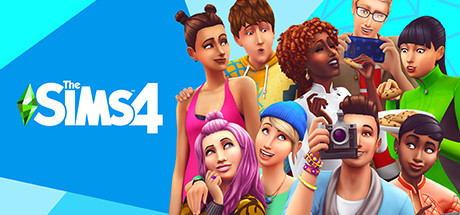
Then there’s The Sims™ 4 (score: 82, dims: Romance & Shoujo, Comedy & Parody). Its description invites you to “Play with life and discover the possibilities… customize every detail from Sims to homes.” That’s the core resonance: the deliberate, loving curation of small-scale reality. Just as Miyano sketches Sasaki’s profile in his notebook—not for an audience, but to know him better—players in TS4 build relationships through mundane rituals: cooking together, sharing jokes on the couch, choosing outfits that feel true. The bitterness in the player review (“TS4 has become awful… packs are insanely expensive… no fun without DLC”) only underscores what the base game does preserve: the unscripted, low-stakes joy of watching two characters sit side-by-side on a park bench, saying nothing, and feeling enough. That’s the same quiet fullness Sasaki and Miyano delivers—not through grand confessions, but through shared earbuds and hesitant hand brushes.
Even Disco Elysium - The Final Cut (score: 65, dims: Romance & Shoujo, Comedy & Parody) resonates—not in tone, but in texture. Its description positions it as “a groundbreaking role playing game” where you “interrogate unforgettable” characters across “a whole city.” And the player review quotes a line about capital subsuming critique—yet beneath that intellectual density lies something tender: the game’s romance options aren’t power fantasies, but vulnerabilities. Choosing to trust, to confess, to be seen by someone who knows your fractures—that’s the same emotional risk Miyano takes when he finally admits, voice barely above a whisper, that he likes Sasaki’s laugh. Both works treat love not as conquest, but as radical honesty in motion.
This pairing sings to the viewer who cries at grocery lists written in shared notebooks, who replays a 3-second hallway exchange for days, who finds profundity in the way light catches dust motes while two boys walk home together—quiet, real, unhurried. They’re for anyone who’s ever loved something so softly, they were afraid to name it—until the world, gently, handed them permission to.
🎮3 Games That Match the Vibe

Match Dimensions Explained
❓Frequently Asked Questions
Why does Prince of Persia keep showing up in 'games like Sasaki and Miyano' lists?
Because its 'Romance & Shoujo' + 'Comedy & Parody' dimension alignment matches Sasaki and Miyano’s tender, character-driven banter—like the Prince’s flustered yet earnest interactions with Zahra mirroring Sasaki’s nervous confessions to Miyano. Plus, Ubisoft Montreal’s light, stylized tone (not gritty realism) echoes the anime’s warm, slice-of-life pacing.
Is there a visual novel adaptation of Sasaki and Miyano?
No official visual novel exists—but The Sims™ 4 nails the *vibe* of building quiet, meaningful relationships through daily choices: think recreating Sasaki and Miyano’s rooftop lunches or library study sessions using custom outfits and relationship-building socials. Its 82-scored Romance & Shoujo dimension makes it the closest interactive stand-in we’ve got.
How does Thrillville: Off the Rails compare to The Sims 4 for Sasaki and Miyano fans?
Thrillville leans into playful, over-the-top camaraderie—like Miyano teasing Sasaki during chaotic group outings—while TS4 offers deeper, quieter intimacy (e.g., crafting private moments between two Sims). Both hit the 'Romance & Shoujo' + 'Comedy & Parody' dims, but Thrillville’s 20 death-defying rides and goofy park management feel more like the anime’s lighthearted class trips than TS4’s nuanced emotional scripting.
What’s the best game like Sasaki and Miyano if I just want that soft, hopeful, low-stakes romance vibe?
Go straight to Prince of Persia—it’s surprisingly perfect. Forget the acrobatics; focus on how the Prince and Zahra’s slow-burn trust unfolds through gentle dialogue, shared glances, and small protective gestures (like him shielding her from sandstorms), all wrapped in warm, painterly visuals—very much like Sasaki nervously holding Miyano’s hand after practice ends.