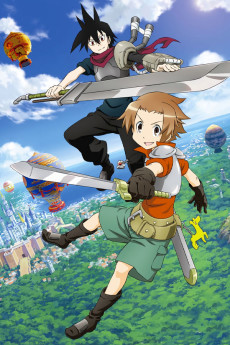
Senyuu
Long ago, there lived an evil being who reigned over the world through fear, called Satan Rchimedes. He invaded the human world with his many demon underlings, spreading madness and chaos everywhere. One thousand years ago, this menace was sealed by the hero Creation, and peace returned to the world.
Then, one day, a great hole suddenly appeared on the surface of the world, and a vast number of demons appeared. The king discerned that the menace Satan had returned after being sealed away for a thousand years, and decided to send the hero's descendants to battle him. He found 75 men. As one thousand years had passed, you see, it was difficult to tell who the hero's descendants were.
So the king declared that he would grant the title of "true hero" and great fortune to the one who defeated Satan, and ordered the new hero, Alba, and his warrior attendant, Ross, on a quest to bring down the evil Satan.
Though he struggles with lesser monsters and is even nearly killed by his partner Ross, Alba's quest to polish his fighting skills leads him to new places and new meetings that he had never expected. Battles, laughter, and emotional moments enhance this adventure tale of an incompetent hero and a sadistic warrior!
(Source: Crunchyroll)
📺Anime Details
📝Editorial Analysis
The air smells like burnt toast and cheap incense. A demon with a lopsided grin and mismatched socks kicks open the temple gate—not with malice, but because he forgot he was supposed to sneak in, and now he’s mid-apology, gesturing wildly at his own tail while the “hero” stares blankly, chewing on a convenience-store onigiri. No music swells. No dramatic pause. Just the thunk of a dropped rice ball hitting stone—and then someone yells, “Dude, your shapeshift’s glitching again!” That’s Senyuu. Not the battle. Not the lore. The aftermath, the off-rhythm, the shared shrug between chaos and competence.

What makes it breathe isn’t parody for parody’s sake—it’s the exhaustion of myth-making, the quiet hilarity of heroes who remember their training manuals were written by delinquents and edited by demons with ADHD. You don’t feel triumphant watching Senyuu—you feel recognized. Recognized in the way you’ve ever fumbled a serious moment, or tried to sound wise while holding a juice box, or nodded along to world-ending stakes while mentally calculating lunch options. It’s surreal not because logic is broken, but because logic keeps getting politely interrupted—by a talking frog who runs a black-market potion stand, by a magic spell that only works if you sneeze first, by the sheer, unrelenting humanity of people who’ve been handed cosmic roles but still argue about whose turn it is to clean the guild basement. It’s warm. It’s tired. It’s deeply, stubbornly kind beneath the absurdity.
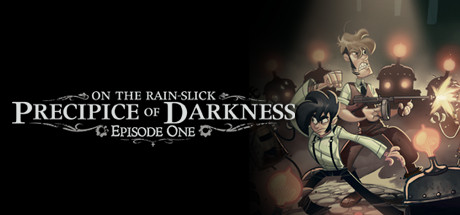
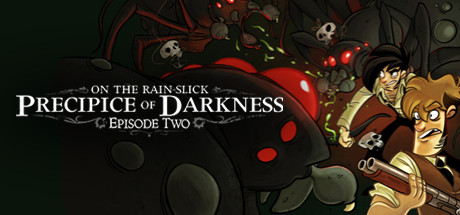
That same warmth-and-chaos resonance lives unmistakably in Precipice of Darkness, Episode One and Precipice of Darkness, Episode Two. Both games wear their JRPG bones like thrift-store jackets—slightly too big, sleeves rolled up, one button missing—but they’re alive with the same kind of self-aware, affectionate disarray. Look at the description: “Create your character in the classic comic style”—not hyper-real, not anime-polished, but drawn, immediate, expressive in its imperfection. That mirrors Senyuu’s visual looseness, where a demon’s transformation might smear across three frames like wet ink, or a spell effect looks suspiciously like a doodle someone added during a staff meeting. And the player review nails it: “Fun as hell, especially if you enjoy the Penny Arcade style of humor… though you don’t need to know much about the comics since this is an AU.” That AU—that deliberate, loving detachment from canon—is pure Senyuu DNA. Satan Rchimedes isn’t the devil—he’s a guy who got really into villain branding a thousand years ago and never updated his LinkedIn. Likewise, the Precipice games treat apocalypse like a poorly scheduled group project: urgent, slightly bureaucratic, and constantly derailed by snack breaks and input lag. Which brings us to the second review’s wry observation: “the special attack minigame seems to have some input delay because I swear I am pressing the buttons at the right time…” That frustrated affection—the player laughing with the game’s wonkiness, not at it—is the exact feeling Senyuu cultivates when a hero’s ultimate technique fails because his cape got caught in a ceiling fan. It’s not broken—it’s character. It’s texture. It’s the difference between spectacle and shared breath.
This pairing isn’t for the lore-hound who cross-references timelines, nor the speedrunner chasing frame-perfect combos. It’s for the person who rewatched the third episode of Senyuu just to hear that one line where the demon lieutenant sighs, “I brought snacks. Do we have to fight now?”—and who, five minutes into Precipice of Darkness, Episode Two, paused the game to text a friend: “Okay but what if the ‘Rain-Slick’ is just the puddle outside the 7-Eleven where the final boss keeps losing his keys?” It’s for the viewer who finds catharsis not in victory, but in the relief of being allowed to be messy, inconsistent, half-prepared—and still enough. They’re the ones who laugh when the world ends, not because it’s trivial, but because they know how many terrible coffee machines exist between here and doomsday—and how deeply funny it is that we keep refilling the pot anyway.
🎮7 Games That Match the Vibe

Match Dimensions Explained
❓Frequently Asked Questions
Why is Precipice of Darkness listed as similar to Senyuu?
Because both lean hard into absurdist, fourth-wall-breaking comedy with RPG mechanics—like Senyuu’s over-the-top dungeon crawls and anime parody, Precipice of Darkness drops you into a surreal noir-JRPG world where your character literally argues with the narrator mid-battle. The Penny Arcade-style gags (e.g., fighting a sentient toaster while your party bickers about loot distribution) mirror Senyuu’s chaotic energy, especially in scenes like the ‘Doomsday Minigame’ in Episode Two where timing-based special attacks devolve into slapstick.
Is there an anime or manga adaptation of Precipice of Darkness like Senyuu has?
No—unlike Senyuu, which got a full anime series and manga spin-offs, Precipice of Darkness stays strictly a game series based on the Penny Arcade webcomic. There’s no official anime, no light novel, and no manga adaptation—just the two episodic RPGs (Episode One and Episode Two), both built around interactive storytelling and comic-panel cutscenes rather than serialized media expansion.
Precipice of Darkness vs. Senyuu: which has better party banter and comedic timing?
Senyuu wins on pure anime-style rapid-fire group chemistry (think Moe’s deadpan sarcasm clashing with Shiro’s oblivious heroics in the Labyrinth of Lament), but Precipice of Darkness nails dry, meta, script-reading humor—like when your party interrupts a boss intro by debating whether the villain’s monologue violates union rules. Both use dialogue as core gameplay, but Precipice leans into written wit; Senyuu rides vocal delivery and visual gags.
What’s the best game like Senyuu if I just want something silly and stress-free to play after work?
Go straight to Precipice of Darkness, Episode One—it’s short (4–6 hours), has zero grinding, and serves up laugh-out-loud absurdity from minute one (e.g., recruiting a depressed ghost who refuses to haunt unless you sign his HR waiver). The turn-based combat is forgiving, the jokes land fast, and unlike Senyuu’s occasional harem-tropes, it keeps things purely parody-focused—no emotional labor required.