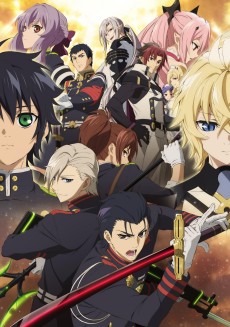
Seraph of the End: Battle in Nagoya
Yuuichirou has reunited with Mikaela at the Shinjuku Battle. But Mikaela was turned into a vampire... To save the "family," and to protect his fellow members, Yuuichirou needed to gain knowledge and power. He searched for ways to bring back vampire to human beings, and at the same time, trained hard working on the Cursed Gear.
Meanwhile, Kureto calls Guren and tells him a shocking truth. That in one month, the main unit of the vampire will start attacking Tokyo. To get a head start against vampires, Kureto orders Guren to go to Nagoya. The noble extermination mission is about to open fire!
(Source: Official website)
📺Anime Details
📝Editorial Analysis
The air in Nagoya tastes like burnt iron and rain-slicked concrete—Yuuichirou’s knuckles split open on the hilt of his Cursed Gear as he braces against Mikaela’s vampiric speed, not with hatred, but with grief so sharp it vibrates in the silence between heartbeats. That moment isn’t about winning. It’s about standing still while everything you loved becomes the weapon pointed at your chest.
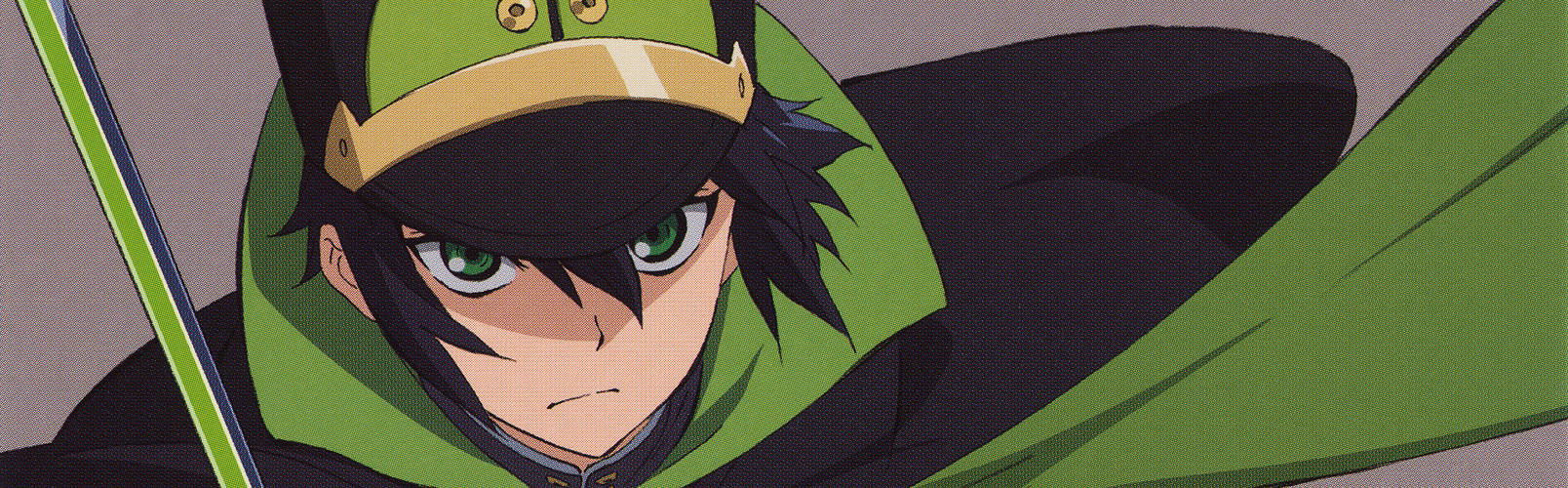
This isn’t just post-apocalyptic—it’s post-familial. The world didn’t end with a bang or a plague; it ended when the people you swore to protect stopped breathing the same air as you. Every military briefing, every whispered conspiracy about lost civilizations, every vampire noble’s cold gaze—they all orbit one unbearable gravity: the collapse of belonging. You don’t feel heroic here. You feel tethered: to memory, to duty, to the unbearable weight of choosing who lives when survival demands sacrifice. There’s no clean line between human and monster—only the slow, grinding erosion of what “family” means when blood is both weapon and wound.
That emotional DNA pulses strongest in Assassin's Creed™: Director's Cut Edition. Its description calls it a Political Thriller, Dark Fantasy, Tactical Warfare—three dimensions that map directly onto Nagoya’s fractured reality. Like Yuuichirou decoding vampire hierarchies while training under Guren’s brutal discipline, Altaïr moves through Jerusalem not just as a killer, but as an intelligence operative parsing layered conspiracies where faith, empire, and forbidden knowledge bleed into one another. A player review notes the dated models—but that grit, that analog texture, mirrors the anime’s aesthetic: no sleek CGI gloss, just sweat-streaked faces, frayed uniforms, and the tactile exhaustion of fighting wars you didn’t choose. The thrill isn’t in victory—it’s in understanding, in seeing how power hides behind scripture and strategy alike.
Then there’s Act of War: Direct Action, tagged Political Thriller, Tactical Warfare, described as “a frightening tale of suspense, international intrigue and geopolitical military conflict.” Its real-time strategy framework forces players to weigh logistics against loyalty—fuel lines, troop morale, intercepted comms—just as Yuuichirou weighs Mikaela’s humanity against Tokyo’s imminent siege. The player review admits the dialogue is “dumb and a bit cringe,” yet calls it “like C&C 3”—which lands exactly: both the anime and the game thrive in the liminal space where tactical clarity clashes with moral static. When Kureto delivers that one-month ultimatum to Guren, it doesn’t land like a villain monologue—it lands like a mission brief: cold, urgent, stripped of flourish, demanding immediate recalibration of every prior assumption.
Neither game offers catharsis. Neither anime does either. What binds them is the relentless pressure of operating inside collapsing systems—military, political, biological—where every choice leaks consequence, and every truth uncovered only deepens the shadow it casts.
This pairing sings for the viewer who watches battle scenes not for spectacle, but for the tremor in a character’s hand before they pull the trigger; for the player who replays a mission not to optimize DPS, but to trace how a single intel drop rewires the entire chain of command. It’s for the person who keeps a notebook of faction timelines, who pauses mid-episode to sketch vampire bloodline trees, who saves game files named after real-world treaties—and feels seen, not by grand destiny, but by the quiet, grinding fidelity of consequence. They don’t want heroes. They want witnesses—armed, exhausted, and still choosing, again and again, what to carry forward from the ruins.
🎮4 Games That Match the Vibe

Match Dimensions Explained
❓Frequently Asked Questions
Why does Seraph of the End: Battle in Nagoya feel so much like Assassin's Creed’s rooftop chases and political intrigue?
Because both lean hard into Political Thriller + Dark Fantasy vibes — think Mika getting ambushed in Nagoya’s ruined train station while dodging vampire assassins, mirroring Altaïr’s tense parkour escapes across Damascus rooftops and his tangled web of Templar conspiracies. Assassin's Creed™: Director's Cut Edition (score 82) nails that same blend of stealthy vertical combat, morally grey factions, and oppressive world-building.
Is there a Seraph of the End anime or game adaptation that actually captures the Nagoya arc’s tactical squad combat?
No official anime or game adapts *only* the Nagoya arc — but Act of War: Direct Action (score 55) comes closest in feel: real-time command of small elite units during urban warfare, like when Yuu commands the 13th Platoon through collapsed office buildings while fending off vampire squads. It’s not anime-styled, but its Tactical Warfare DNA and geopolitical tension match the arc’s desperate, grounded stakes.
How does Assassin's Creed compare to Act of War for someone who loved Seraph’s mix of personal drama and large-scale military collapse?
Assassin's Creed™ digs deeper into intimate betrayal and ideological conflict — like Guren’s loyalty crisis echoing Altaïr’s fall from grace — with strong Dark Fantasy texture (e.g., cursed artifacts, shadowy cults). Act of War trades that for blunt-force Tactical Warfare: think C&C-style mission briefings and squad micromanagement during Nagoya-level chaos, but zero fantasy elements. If you want mood *and* mythos, go AC; if you want gritty, boots-on-the-ground RTS tension, Act of War delivers.
What’s the best game like Seraph of the End: Battle in Nagoya if I’m craving that grim, rain-soaked Nagoya vibe — tense, political, and claustrophobic?
Assassin's Creed™: Director's Cut Edition is your top pick — its narrow alleyways of Jerusalem, flickering torchlight, and constant surveillance by Templar patrols nail that same suffocating, rain-slicked dread as Nagoya’s flooded subway tunnels and Mika’s last stand near the shattered JR station. With an 82 score and strong Political Thriller + Dark Fantasy dimensions, it’s the only match that truly *feels* like walking through that arc’s atmosphere.