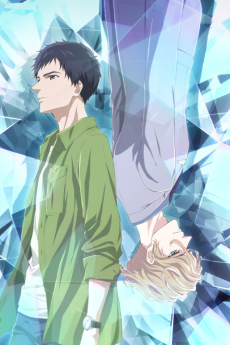
The Case Files of Jeweler Richard
📺Anime Details
📝Editorial Analysis
The quiet clink of a diamond being set into a platinum band—just that single sound, held for three seconds while Richard’s gloved fingers steady the tweezers, his breath barely stirring the dust motes in the afternoon light slanting through the shop window. No music. No dialogue. Just the weight of intention, the precision of care, and the unspoken history humming inside the stone.
That’s the heart of The Case Files of Jeweler Richard: not mystery as puzzle, but mystery as reverence. It’s the feeling of holding something fragile—memory, identity, desire—and choosing to honor it with meticulous attention. This isn’t urgency or spectacle. It’s the slow, deliberate warmth of a shared cup of tea after a confession; the hush before a client traces the engraving on a ring they haven’t worn in twelve years; the way Richard listens—not to solve, but to witness. You don’t walk away from an episode thinking “What happened?” You walk away thinking What did it mean to be seen like that? It makes you feel tender, attentive, quietly responsible—like every human story is a gem cut from flawed, luminous material, and every act of understanding is a kind of setting.
Which is why Prince of Persia lands with such uncanny resonance. Its description calls it “an all-new epic journey” built on “melancholic exploration”—and that phrase melancholic exploration is the exact tonal twin of Richard’s workshop. Not despair, not nostalgia, but the bittersweet ache of moving through time, memory, and consequence with grace. The player review notes it introduces “a new prince, new lands and a brand new story completely separate from the sands…”—that same intentional freshness within continuity, that refusal to rely on legacy alone, mirrors how The Case Files of Jeweler Richard treats each client: no backstory is recycled, no emotion reduced to trope. Both ask you to move forward while carrying weight—not as burden, but as texture.
Then there’s Disco Elysium - The Final Cut, tagged with the same dimensions: Romance & Shoujo, Melancholic Exploration. Its description positions you as “a detective with a unique skill system… and a whole city to carve your path across.” That word carve is vital—not conquer, not dominate, but shape, with care and consequence. And the player review? That dense, self-aware line—“Capital has the ability to subsume all critiques into itself. Even those who would critique capital end up reinforcing it instead.”—echoes the anime’s quiet interrogation of systems: inheritance, gender expectation, class-coded silence around desire, the invisible labor of emotional translation. Richard doesn’t dismantle capitalism—he works within its structures (the boutique, the appraisal, the sale) while insisting on humanity as non-negotiable. Like Disco Elysium, it refuses easy answers, trusting the audience to sit with contradiction, to hold both the beauty of the ring and the sorrow in the hand that holds it.
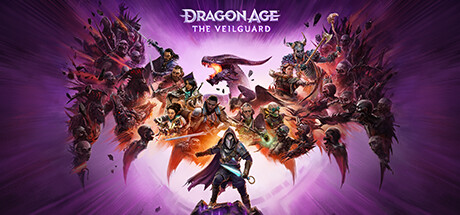
And Dragon Age™: The Veilguard, also scoring 67 on those same two dimensions, carries that same layered intimacy. Though its description is cut off, the shared tags point to its core: romance not as conquest, but as recognition—shoujo-coded emotional literacy meeting adult stakes. In The Case Files of Jeweler Richard, bisexuality and LGBTQ+ themes aren’t plot devices; they’re woven into the fabric of how people choose to be known—how a man might commission a piece for his husband, how a woman quietly reclaims her maiden name through engraving, how Richard himself moves through relationships without labels but with profound specificity. That’s the DNA Dragon Age™: The Veilguard shares: romance as worldbuilding, as ethical practice, as melancholic exploration of what it costs—and what it gifts—to love honestly in a world that rarely makes space for it.
This pairing isn’t for fans of fast-paced drama or heroic arcs. It’s for the person who pauses mid-scroll to read the inscription inside a thrift-store locket. For the one who remembers the exact shade of blue in their first partner’s scarf. For the reader who underlines sentences about quiet courage in literary fiction, and the player who spends twenty minutes just walking through a game’s rain-slicked alleyways, listening. It’s for adults who still believe tenderness is radical—and who recognize that the most profound mysteries aren’t solved, but held, like light in a cut stone, waiting for the right angle to reveal everything.
🎮3 Games That Match the Vibe

Match Dimensions Explained
❓Frequently Asked Questions
Why does Prince of Persia keep showing up in 'Games Like The Case Files of Jeweler Richard' lists?
Because both lean hard into melancholic exploration—think Richard wandering quiet Tokyo streets at dusk, or the Prince tracing crumbling palace ruins while reflecting on legacy and loss. The romance & shoujo dimension isn’t about dating sims; it’s in the tender, restrained intimacy of interactions (like the Prince’s quiet bond with Zola) and the weight of unspoken feelings amid beautiful, sorrow-tinged environments.
Is there a visual novel or anime adaptation of The Case Files of Jeweler Richard that I can play?
No—there’s no official visual novel, anime game, or interactive adaptation of *Jeweler Richard* yet. But if you’re craving that same hushed, character-driven atmosphere with layered emotional beats, *Disco Elysium - The Final Cut* delivers through its dialogue-heavy, choice-rich detective work—like when you spend an entire scene quietly observing a grieving widow in her sunlit apartment, choosing whether to offer comfort or probe deeper.
How does Dragon Age: The Veilguard compare to Prince of Persia for someone who loves Jeweler Richard’s vibe?
Both share that ‘romance & shoujo’ + ‘melancholic exploration’ blend—but *Veilguard* leans more into ensemble banter and high-stakes fantasy stakes (like your party debating fate while standing atop a storm-lashed cliff), whereas *Prince of Persia* mirrors *Richard*’s quieter rhythm: slow walks through evocative spaces, emotionally charged silences between characters like the Prince and Zola, and a story where healing feels earned, not rushed.
What’s the best game like Jeweler Richard if I want something soothing but emotionally rich—not action-heavy or stressful?
Go straight to *Prince of Persia*—its score of 83 and emphasis on melancholic exploration make it the closest match. You’ll savor moments like gliding across moonlit courtyards, solving environmental puzzles that double as metaphors for grief, and conversations where subtext matters more than exposition—exactly like Richard’s gentle, observant presence in a quiet antique shop.