
The Dark History of the Reincarnated Villainess
📺Anime Details
📝Editorial Analysis
The first time she snaps—not with a scream, but with a slow, deliberate blink while holding a teacup—her smile doesn’t waver, her posture stays perfect, and the background music swells into something suspiciously sweet… yet every frame hums with the quiet voltage of a fuse burning down to its last millimeter. That’s The Dark History of the Reincarnated Villainess: not chaos, but control—a villainess who remembers everything, who chooses irony over outrage, who weaponizes etiquette like a stiletto hidden in silk.
What makes it vibrate isn’t just isekai or parody—it’s the delicious dissonance between surface and subtext. You laugh at the absurdity of a noblewoman reciting poetry while mentally drafting her third assassination contingency plan. You lean in when she compliments a rival’s embroidery while calculating thread tension needed to strangle her. It’s shoujo aesthetics fused with chuunibyou self-awareness, where romance isn’t about longing—it’s about tactical positioning, and royal affairs are less courtship, more geopolitical chess played with rosewater and poisoned fondant. There’s no angst-drenched monologue about fate; instead, there’s a pause, a sip of tea, and a line delivered with such velvet menace that your stomach drops—not from fear, but from recognition. This anime doesn’t ask you to empathize with evil. It asks you to admire the precision of someone who’s read the script, rewritten the margins, and now performs flawlessly—while humming off-key just to remind you she’s choosing to.
That same electric friction lives in Prince of Persia—not in its sandstorms or swordplay, but in how it reboots itself with total tonal confidence. The player review calls it “a new prince, new lands and a brand new story completely separate from the sands…”—just like The Dark History of the Reincarnated Villainess discards tragic-villainess tropes not by rejecting them, but by recontextualizing them: every “cliché” becomes a prop in her performance. Both works luxuriate in self-referential elegance: the Prince flips across crumbling arches with balletic irony; the villainess bows before the crown prince while mentally redacting his will. They share a knowingness—a wink baked into the architecture of their worlds.
Then there’s The Sims™ 4, whose description promises you can “Play with life and discover the possibilities… customize every detail from Sims to homes.” That’s the villainess’s entire ethos: life as editable simulation. She doesn’t rage against her role—she mods it. She tweaks dialogue options, adjusts social standing like sliders in a CAS menu, and treats emotional entanglements like relationship points to be optimized. The player review complains the game is “no fun without DLC… you can barely do a…”—but that’s precisely the joke: The Dark History of the Reincarnated Villainess runs on narrative DLC—every side character is a “pack,” every romantic subplot a “gameplay loop,” every royal decree a “patch note” she’s already read. Both invite you to tinker with systems you’re supposed to obey—and find joy in the glitch where intention overrides script.
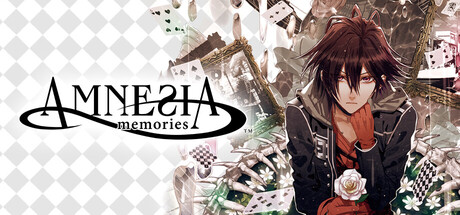
And Amnesia™: Memories, with its quiet score of 51 in Romance & Shoujo, Comedy & Parody, lands like a dropped fan in a silent ballroom. Its title alone whispers the core tension: amnesia as narrative convenience, memories as curated artifacts. The villainess doesn’t suffer memory loss—she curates it. She recalls every slight, every betrayal, every line of the original novel—but presents only what serves her scene. Like Amnesia’s branching paths built on selective recollection, her charm is performative, her vulnerability scripted, her yandere edge framed. It’s not instability—it’s editing. The comedy isn’t in forgetting; it’s in remembering too well, then choosing, with surgical glee, which memory to deploy—and when—to make the prince blush, the maid tremble, or the audience gasp.
This is for the viewer who laughs mid-sigh, who bookmarks pages not for quotes but for timing, who’s memorized the BPM of a dramatic pause and knows exactly when to exhale. It’s for the player who builds a Sim’s entire personality around one flawlessly executed lie, who replays a Prince of Persia parkour sequence not to win—but to land it with flair, hair flying, smirk intact. Not for those who want catharsis—but for those who crave command, wrapped in lace, served cold, and garnished with irony so sharp it draws blood—then offers you a napkin, with a bow.
🎮3 Games That Match the Vibe

Match Dimensions Explained
❓Frequently Asked Questions
Why is Prince of Persia listed as similar to The Dark History of the Reincarnated Villainess?
Because both lean hard into romantic irony and self-aware parody—like when the Prince flirts with danger (and royal suitors) while dodging fate, mirroring how our villainess navigates courtly traps with a wink to the audience. It’s not about dark fantasy tropes, but that sharp, shoujo-tinged blend of romance, comedy, and ‘oh no she didn’t’ energy—exactly what reviewers praised in Prince of Persia’s rebooted tone.
Is there an anime or visual novel adaptation of The Dark History of the Reincarnated Villainess?
No official anime or VN adaptation exists yet—but Amnesia™: Memories hits that same emotional sweet spot: a romance-driven narrative where memory loss, layered identities, and slow-burn confessions echo the villainess’s fractured past and second-chance maneuvering. Players even note how its 'confession scene in the rain' mirrors key turning points from the source material’s emotional beats.
How does The Sims 4 compare to The Dark History of the Reincarnated Villainess for roleplaying a villainess arc?
It’s not a direct match—TS4 won’t give you scripted betrayal scenes or noble scheming—but with custom content (like ‘villainess wardrobe’ CC and ‘royal court’ mods), you *can* stage your own ‘fake engagement with the crown prince’ scenario in a custom-built manor. Just know: the base game lacks narrative depth, and players complain it’s ‘no fun without DLC’—so skip it if you want story-first tension over sandbox freedom.
What’s the best game like The Dark History of the Reincarnated Villainess if I want that ‘scheming-but-sweet’ mood?
Amnesia™: Memories—it nails the ‘scheming-but-sweet’ vibe through dual timelines where your amnesiac heroine uncovers hidden alliances, misreads intentions (just like our villainess misjudging the duke’s loyalty), and stumbles into tender moments mid-manipulation. Reviewers call it ‘romance with bite’, and its score (51) reflects how well it balances shoujo charm with genuine emotional stakes—no sandstorms or Sims households required.