
The Disappearance of Haruhi Suzumiya
It is mid-December, and SOS Brigade chief Haruhi Suzumiya announces that the Brigade is going to hold a Christmas party in their clubroom, with Japanese hotpot for dinner. The brigade members Kyon, Yuki Nagato, Mikuru Asahina and Itsuki Koizumi start preparing everything for the party, such as costumes and decorations. But a couple of days later, Kyon arrives at school only to find that Haruhi is missing. Not only that, but Mikuru claims she has never known Kyon before, Koizumi is also missing, and Yuki has become the sole member of the literature club. The SOS Brigade seems to have never existed, nor has Haruhi Suzumiya. No one in the school has ever heard about her... except for Kyon.
(Source: Anime News Network)
📺Anime Details
📝Editorial Analysis
The snow falls sideways outside the classroom window, blurring the world into soft, grey static—just as Kyon stares at the empty desk where Haruhi Suzumiya should be. His breath fogs the cold glass. Not panic yet. Not even disbelief. Just a quiet, hollow recognition: something fundamental has been unwritten. The decorations for the Christmas party—paper lanterns, a half-folded origami crane, the faint scent of miso still clinging to his coat sleeve—are all still there. But the person who demanded them, who charged the air with possibility, is gone. And worse: no one remembers her except him. That moment isn’t about loss—it’s about standing alone inside a reality that’s been gently, irrevocably edited, and realizing you’re the only archive left.
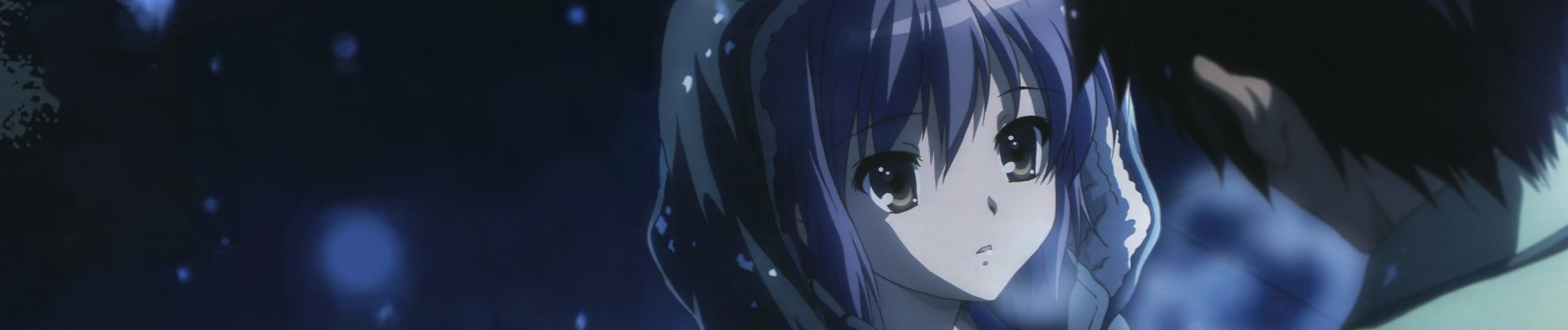
What makes The Disappearance of Haruhi Suzumiya ache so deeply isn’t its time loops or alien interfaces—it’s the weight of ordinary intimacy made fragile. It’s the way a shared hotpot meal, a whispered joke in the clubroom, or the exact tilt of Yuki Nagato’s head when she watches Kyon—all these tiny, unremarkable human textures—become sacred the second they’re threatened with erasure. This isn’t sci-fi spectacle; it’s domestic metaphysics. You feel the chill not from the December snowscape, but from the silence where Haruhi’s voice should ricochet off the walls. You think—not about paradoxes—but about how memory isn’t storage; it’s continuity. How love, friendship, even irritation, are verbs that require mutual participation—and what happens when one participant vanishes from the grammar itself. It leaves you tenderly suspicious of your own recollections, wondering which parts of your past are yours, and which are just… consensus.
That same trembling vulnerability lives in BioShock Infinite. Its description names Booker DeWitt’s debt and Elizabeth’s rescue—but the player review cuts deeper: “I know that some people are still bitter about the Bioshock Infinite we could have gotten.” That phrase—the one we could have gotten—is pure Disappearance DNA. It’s the ghost of alternate selves, of roads not taken that feel lived-in, mourned. Like Kyon walking past Mikuru Asahina who doesn’t know his name, Booker confronts versions of himself—and of Elizabeth—that destabilize his sense of agency, identity, even morality. Both works force you to hold two truths: the self you are now, and the self you might have been, if just one choice, one memory, one person had remained. The emotional resonance isn’t in the multiverse mechanics—it’s in the grief for possibilities that never coalesced, yet somehow hurt like real loss.
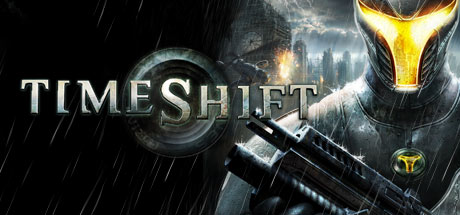
Then there’s TimeShift™, where Dr. Aiden Krone’s “reckless act” births a “disturbing alternate reality.” Its description doesn’t dwell on emotion—but the consequence is identical to Kyon’s: a world reassembled without consent, where familiar landmarks exist but carry alien meaning. The player review calls it “a little 4 hour game [that] is a blast, but it takes a little work to get it into a playable state.” That line—takes a little work to get it into a playable state—mirrors Kyon’s entire arc: he must relearn how to navigate a reality that looks intact but operates on broken rules. He doesn’t fight monsters—he fights incoherence. He adjusts his posture, relearns how to speak to Koizumi, rehearses how to look at Nagato—not as an alien, but as someone whose quiet presence now feels like a lifeline. Both Kyon and Krone aren’t heroes conquering time; they’re repair technicians trying to reboot a world that’s forgotten its own syntax.
This pairing sings to the quiet observer—the one who pauses mid-scene to trace the condensation on a train window, who replays a character’s glance three times to catch the micro-tremor beneath the calm. It’s for readers who underline sentences about silence in novels, players who linger in empty corridors just to hear their footsteps echo differently, fans who don’t crave answers but resonance. They don’t want to win the timeline—they want to feel its fragility in their molars, taste the metallic tang of a memory that shouldn’t exist, and recognize, in the snow falling sideways, that home is not a place—it’s a shared story, whispered back and forth, until someone stops whispering back.
🎮2 Games That Match the Vibe
Match Dimensions Explained
❓Frequently Asked Questions
Why does BioShock Infinite keep coming up in Haruhi Suzumiya game recommendations?
Because both hinge on reality-bending time/memory paradoxes and charismatic, genre-savvy protagonists who question narrative control—Booker’s amnesia and Elizabeth’s multiverse awareness echo Kyon’s meta-awareness and Haruhi’s unconscious godlike power over causality. The Columbia skyline’s shifting architecture and the 'Songbird' sequence mirror Haruhi’s world-rewriting episodes, especially the 'Endless Eight' time loop’s psychological weight.
Is there a visual novel or game adaptation of The Disappearance of Haruhi Suzumiya?
No official game adaptation exists—but TimeShift™ scratches that same itch: Dr. Krone’s time-jumping powers and the fractured, unstable alternate reality he stumbles into (with glitching textures, repeating corridors, and NPCs stuck in loops) directly channel the disorienting, self-referential dread of Haruhi’s disappearance arc. It’s not a VN, but its 4-hour runtime and time-manipulation mechanics make it a tight, thematic cousin.
BioShock Infinite vs. TimeShift™: which one captures Haruhi’s 'reality unraveling' vibe better?
TimeShift™ wins for raw, visceral disorientation—the way Krone rewinds time mid-combat to dodge bullets *while the environment fractures* feels like living inside Kyon’s panicked head during the 'Endless Eight'. BioShock Infinite leans heavier on philosophical exposition and scripted twists (e.g., the lighthouse reveal), whereas TimeShift™’s unstable physics and jarring reality shifts mirror Haruhi’s abrupt, rule-breaking world changes moment-to-moment.
What’s the best game like The Disappearance of Haruhi Suzumiya if I want that anxious, time-loop claustrophobia?
TimeShift™ is your answer—it nails the suffocating repetition and mounting dread: Krone relives the same ruined lab corridor over and over, with flickering lights, distorted audio, and enemies respawning *exactly* as before—just like Kyon waking up to the same July 18th, same dialogue, same rain on the window. That 4-hour, tightly wound tension is pure 'Endless Eight' energy.