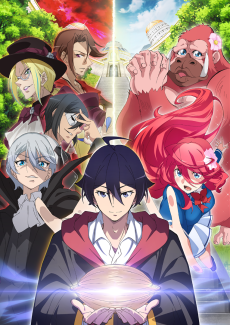
The Fruit of Evolution: Before I Knew It, My Life Had It Made Season 2
📺Anime Details
📝Editorial Analysis
The cafeteria’s fluorescent lights hum overhead as a harpy girl—wings flared, lunch tray tilted at a physics-defying angle—launches herself sideways into the protagonist’s chest, sending rice balls flying like shrapnel while her tail whips a startled teacher’s clipboard into orbit. No one blinks. The principal sighs, adjusts his glasses, and calmly files the incident under “Tuesday.” That exact beat—the absurd collision of mundane school routine and escalating monster-girl chaos—is where The Fruit of Evolution: Before I Knew It, My Life Had It Made Season 2 lives: not in world-ending stakes, but in the delicious friction between bureaucratic normalcy and uncontainable, slapstick evolution.
This isn’t just parody—it’s warm, low-stakes surrealism. You don’t feel tension; you feel recognition. Like watching your own life get gently hijacked by whimsy. The harem isn’t about conquest—it’s about shared embarrassment, overlapping misunderstandings, and teachers who’ve long since stopped filing reports because the paperwork would outlive them. The conspiracy isn’t shadowy or grim—it’s a poorly maintained administrative loophole, a faculty meeting where someone absentmindedly mentions “Phase Three of the Human-Beast Hybrid Integration Protocol” while passing the soy sauce. What lingers isn’t plot—it’s the lightness, the way every escalation feels less like danger and more like a slightly louder inside joke you’re finally in on.
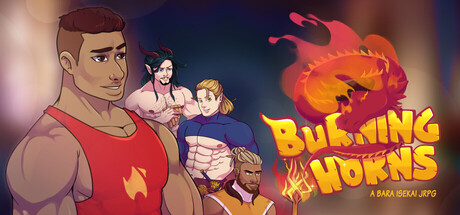
That same vibe pulses through Burning Horns: A Bara Isekai JRPG, where comedy and parody aren’t garnish—they’re structural scaffolding. Its JRPG narrative doesn’t hide behind lore dumps; it leans hard into genre self-awareness, letting absurdity breathe in the same air as turn-based combat. Just like the anime’s harpy mid-air collision, Burning Horns treats its own tropes like furniture you can trip over—and laugh with, not at. And then there’s Like a Dragon: Pirate Yakuza in Hawaii, scoring identically (64) on those same dimensions: Comedy & Parody, JRPG Narrative. Its tonal whiplash—pirate ships docking in Waikīkī, yakuza bosses debating shave ice toppings mid-chase—mirrors the anime’s classroom-to-monster-battlefield pivot. It doesn’t ask you to suspend disbelief so much as hand you a snorkel and say, “Dive in—this water’s warm and full of glitter.”
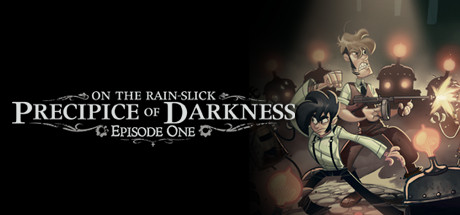
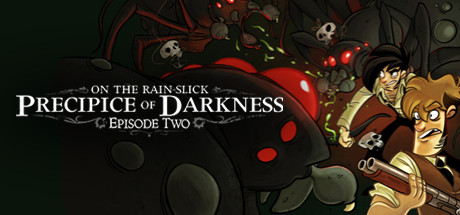
Even the Precipice of Darkness entries—both Episode One and Two, both at 57—echo that same rhythm. Their descriptions position them as RPG-adventures rooted in Penny Arcade’s signature brand of comic-style absurdism, and player reviews confirm it: “Fun as hell, especially if you enjoy the Penny Arcade style of humor…” and “Same as my review on episode one though the special attack minigame seems to have some input delay…” That trailing, almost offhand complaint about input delay? It’s exactly the anime’s spirit—technical imperfection treated as part of the charm, not a flaw to fix. The games don’t polish away their rough edges; they let them clack against the story like loose change in a pocket. Just like when the anime’s protagonist trips over his own shoelaces during a magical duel—and the monster girl opponent pauses mid-spell to help him tie them properly.
Who’d love this pairing? Not just fans of harem or isekai—but people who crave tonal trust. The kind of viewer who grins when a vampire girl tries to “blend in” by wearing oversized sunglasses indoors, or the player who cackles when a JRPG boss monologues about tax reform while summoning lightning. They’re the ones who find relief in systems that refuse to take themselves seriously—not because they’re shallow, but because they’re deeply humane. They know real connection isn’t forged in flawless execution, but in the shared, slightly messy, gloriously unguarded moment—like a harpy’s wings knocking over three juice boxes, and everyone laughing instead of cleaning up. That’s where the warmth lives. That’s where you stay.
🎮5 Games That Match the Vibe

Match Dimensions Explained
❓Frequently Asked Questions
Why does Burning Horns feel so similar to Fruit of Evolution Season 2’s absurd power fantasy?
Because both lean hard into over-the-top Bara parody—Burning Horns has you leveling up absurdly fast while flexing in increasingly ridiculous poses (like the 'Golden Abs Ascension' cutscene), and its combat lets you spam 'Muscle Burst' attacks just like Season 2’s 'Evolution Overdrive' mechanic. It nails that same tone where getting jacked *is* the plot—and the jokes land with the same self-aware, sweaty sincerity.
Is there a live-action or anime adaptation of Fruit of Evolution Season 2?
No official adaptation exists yet—but if you're craving that same vibe, Like a Dragon: Pirate Yakuza in Hawaii delivers the closest thing: it swaps isekai tropes for pirate chaos, but keeps the same rapid-fire parody energy (think Kiryu doing karaoke on a flaming ship) and even mirrors Season 2’s 'unintentional god-tier protagonist' arc with its own delusional-yet-unstoppable hero.
How does Precipice of Darkness Episode Two compare to Fruit of Evolution Season 2 in terms of humor and pacing?
Both hit that frantic, fourth-wall-breaking rhythm—Precipice Episode Two’s 'button-mashing special attack minigame' (which players complain about due to input delay) feels like Season 2’s 'Sudden Evolution Spam' sequences: chaotic, slightly broken, and 100% intentional. And just like Season 2’s 'Diet Coke Break' interlude, Precipice leans into surreal comic-panel gags (e.g., fighting a sentient toaster voiced by Tycho) without slowing down the JRPG momentum.
What’s the best game like Fruit of Evolution Season 2 if I want something equally stupid-fun but less horny and more sarcastic?
Go straight to Precipice of Darkness, Episode One—it’s got zero romance subplots, max sarcasm (your character literally argues with the tutorial text), and its Penny Arcade-style dry wit hits like Season 2’s 'Lunchroom Monologue' scene, but swapped for existential dread about vending machine snacks. Plus, it shares that same 57–64 score range and Comedy & Parody + JRPG Narrative DNA.