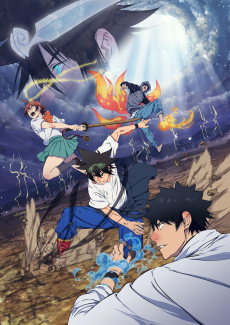
The God of High School
It all began as a fighting tournament to seek out for the best fighter among all high school students in Korea. Mori Jin, a Taekwondo specialist and a high school student, soon learns that there is something much greater beneath the stage of the tournament.
(Source: WEBTOON)
📺Anime Details
📝Editorial Analysis
The air crackles—not with electricity, but with weight. Mori Jin’s knuckles split open mid-air as he throws a spinning hook kick in the Seoul stadium, sweat flying like shrapnel, the crowd’s roar collapsing into a single deafening pulse just before impact. His foot doesn’t just land—it unfurls a shockwave that ripples the floor tiles outward in concentric fractures, dust rising in slow, golden suspension. In that suspended half-second, you don’t see a high schooler. You see something older: a vessel trembling under the pressure of gods who’ve been watching from the rafters all along.
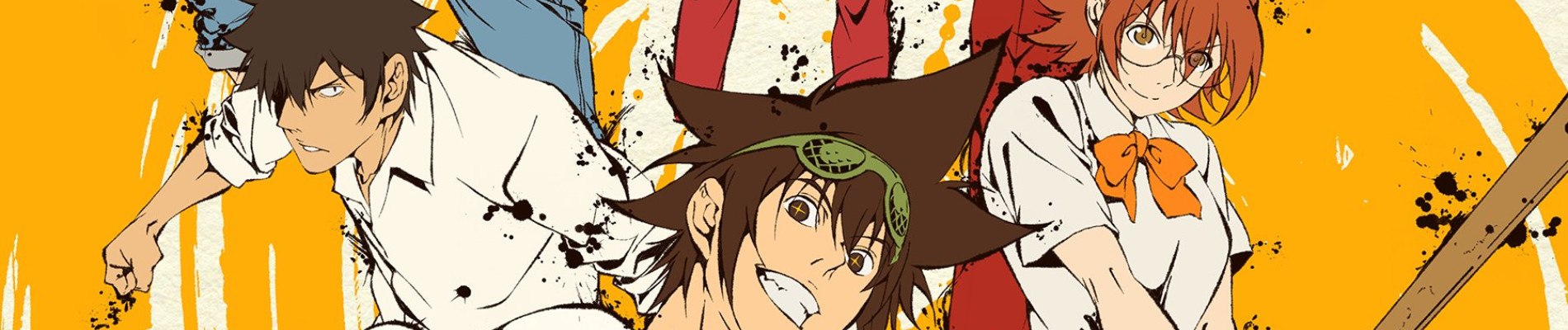
That’s the feeling The God of High School lives inside—not spectacle for spectacle’s sake, but consequence. Every punch carries the gravity of myth made flesh; every taunt echoes like a challenge thrown across centuries. It’s not urban fantasy because it’s set in Seoul—it’s urban fantasy because it presses divine scale into cramped locker rooms, subway tunnels, and rain-slicked alleyways where teenagers argue about technique while their bones hum with celestial resonance. You feel small, yet charged—like standing barefoot on a live wire strung between heaven and homeroom. The rotoscoping doesn’t smooth things out—it grinds motion into something tactile, almost painful: tendons strain, breath hitches, joints pop audibly. This isn’t power fantasy. It’s burden fantasy—where strength arrives not as liberation, but as inheritance you didn’t ask for and can’t refuse.
Which is why Loki lands with such eerie familiarity. Its description promises a “fantasy voyage through the great mythologies” where you play one of four heroes drawn from distinct traditions—and that’s precisely the emotional architecture The God of High School builds: gods aren’t distant statues; they’re lineage, blood memory, unfinished business wearing high school uniforms. The player review calls it “similar to Diablo… but filled with annoying glitches and game crashes”—and that friction, that sense of the system itself buckling under the weight of its own mythic ambition? That’s Mori Jin’s first transformation: raw, unstable, glitching at the edges of human form. The review’s complaint about the “anticlimactic” ending—“nothing happens”—mirrors how The God of High School refuses catharsis. Revelations don’t resolve—they compound. Gods don’t grant answers; they deepen the silence after the question.
Then there’s Rise of the Argonauts, where Jason, King of Iolcus, loses his fiancé on their wedding day and vows to restore her life “at any cost.” The description frames it as ancient history done right—but what resonates isn’t the setting, it’s the catalyst: love so absolute it cracks open the world’s foundations. Mori Jin doesn’t fight for glory or even truth—he fights because his friends are vanishing into the same abyss that swallowed his grandfather, because loyalty isn’t abstract, it’s muscle memory. The player review says, “If you love games based on ancient history this one does it right…”—but the real alignment is in how both works treat myth not as backdrop, but as wound. History isn’t studied here. It’s reopened.
None of these pairings work if you’re looking for clean power-ups or tidy resolutions. They resonate because they share a specific kind of hunger—the kind that burns when a teenager realizes their fists aren’t just tools, but keys; when a king realizes his crown is also a curse; when a Norse warrior’s axe feels less like a weapon and more like a prayer spoken in blood and steel. You’ll love these pairings if you’ve ever watched a fight scene and felt your pulse sync not to the music, but to the tremor in the character’s wrist before the strike—if you crave stories where divinity isn’t ascended, but dragged down, shoulder-to-shoulder, into the mud and sweat of being this young, this mortal, this dangerously close to breaking open.
🎮3 Games That Match the Vibe
Match Dimensions Explained
❓Frequently Asked Questions
Why does the final boss fight in Rise of the Argonauts feel so much like a God of High School tournament match?
Because it’s built around cinematic, multi-phase arena combat—like when Jason faces Aeëtes in Colchis, dodging golden dragon breath and chaining combos mid-air just like Jin Mori vs. Taek Jegal. The game’s ‘Fury’ system lets you unleash flashy, screen-filling mythic abilities (think Mjolnir slams or Medusa gaze bursts), mirroring GoHS’s emphasis on escalating spectacle over pure strategy.
Is there an official God of High School anime or game adaptation?
No official game adaptation exists—but Loki and Rise of the Argonauts are the closest *spiritual* matches fans keep citing. Loki’s Norse fighter even channels Mori’s cocky swagger and rapid-fire aerial combos, while Rise of the Argonauts nails that same mythic-tournament energy with its story-driven duels and visual flair (one reviewer called its Colchis arena 'a perfect GoHS-style showdown stage').
Rise of the Argonauts vs. Loki—which is better for someone who loves God of High School’s over-the-top martial arts + mythology blend?
Rise of the Argonauts—hands down. Its combat feels more grounded in human-scale martial flow (Jason’s swordplay echoes Mori’s taekwondo stance shifts and feints), and its story leans hard into emotional stakes like GoHS’s wedding-day tragedy mirroring Jin’s loss of his sister. Loki’s fun but glitchy—reviewers complain its crashes break immersion right when you’re lining up a Thor-inspired hammer slam.
What’s the best game like The God of High School if I want hype, fast-paced mythic fights and zero chill?
Rise of the Argonauts—it drops you straight into high-stakes duels where every fight has narrative weight (like Jason vs. Pelias in the throne room) and combo-driven action that mirrors GoHS’s rapid pacing. One player nailed it: 'If you love games based on ancient history this one does it right'—and that ‘right’ means flashy parries, mythic weapon unlocks, and zero downtime between adrenaline spikes.