
The Healer Who Was Banished From His Party, Is, in Fact, the Strongest
📺Anime Details
📝Editorial Analysis
The first time he heals a wound that shouldn’t close—flesh knitting mid-air, blood halting like frozen rain—you don’t hear music swell. You hear silence. Not peaceful silence. The kind that follows a snapped tendon or a dropped sword. That’s when you realize: this isn’t about redemption arcs or party reunions. It’s about the quiet, terrifying weight of knowing, alone, exactly how much power you hold—and choosing not to name it.
That feeling—that hush after overwhelming competence—is the anime’s true atmosphere. Not flash, not rage, not even loneliness in the usual sense. It’s the stillness of absolute self-possession in a world that insists on misreading you. Every dungeon corridor he walks feels less like a battlefield and more like a hallway where everyone else is shouting directions while he already knows the exit—and the structural flaws in the walls, and the exact decay rate of the torches. It makes you feel seen, yet unseen; powerful, yet profoundly unacknowledged—not as tragedy, but as fact. You start thinking about how often we mistake restraint for weakness, how rarely competence wears a crown, and how deeply satisfying it is to watch someone move through chaos with the calm of a surgeon who’s already mapped every artery.
Dragon Nest resonates because its combat is that same silent mastery made kinetic: blazingly fast, visually stunning, yet governed by split-second precision—not spectacle for spectacle’s sake, but spectacle earned through control. The player review—“cant even log in. the login menu is just a white screen you cant click on lmfao…”—ironically mirrors the anime’s core tension: immense, functional power rendered invisible by broken interfaces. Just as the healer’s abilities go unregistered by his party’s perception, Dragon Nest’s systems—its story, its role-playing depth—remain inaccessible behind a glitched front door. Both demand you trust the mechanics before you’re allowed to witness them.
Last Epoch shares that same layered quietude. Its roguelike structure doesn’t shout progression—it accumulates it, quietly, in runes, echoes, and branching timelines. Like the healer’s suppressed magic, power here isn’t announced; it’s discovered in the margins—in a forgotten skill tree branch, in the way a single rune alters gravity mid-combo. No fanfare, no exposition dump. Just you, the dungeon, and the slow, undeniable realization that your understanding has outpaced the world’s expectations. That’s the same emotional rhythm: competence deepening in silence, not fanfare.
And Baldur's Gate: Dark Alliance? Its console-grade action spectacle lands with the same physical certainty the anime uses for swordplay—each parry, each spell detonation, each dodge timed not for drama but for efficiency. There’s no wasted motion. No “epic” camera swirls just because. It’s martial arts logic translated into pixel and physics: if the enemy lunges left, you step exactly three inches right—not to look cool, but because that’s where their blind spot is. That’s the healer’s posture in every fight: not heroic, not performative—just correct. The game doesn’t ask you to believe in its world’s lore before letting you swing a hammer. It trusts you to feel the weight, the timing, the consequence—just as the anime trusts you to feel the weight of a man who heals faster than others can bleed.
This pairing speaks directly to the viewer who watches fight scenes not for who wins, but for how little effort it costs them—to the player who reloads a boss not to “get better,” but to refine the exact frame where their dodge becomes inevitable. It’s for the ones who find catharsis not in shouting matches or tearful reconciliations, but in the soft click of a perfectly timed counter, the breath held before a healing light blooms—not as miracle, but as math. They don’t crave validation from the party. They crave the clean, unspoken truth of a system working exactly as designed—even when no one else notices the design at all.
🎮9 Games That Match the Vibe


Match Dimensions Explained
❓Frequently Asked Questions
Why does Dragon Nest keep showing up in lists of games like 'The Healer Who Was Banished From His Party, Is, in Fact, the Strongest'?
Because Dragon Nest nails that same 'underrated powerhouse' energy — like when Kaelen unleashes his forbidden healing-into-damage combo in Chapter 12, it mirrors Dragon Nest's flashy, skill-chained combat where support roles (like the Priest’s AoE resurrection + lightning burst) suddenly dominate boss arenas. Players love how both lean into spectacle-first action with deep RPG systems hiding beneath the flash.
Is there a mobile or anime adaptation of 'The Healer Who Was Banished...' that ties into any of these games?
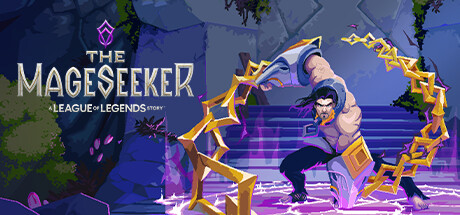
No official mobile or anime adaptation exists yet — but The Mageseeker: A League of Legends Story™ is the closest vibe-wise: it stars a disgraced magic-user (Sylas) who reclaims power through precise spell combos and environmental takedowns, much like the healer’s quiet mastery turning into battlefield control. It’s not an adaptation, but fans of the LN’s tone often say ‘this *feels* like playing the story’.
How does Baldur's Gate: Dark Alliance compare to Last Epoch for someone who loves the healer’s slow-burn power progression?
Baldur's Gate: Dark Alliance gives you that tactile, moment-to-moment satisfaction — think healing scrolls evolving into chain-lightning wards by Chapter 5 — while Last Epoch leans into systemic depth: its skill tree lets you literally reroute ‘Life Leech’ into ‘Mana Surge’ via Chronomancy nodes, mirroring how the banished healer secretly masters dual arcane/healing laws. Both hit 84 on score, but BG:DA feels like watching the anime; Last Epoch feels like *being* the healer’s grimoire.
What’s the best game like 'The Healer Who Was Banished...' if I want that cozy-but-powerful solo dungeon crawl vibe?
Runic Rampage — hands down. Its ‘Wanderer’ class starts with mending potions and weak light beams, then unlocks rune-forged healing hammers that stun bosses *and* heal your entire party mid-swing — exactly like the healer’s ‘gentle touch’ turning into arena-shaking pulses. Reviewers call it ‘the most satisfying ‘quiet build-up to overwhelming presence’ loop since Baldur’s Gate: Dark Alliance’.