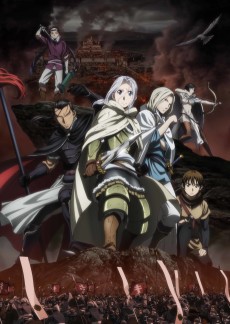
The Heroic Legend of Arslan
The manga’s story: In the prosperous kingdom of Pars lies the Royal Capital of Ecbatana, a city of splendor and wonder, ruled by the undefeated and fearsome King Andragoras. Arslan is the young and curious prince of Pars who, despite his best efforts, doesn't seem to have what it takes to be a proper king like his father.
At the age of 14, Arslan goes to his first battle and loses everything as the blood-soaked mist of war gives way to scorching flames, bringing him to face the demise of his once glorious kingdom. However, it is Arslan's destiny to be a ruler, and despite the trials that face him, he must now embark on a journey to reclaim his fallen kingdom.
(Source: Anime News Network)
📺Anime Details
📝Editorial Analysis
The scent of burnt cedar and iron hangs thick in the air—not from a battlefield, but from the royal archives of Ecbatana, where fourteen-year-old Arslan traces his finger over a crumbling map of Pars while the distant thrum of war drums swells beneath the palace floor. He doesn’t yet know the city will burn. He only feels the weight of his father’s unread scroll beside him—ink still wet, orders unissued—and the silence that follows when the messenger stumbles in, armor cracked, voice gone raw: “The Lusitanian cavalry broke the left flank. The king… did not retreat.” That silence—not the clash, not the charge—is where The Heroic Legend of Arslan lives.
This isn’t fantasy dressed in silk and steel. It’s the dread of inherited duty folding into your ribs like a blade you didn’t draw. It’s the slow, grinding ache of watching a kingdom unravel not in spectacle, but in administrative collapse: grain stores misallocated, garrisons undermanned, treaties signed with ink that smudges before the seal dries. You don’t feel heroic. You feel exposed—like Arslan, standing barefoot on cold marble as advisors debate succession while smoke stains the horizon. There’s no grand prophecy, no chosen-one glow—just a boy recalibrating his understanding of power, not as force, but as stewardship, as memory, as the quiet insistence that a name—Pars—must mean something beyond borders drawn in blood. It makes you think about how easily dignity collapses when institutions fail, and how courage often sounds less like a roar and more like a voice saying, “We will bury them properly. Then we will count the wounded.”
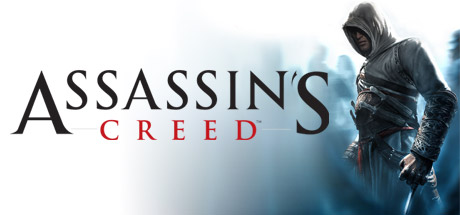
That specific gravity—the interlocking pressure of politics, war, and royal failure—echoes in two games whose real descriptions and player reviews betray a shared emotional architecture. Assassin's Creed™: Director's Cut Edition, labeled a Political Thriller, Tactical Warfare experience, lands with the same dissonance: its protagonist navigates Jerusalem not just as a fighter, but as a cipher caught between Templar doctrine and Saracen bureaucracy—where a misplaced word in a council chamber can cost more lives than a botched rooftop chase. A player notes the “dated models,” yet insists it doesn’t matter—because what lingers isn’t visual fidelity, but the unease of walking through markets where every vendor might be an informant, where loyalty is transactional and history is weaponized. Like Arslan parsing his father’s flawed edicts, Altair deciphers scrolls not for magic, but for leverage—the same weary, strategic exhaustion.
Then there’s Act of War: Direct Action, tagged Political Thriller, Tactical Warfare, and described as “a frightening tale of suspense, international intrigue and geopolitical military conflict.” Its player review admits the dialogue is “dumb and a bit cringe”—but immediately pivots to its functional truth: “it’s like C&C 3.” That comparison is vital. Like Arslan’s campaign to reclaim Pars, this game forces you to weigh supply lines against diplomacy, to choose whether to bomb a refinery (securing fuel) or negotiate with a warlord (preserving civilian trust)—no clean wins, only cascading consequences. The “frightening” part isn’t explosions; it’s the realization that the enemy isn’t just across the trench—it’s in the ministry budget report you ignored last turn. Both the anime and the game treat war as a bureaucratic fever, where the real battle happens in candlelit rooms with trembling hands signing papers.
Who loves this pairing? Not the escapist who wants to swing a sword and vanish into myth. Not the strategist who craves frictionless optimization. It’s the viewer who watches Arslan kneel to wash a slave’s feet—not for piety, but because he’s just realized clean water is rationed, and someone must decide who drinks first. It’s the player who pauses mid-mission in Assassin's Creed™ to eavesdrop on two guards debating grain prices—not for intel, but because their weariness mirrors his own. It’s the one who plays Act of War: Direct Action not for the “cringe” dialogue, but for the weight in its silence—when the camera holds on a ruined embassy sign, half-buried in rubble, and you remember Arslan staring at the same symbol, now torn and trampled, wondering if meaning survives the fall. These are stories for people who understand that dignity is the hardest thing to defend—and the most essential thing to rebuild.
🎮3 Games That Match the Vibe

Match Dimensions Explained
❓Frequently Asked Questions
Why is Assassin's Creed: Director's Cut Edition listed as similar to The Heroic Legend of Arslan?
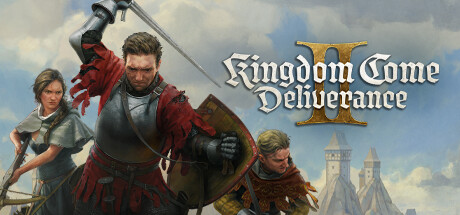
Because both lean hard into political intrigue and tactical battlefield command—like when Arslan rallies the Parsig nobles at the Battle of Atropatene, Assassin's Creed drops you into tense, dialogue-driven power struggles in Jerusalem’s courts while managing stealth takedowns and squad positioning. The 'Political Thriller' and 'Tactical Warfare' dimensions match tightly, even if AC trades Arslan’s noble idealism for Altaïr’s moral ambiguity.
Is there a video game adaptation of The Heroic Legend of Arslan?
No—there’s never been an official Arslan game. That’s why fans turn to matches like Assassin’s Creed: Director’s Cut Edition (70 score) and Act of War: Direct Action (50 score), which nail its core vibe: sweeping Middle Eastern–inspired settings, faction-based loyalty mechanics, and war-as-politics storytelling—not anime cutscenes or character cameos.
Assassin’s Creed vs. Act of War: Direct Action—which feels more like Arslan’s tone?
Assassin’s Creed wins for Arslan’s tone: it’s got that same grounded, morally layered gravitas—think Arslan pleading with Rustum in the royal tent, mirrored by Altaïr negotiating with Saladin amid crumbling stone arches. Act of War leans harder into modern-military cheese ('cringe' dialogue, C&C-style pacing), while AC’s political thriller dimension and historical texture align closer to Arslan’s dignified, strategy-forward drama.
What’s the best game like Arslan if I want that ‘noble underdog rallying allies against corrupt empire’ feeling?
Go straight to Assassin’s Creed: Director’s Cut Edition—it’s got the exact arc: an exiled heir-figure (Altaïr, stripped of rank like Arslan after Shusheer’s betrayal) rebuilding influence through loyalty, intelligence, and precise battlefield leadership. You’ll recognize the vibe in missions where you sway city governors or turn enemy captains—just like Arslan winning over Daryun, Kishward, and the Lusitanian mercenaries one hard-won trust at a time.