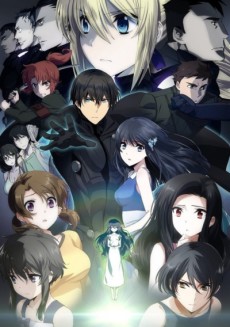
The Irregular at Magic High School The Movie: The Girl Who Summons the Stars
In the story, the seasons have changed, and it will soon be the second spring. The poor student older brother Tatsuya and the honor student younger sister Miyuki have finished their first year at their magic high school, and are on their spring break. The two go to their villa on the Ogasawara Island archipelago. After only a small moment of peace, a lone young woman named Kokoa appears before them. She has abandoned the Naval base, and she tells Tatsuya her one wish.
(Source: Anime News Network)
Note: The film takes place in between the A and B part of the 11th episode of "Mahouka Koukou no Rettousei: Raihousha-hen"
📺Anime Details
📝Editorial Analysis
The salt wind off Ogasawara carries the scent of damp concrete and ozone—not the clean brine of vacation, but the metallic hush before a system reboot. Tatsuya stands barefoot on the villa’s sun-bleached deck, sleeves rolled, watching Kokoa’s silhouette shrink against the volcanic ridge as she walks away from the Naval base—not fleeing, not running, but unmooring. Her wish isn’t shouted; it’s delivered in the space between breaths, quiet enough that Miyuki doesn’t hear it, quiet enough that Tatsuya’s jaw doesn’t move, only his fingers tighten around the railing. That silence isn’t emptiness—it’s pressure. Compressed. Ready to fracture.
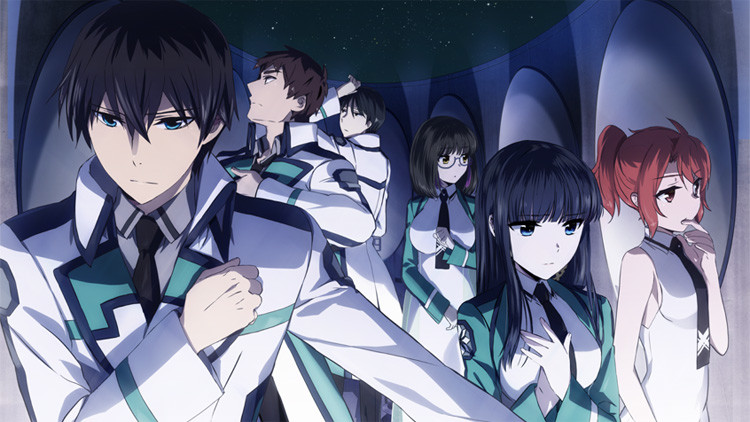
What makes The Irregular at Magic High School The Movie: The Girl Who Summons the Stars vibrate with such particular gravity isn’t its magic or its military scaffolding—it’s how deeply it trusts stillness as tension. This isn’t a story about escalation; it’s about containment. The twins’ quiet breakfasts, the way Miyuki folds her napkin after Tatsuya leaves the table, the way Kokoa’s uniform hangs slightly loose—not from neglect, but from deliberate shedding—all pulse with the same restrained urgency. You feel the weight of unspoken protocols, of chain-of-command folded into sibling glances, of political consequence held in abeyance like a blade half-drawn. It makes you think about loyalty as architecture—not something declared, but something maintained, brick by silent brick, even when the foundation trembles. There’s no grand battle montage, no swelling score—just the low thrum of surveillance drones overhead and the cold precision of a decision made before the camera cuts.
That emotional DNA—the tight coil of geopolitical stakes wrapped in personal austerity—resonates sharply with Assassin's Creed™: Director's Cut Edition. Its description calls it a “Political Thriller, Tactical Warfare” experience where action is redefined not by spectacle, but by positioning: climbing, observing, choosing when to break the peace. A player review notes how dated models don’t undermine immersion—because the power lies in “the flaws first,” in acknowledging imperfection as part of the system’s texture. Like Kokoa abandoning her post, Altaïr doesn’t rage; he recalibrates. Both stories treat ideology not as slogan, but as infrastructure—something you navigate, exploit, and quietly dismantle from within. The weight lands the same: not in explosions, but in the pause before the leap.
Then there’s Act of War: Direct Action, tagged identically—“Political Thriller, Tactical Warfare”—and described as ripped “from today’s headlines,” a “frightening tale of suspense, international intrigue and geopolitical military conflict.” A player admits the dialogue is “dumb and a bit cringe,” yet still calls it “not bad at all”—because the mechanics of consequence hold. Like Tatsuya parsing naval comms while stirring miso soup, Act of War forces players to weigh supply lines against sovereignty, intel against optics, all without moral fanfare. No one shouts ideals here either—just radio static, unit loss reports, and the slow dawning that every tactical choice echoes in a minister’s briefing room. That clinical dread, that sense of being a single node in a vast, humming, indifferent machine? It’s the same air Kokoa breathes when she steps off the base tarmac.
Who loves this pairing? Not just fans of magic or mechs—but people who get chills when a character checks their watch twice before speaking, who replay cutscenes not for lore dumps but for the micro-tremor in a hand resting on a holoscreen. The kind of viewer who notices Miyuki’s hairpin is slightly askew only after Tatsuya receives encrypted orders—and the kind of player who spends ten minutes scouting a rooftop in Assassin’s Creed™ not for loot, but to confirm the guard rotation matches the dossier. They’re drawn to stories where power wears a school blazer or a fatigues collar, where the most dangerous thing isn’t a spell or a missile—it’s the silence after consent is withdrawn. They don’t want catharsis. They want continuity under strain. And they’ll recognize it instantly—in the curve of a sword sheath, the flicker of a drone’s LED, the exact second a twin stops pretending not to listen.
🎮6 Games That Match the Vibe


Match Dimensions Explained
❓Frequently Asked Questions
Why does Assassin's Creed: Director's Cut Edition feel like a spiritual cousin to The Girl Who Summons the Stars despite no magic or anime ties?
It nails the same high-stakes political thriller tension—like when Miyuki faces off against the US military delegation in the film’s climax—through its layered conspiracies and morally grey power struggles. The tactical warfare dimension shines in Altaïr’s precision assassinations and crowd-blending stealth, echoing how the movie balances quiet diplomacy with sudden, decisive magical combat.
Is there a video game adaptation of The Irregular at Magic High School: The Girl Who Summons the Stars?
No—there’s never been an official game adaptation of that specific movie (or any Irregular movie, for that matter). The closest licensed games are older Japan-only PSP titles like *The Irregular at Magic High School* (2014) and *The Irregular at Magic High School: Out of Order*, neither of which cover *The Girl Who Summons the Stars*’ plot or characters.
How does Act of War: Direct Action compare to Assassin’s Creed: Director’s Cut Edition for fans of The Girl Who Summons the Stars’ geopolitical stakes?
Act of War leans harder into real-time strategy and modern military realism—think the tense UN summit scene where global powers jockey for control—but trades Assassin’s Creed’s intimate, character-driven intrigue for broader, C&C-style unit commands and cringe-y but earnest dialogue. Both deliver that ‘world on a knife’s edge’ vibe, but Act of War feels more like the film’s US-Japan diplomatic friction made playable.
What’s the best game like The Girl Who Summons the Stars if I want that mix of elite teen operatives, quiet tension, and sudden tactical escalation?
Go straight to *Assassin’s Creed: Director’s Cut Edition*—Altaïr’s status as a young, hyper-competent operative navigating layered political factions mirrors Miyuki’s role in the film’s international crisis. The rooftop chases and silent takedowns capture that same breathless precision you feel during her star-summoning sequence, just swapped for stealth and daggers instead of ice magic.