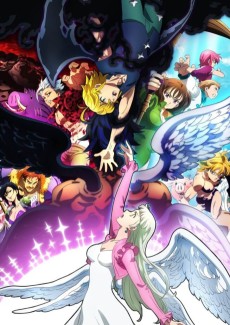
The Seven Deadly Sins: Dragon's Judgement
Time is running out. The curse imposed on Elizabeth will kill her in few days. To lift the curse Meliodas and Ban have travelled to the Demon Realm to challenge Meliodas' father, the Demon King.
Meanwhile, Merlin, Escanor, and Archangel Ludociel are set to slay Meliodas' brother Zeldris. Elsewhere, Meliodas' other brother Estarossa has kidnapped Elizabeth, and it falls to King, Diane, Gowther, and Hawk to rescue her.
📺Anime Details
📝Editorial Analysis
The air in the Demon Realm tastes like burnt iron and old vows—sharp, metallic, thick with the weight of blood oaths broken and remade. Meliodas stands before his father, the Demon King, not with a roar, but with a quiet, trembling hand resting on the hilt of a sword that’s already bled through centuries. His knuckles are white. His breath is shallow. Not because he fears death—but because time is the real enemy, ticking down Elizabeth’s final days like a lit fuse buried in her ribs. That moment isn’t about power scaling or spectacle—it’s about sacrifice measured in seconds, love worn thin by inevitability, and legacy as both inheritance and sentence.
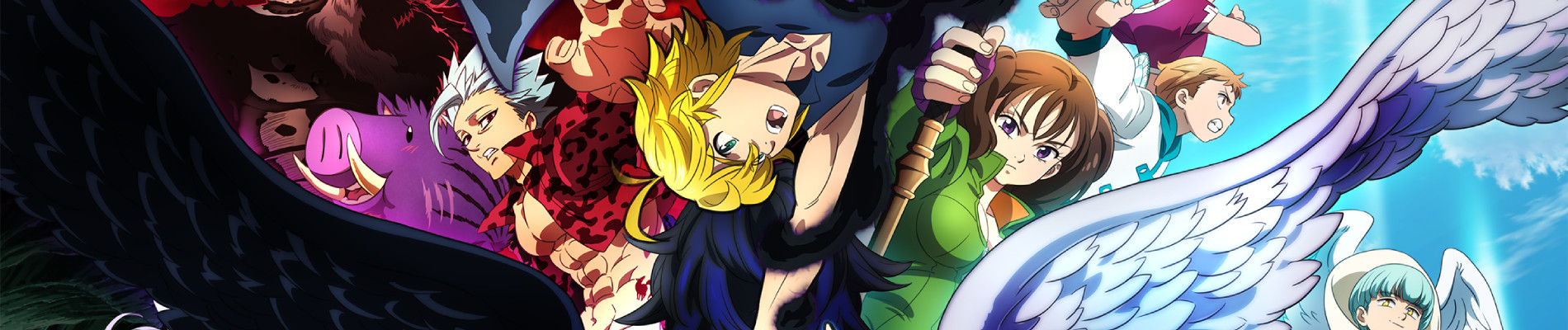
What makes The Seven Deadly Sins: Dragon's Judgement ache so deeply isn’t its fantasy scaffolding—demons, gods, magic—but how relentlessly it ties power to consequence. Every superhuman feat carries emotional gravity: Ban’s immortality isn’t a perk; it’s a wound that won’t close. Merlin’s intellect isn’t just cleverness—it’s isolation sharpened over millennia. Even the comedy lands like a sigh between sobs, the ecchi moments flickering like candlelight in a tomb—not titillation, but fragile warmth against encroaching tragedy. This anime doesn’t ask you to believe in magic—it asks you to feel the weight of a promise you swore when you were still human, and how heavy it gets when you’re no longer sure what that word even means.
That same emotional density—where myth isn’t backdrop but psychological architecture—echoes in Jade Empire™: Special Edition. Its description invites you to “follow the path of the open palm or the closed fist,” framing morality not as choice, but as embodied philosophy. Like Meliodas choosing mercy over vengeance even as his father’s shadow looms, the game forces identity into motion: your stance, your posture, your silence—all become narrative. A player review mentions needing to copy “steam.dll” from Steam to launch—a small, gritty detail that mirrors the anime’s texture: grand stakes built on real, fumbling human effort. The myth isn’t decorative; it’s the language the characters use to argue with their own souls.
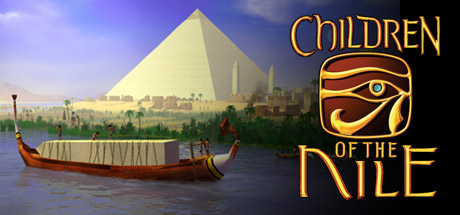
Then there’s Children of the Nile: Enhanced Edition, where you guide your people “through thousands of years of history” as Pharaoh. Its description calls it “a unique gem… unparalleled in both grandeur and attention to detail”—and that precision resonates sharply with Dragon's Judgement’s structural rigor. While the anime fractures across parallel crises—Meliodas and Ban in the Demon Realm, Merlin and Escanor hunting Zeldris, King and Diane racing to save Elizabeth—the city-builder demands the same orchestrated simultaneity: managing grain stores while appeasing gods, training soldiers while priests whisper omens. A player review confesses, “I can’t describe in words how many hours I have lost… how painful it is for me to play right now.” That painful investment—the kind that lingers after the screen goes dark—is identical to watching Diane clutch her spear, knowing every second she delays could mean Elizabeth’s last breath. Both demand you hold multiple fragile truths at once: devotion and duty, love and war, hope and countdown.
Who lives for this? Not just fans of shōnen or city-builders—but people who feel time as texture. The reader who underlines passages in epic poetry because the rhythm matches their pulse. The player who saves mid-battle not to win, but to sit with the weight of a decision for ten minutes, staring at the pause menu like it’s a confessional. The one who watches Estarossa vanish with Elizabeth and doesn’t rage—they grieve the shape of the silence left behind. These pairings aren’t about shared tropes. They’re for those who recognize tragedy not as ending, but as pressure—the kind that forges character, bends magic, and makes even a copied “steam.dll” feel like a sacred ritual. Because when the world is ending in days, what matters isn’t the scale of the battle—it’s how tenderly you hold someone’s hand while counting down.
🎮5 Games That Match the Vibe
Match Dimensions Explained
❓Frequently Asked Questions
Why does Jade Empire feel so similar to The Seven Deadly Sins: Dragon's Judgement in its fight scenes?
Because both lean hard into over-the-top, cinematic martial arts with flashy special moves—like Jade Empire’s ‘Dragon Fist’ or ‘Tiger Storm’ combos that mirror Meliodas’ rapid sword slashes and explosive ki bursts. The emotional weight behind each battle (e.g., your master’s betrayal arc) also echoes the anime’s focus on loyalty and redemption, not just spectacle.
Is there a Seven Deadly Sins mobile game or official adaptation like Dragon's Judgement?
No—Dragon’s Judgement is the *only* official console/PC game based on the anime, and it’s not adapted from a mobile title. Unlike Jade Empire (a standalone BioWare RPG) or Children of the Nile (a deep city-builder), there’s no companion app, gacha version, or spin-off—just that one action-RPG.
Jade Empire vs. Children of the Nile: which has more mythological worldbuilding for fans of The Seven Deadly Sins?
Jade Empire wins hands-down for mythological *vibe*—its wuxia-inspired pantheon (Celestial Bureaucracy, spirit foxes, demonic cultivators) mirrors the anime’s blend of divine hierarchy and cursed bloodlines. Children of the Nile nails Egyptian mythology in granular detail (e.g., building temples to Ra while managing priest hierarchies), but it’s grounded in simulation, not character-driven divine drama.
What’s the best game like The Seven Deadly Sins: Dragon's Judgement if I want that ‘epic underdog hero rising up’ feeling?
Jade Empire™: Special Edition—it’s all about your nameless protagonist rising from obscurity to challenge gods and emperors, just like Meliodas reclaiming his power. That ‘open palm or closed fist’ choice shapes your entire moral arc, and boss fights like the corrupted Master Li hit with the same emotional gut-punch as Zeldris’ confrontations.