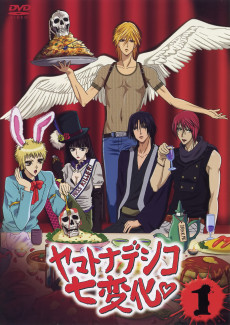
The Wallflower
Takano Kyohei, Oda Takenaga, Toyama Yukinojo, and Morii Ranmaru are going to rent a house to go to school for free on the condition that they make the girl of the house a "lady". However, Nakahara Sunako, the girl living there, is gloomy, weird, and horror movie maniac. She has a trauma of when she was told she was ugly by the boy whom she loved when she was in junior high school. She doesn't like beautiful things and gets a nosebleed when she looks at something beautiful.
(Source: AnimeNfo)
📺Anime Details
📝Editorial Analysis
Sunako’s nosebleed hits like a slapstick detonation—sudden, absurd, crimson-splattered across her pale cheek as she stares at Kyohei’s perfectly symmetrical, unfairly handsome face. She doesn’t scream. She gags. Then collapses backward into a pile of horror VHS tapes, limbs splayed like a marionette with its strings cut. The camera lingers—not on the blood, but on the flickering cover of The Exorcist beneath her elbow, its scratched plastic glinting under the hallway light. That’s the heartbeat of The Wallflower: trauma wearing clown makeup, grief dressed in goth lace, and healing that arrives not through grand confessions, but through slapstick, chibi distortions, and the sheer, exhausting persistence of four boys who keep dragging beauty—like an unwilling guest—into her darkened room.
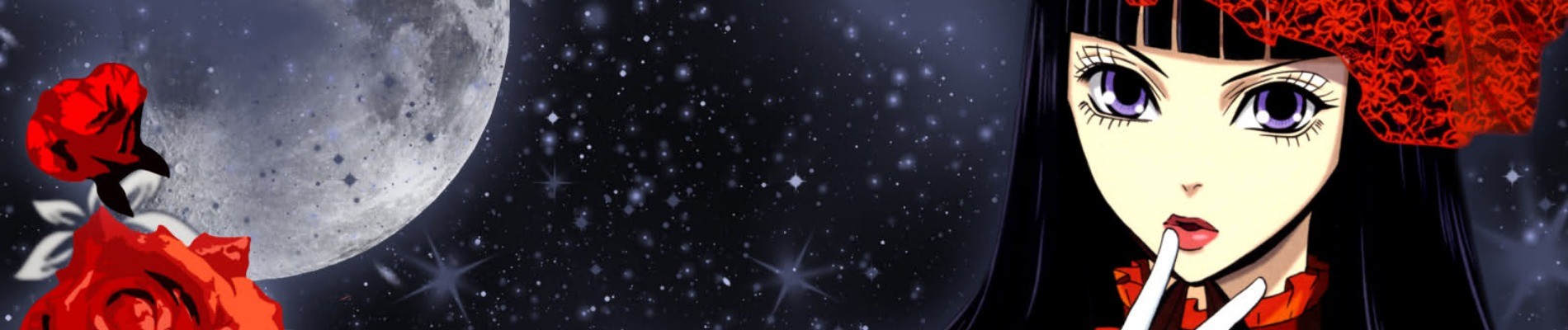
This isn’t just comedy. It’s surreal tenderness. You feel the weight of Sunako’s junior high wound—the boy’s words still echoing in the silence between scenes—but the anime refuses to let that silence calcify. Instead, it parodies emotional gravity: Ranmaru’s tearful monologues about “ladyhood” dissolve into pratfalls; Yukinojo’s flamboyant femininity is rendered in glittery chibi bursts that undercut any potential mockery; even Kyohei’s gruff protectiveness curdles into absurdity when he tries (and fails) to fold a napkin into a swan. It makes you think about how shame lives in the body—not as solemn drama, but as physical revolt (nosebleeds), spatial retreat (her locked room), and aesthetic recoil (her hatred of roses, pastel, symmetry). It’s hikikomori as lived texture, not diagnosis—a world where vulnerability wears fishnet gloves and laughs too loud when cornered.
Prince of Persia resonates because, like The Wallflower, it wraps romance and self-reconstruction in parody and physical comedy. The description calls it “an all-new epic journey” built by Ubisoft Montreal—yet the player review hints at something deeper: it’s a reboot, a deliberate, almost theatrical reset, much like Sunako’s forced “lady training.” Both pivot on transformation through performance: the Prince must master acrobatic grace while navigating emotional entanglement; Sunako must endure tea ceremonies and flower arranging while her soul recoils. They share that same shoujo-tinged tension—beauty as both weapon and lifeline—where every elegant leap or carefully placed teacup feels like a tiny act of defiance against internalized ugliness.
The Sims™ 4 mirrors the anime’s episodic, domestic surrealism—not in story, but in structure and emotional permission. Its description invites you to “play with life” and “create a world of Sims that’s wholly unique,” echoing how The Wallflower treats Sunako’s house like a sandbox of emotional reconditioning: each episode a new scenario (a garden party! a school festival!), each character a customizable archetype (the stoic brute, the flamboyant dreamer, the anxious perfectionist). The player review complains about DLC costs and bugs—but that friction is part of the resonance. Like Sunako’s resistance to “ladyhood,” TS4’s jankiness becomes part of its charm: you’re not simulating realism, you’re curating chaos, forcing beauty into glitchy, defiant coexistence with mess. Both reward patience with absurd payoff—watching a Sim spontaneously burst into ballet mid-argument feels kin to Sunako accidentally reciting Shakespeare while trying to scare off a deliveryman.
Thrillville®: Off the Rails™, with its “20 death-defying rides” and “coasters [that] leap from one track to another,” captures the anime’s tonal whiplash. The description celebrates physics-defying spectacle; the player review fondly recalls its “fun” aging “really well.” That’s The Wallflower’s rhythm: one moment Sunako is weeping over a dead spider, the next she’s launching herself off a balcony onto a trampoline held by Yukinojo in full Victorian drag. It’s episodic adrenaline—no stakes, no permanence, just the giddy, slightly nauseating rush of emotional gears grinding against each other until something new clicks into place. The coaster doesn’t need meaning. It needs velocity. So does Sunako’s healing.
You’d love this pairing if you’ve ever laughed too hard while crying in a dim room, if you collect vintage horror posters but also own three shades of pink lipstick, if your idea of intimacy includes both deep silence and someone dramatically tripping over a rug. It’s for the person who knows trauma isn’t always a monolith—it can wear platform boots, quote Dracula, and bleed bright red when handed a single perfect rose.
🎮4 Games That Match the Vibe

Match Dimensions Explained
❓Frequently Asked Questions
Why does Prince of Persia keep showing up in 'Games Like The Wallflower' lists?
Because both lean hard into romantic tension, witty banter, and emotionally charged shoujo-adjacent storytelling—like when the Prince’s guarded charm mirrors Wallflower’s Hanaji’s slow-burn vulnerability, and the game’s comedy-parody tone (think palace intrigue meets awkward first dates) hits that same sweet spot. Critics even called it ‘a love letter to classic anime romance with a swashbuckling twist’.
Is there an anime or live-action adaptation of The Wallflower?
No official adaptation exists—but fans often compare Prince of Persia’s cinematic cutscenes and character-driven drama to what a Wallflower anime *could* feel like: think lavish settings, expressive facial animations during confession scenes, and that same blend of earnestness and gentle humor you’d get from watching Koichi and Sunako navigate their feelings.
How is The Sims 4 actually like The Wallflower if it’s just a life sim?
It’s all about the romance & shoujo dimension—TS4 lets you craft Sunako-like reclusive goth Sims who slowly open up through relationships, throw elaborate ‘haunted mansion tea parties’ (à la the Kuroba house), and even roleplay cringe-comedy moments like Hanaji’s infamous ‘I’m not a pervert!’ denial. Players say it’s the only game where you can authentically recreate Wallflower’s vibe without combat or quests.
What’s the best ‘Wallflower-like’ game if I want something cozy, low-stakes, and full of quiet character moments?
Thrillville®: Off the Rails™—yes, really! It’s got that same gentle, offbeat charm: building whimsical rides feels like designing the Kuroba mansion’s secret passages, and managing park guests lets you ‘matchmake’ quirky characters (think pairing the shy botanist with the flamboyant magician) in ways that echo Wallflower’s found-family warmth. One longtime fan said it ‘captures the joy of small, sincere connections better than half the dating sims out there.’