
The Warrior Princess and the Barbaric King
📺Anime Details
📝Editorial Analysis
The first time she draws her sword—not in battle, but in the council chamber, barefoot on cold marble, hair unbound and sweat-slicked from a dawn patrol—her voice doesn’t shake. It cracks, just once, like dry riverbed clay under sudden rain. The Barbaric King watches, arms crossed, not with mockery, but with the slow, quiet weight of someone who’s seen too many heirs break under ceremony—and this one refuses to shatter. That crack isn’t weakness. It’s the sound of a world recalibrating.
What makes The Warrior Princess and the Barbaric King vibrate so distinctly isn’t its ecchi gags or elf-adjacent magic—it’s the tension between sovereignty and surrender. Not romantic surrender, not political capitulation—but the raw, daily choice to hold power while being seen, while navigating war logistics, lost-civilization archives, and an age-gap dynamic that never flattens into trope. You feel the grit of diplomacy in a shared meal where every bite is measured: her fork hovers over roasted boar; his thumb brushes flour off her wrist after they jointly decipher a glyph. There’s no grand monologue about duty—just the exhaustion in her shoulders when she re-sheathes her blade after the vote passes, and the way he leaves his war map open on the table, deliberately untranslated, until she asks. It’s intimate warfare: love as co-governance, romance as tactical coordination.
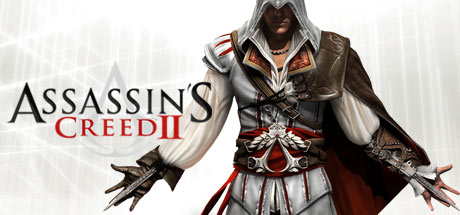
That same emotional architecture hums in Assassin's Creed™: Director's Cut Edition, where player reviews admit the textures are dated—but call it “next-gen” for how it redefines action through consequence. Like the Warrior Princess, Altaïr doesn’t win by overpowering; he wins by reading rooms, memorizing guard rotations, choosing when to be visible. The political thriller dimension isn’t backdrop—it’s bone-deep. When the game forces you to stand motionless in plain sight, heart pounding, waiting for a target to turn—that’s the council-chamber silence before her voice cracks. Both demand you feel the weight of your own visibility as a weapon and a vulnerability.
Then there’s Kingdom Come: Deliverance II, matching The Warrior Princess and the Barbaric King at 85—not because it’s historically accurate, but because its dark fantasy isn’t about dragons, but dust in the throat during siege negotiations. Its tactical warfare isn’t flashy combos; it’s calculating how many days your garrison can hold out while also feeding refugees. Just like the anime’s lost-civilization subplot isn’t ancient ruins as set dressing—it’s crumbling aqueducts that still channel water, elven glyphs etched into grain silos, magic that works only if you know the soil pH. Both treat worldbuilding as lived infrastructure, not lore-dump. The player review doesn’t mention elves or romance—it doesn’t need to. What resonates is the grind: the fatigue in Henry’s hands as he reforges a broken hinge, mirroring her fingers tracing cracked mortar in the palace wall, wondering if the old masons used ash from volcanic glass.
And Throne of Lies®: Medieval Politics, scoring 84, nails the unspoken calculus that fuels every scene between princess and king. Its dark fantasy isn’t spells—it’s the way a compliment from a rival lord lands like a threat, or how a shared laugh in the scriptorium gets dissected in whispers three corridors away. No one shouts. Everyone adjusts. That’s the anime’s heartbeat: when the king “forgets” to wear his ceremonial crown during treaty talks, and she doesn’t correct him—because she knows the gesture is for the emissaries watching her reaction. The game’s political thriller dimension lives in those micro-adjustments, not throne-room speeches. It’s the same exhausted, razor-wire awareness.
This pairing isn’t for fans of “strong female leads” as bullet points. It’s for the person who rewatches the scene where she stitches his wound while reciting troop deployment orders, and feels their chest tighten—not at the blood, but at the sheer, quiet continuity of care and command. It’s for the player who pauses Act of War: Direct Action mid-mission not to strategize, but to read the intercepted radio chatter about a supply convoy carrying both gunpowder and midwife herbs—and smiles, because that duality matters. They’re the ones who don’t want fantasy to escape reality, but to deepen it: where love is logistics, war is paperwork, and magic is just the name we give to systems we haven’t mapped yet. They crave stories where every kiss has a casualty list, and every victory smells faintly of burnt parchment and wet stone.
🎮12 Games That Match the Vibe


Match Dimensions Explained
❓Frequently Asked Questions
Why is Assassin's Creed: Director's Cut Edition listed as a match for The Warrior Princess and the Barbaric King?
Because both lean hard into political thriller tension—like when Altair navigates Damascus' shadowy factions while trying to expose the true mastermind, mirroring the princess’s courtly deception scenes where she feigns loyalty to the barbaric king while secretly rallying dissenters. The tactical warfare dimension also lines up: you plan assassinations using crowd cover and timed strikes, just like the game’s ‘Duel of Whispers’ mechanic where timing and environment matter more than raw strength.
Is there a TV adaptation of The Warrior Princess and the Barbaric King?
No—there isn’t, and none of the matched games have official adaptations either. But if you love the vibe, Throne of Lies®: Medieval Politics comes closest to feeling like an interactive HBO drama: think scheming nobles whispering in candlelit halls (like Lady Isolde’s betrayal scene in Chapter 4), all wrapped in real-time diplomacy and backstabbing that plays out like a live-action political thriller.
How does Kingdom Come: Deliverance II compare to REMNANT II for fans of The Warrior Princess and the Barbaric King?
Kingdom Come: Deliverance II nails the grounded, consequence-driven political intrigue—the way Henry must negotiate with Bohemian lords after the massacre at Rataje feels like the princess navigating her marriage alliance after the king’s public execution of her advisor. REMNANT II swaps that for high-stakes Dark Fantasy survival: imagine the ‘Cursed Frostlands’ boss fight against the Hollow King, where environmental hazards and stamina-based dodging echo the barbaric king’s arena trials—but without the courtly subterfuge.
What’s the best game like The Warrior Princess and the Barbaric King if I want slow-burn tension and morally grey choices?
Throne of Lies®: Medieval Politics is your top pick—it’s built entirely around lying, bluffing, and reading other players’ tells during round-based debates, just like the princess’s ‘Council of Thorns’ sequences where every ‘yes’ could be treason. With its 84 Metacritic score and focus on Dark Fantasy + Political Thriller dimensions, it delivers that delicious, nerve-wracking uncertainty of not knowing who’s truly loyal—no combat spam, just razor-sharp dialogue and consequences that linger for three in-game days.