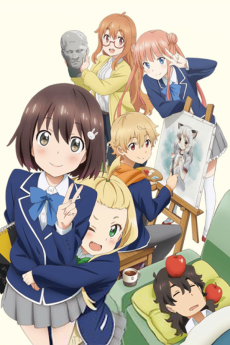
This Art Club Has a Problem!
The anime focuses on an art club in a certain middle school, and its members: Subaru Uchimaki, who is a genius at drawing faces, but only wants to draw the perfect 2D wife; Colette, a rich troublemaker who never stops making mischief; and the club president, who sleeps through sessions and collects sleeping aids. Mizuki Usami is the only person in the club who wants to do art club-like activities, and constantly struggles to do so.
(Source: Anime News Network)
📺Anime Details
📝Editorial Analysis
The smell of cheap acrylic paint and stale tea hangs in the air—Mizuki Usami’s hand trembles slightly as she holds up a half-finished still life, her knuckles white around the brush handle. Around her, Subaru sketches her—but only her face, detached from context, floating on a blank page like a shrine idol; Colette flips through a fashion magazine, doodling devil horns on the model’s forehead; the president snores softly into a stack of sleep masks, one strap dangling off her ear. No one looks at the canvas. No one asks about the light source. The art club isn’t making art—it’s holding space for wanting, awkwardly, desperately, without permission to name it.
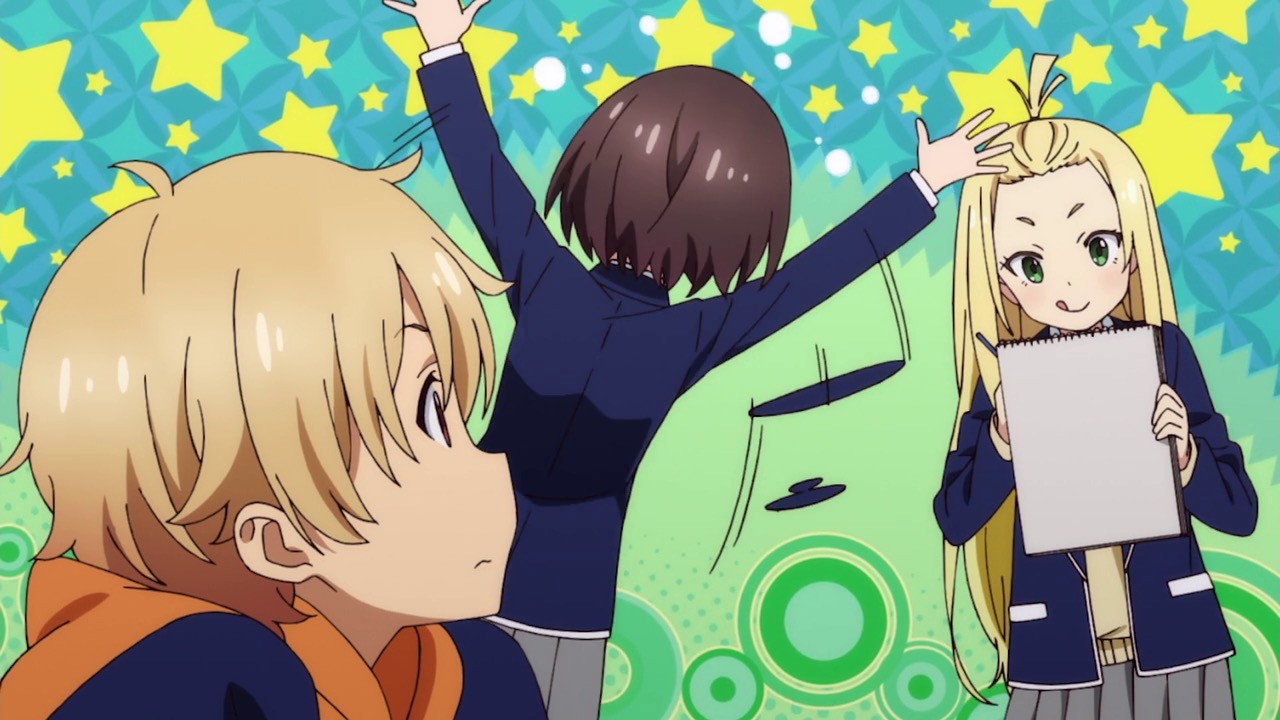
That’s the quiet hum beneath This Art Club Has a Problem!: not incompetence, but misalignment. Every character orbits the same sun—art—but their gravitational pulls point in wildly different directions. Subaru’s obsession with 2D wives isn’t just otaku fixation; it’s a shield against the terrifying vulnerability of drawing real people—especially Mizuki, whose earnestness feels like an exposed nerve. Colette’s mischief isn’t chaos for chaos’ sake—it’s the glittery deflection of someone who’s never had to try to belong, so she destabilizes instead. And Mizuki? Her frustration isn’t about technique—it’s the ache of offering sincerity into a room that keeps turning its face away. It’s melancholic exploration disguised as slapstick: the slow, tender agony of caring deeply in a world that refuses to meet you halfway.
Which is why Prince of Persia lands with such uncanny resonance. Its description calls it “an all-new epic journey” built on “new lands and a brand new story”—yet the player review quietly undercuts that grandeur: “The 3rd reboot… completely separate from the sands…” That dissonance—between spectacle and erasure, between forward motion and recursive reinvention—is pure This Art Club Has a Problem! energy. Mizuki tries to launch a figure-drawing session; Subaru reboots into “perfect eyelash curvature”; Colette “reboots” the lesson into a prank war; the president reboots into REM cycle. There’s no continuity, no canon—just beautiful, futile attempts to begin again, each time hoping this version will finally stick. The melancholy isn’t in failure—it’s in the quiet dignity of beginning yet again, even when the ground keeps dissolving.
Then there’s Disco Elysium - The Final Cut, where the description promises “a detective with a unique skill system” and “a whole city to carve your path across”—but the player review cuts deeper: “Capital has the ability to subsume all critiques into itself. Even those who would critique capital end up reinforcing it instead.” That’s Mizuki, every episode. She critiques the club’s dysfunction—not with irony or detachment, but with love—and yet her critiques become the club’s dysfunction: her passion fuels Subaru’s avoidance, her structure invites Colette’s sabotage, her care makes the president’s naps feel like sacred rites. Like the detective in Revachol, Mizuki is trapped inside a system she both sustains and mourns. Her “skill system” isn’t logic or empathy—it’s endurance. Her “city” isn’t sprawling—it’s four folding chairs, a drying rack, and the stubborn belief that meaning can be squeezed from the gap between intention and outcome.
None of this is cynical. That’s the miracle. Both the anime and these games hold space for yearning that doesn’t resolve—Subaru never draws Mizuki’s full body; the Prince never quite reconciles time and consequence; the detective never fully escapes the architecture of his own mind. What binds them isn’t plot or genre, but emotional honesty: the way they treat unrequited love—not as a punchline or a plot device—but as a quiet, persistent weather system, shaping how light falls across a face, how silence settles in a room, how a brush hovers, trembling, above a blank page.
You’d love this pairing if you’ve ever stayed late in an empty classroom, rearranging chairs just to feel like something was happening—even if nothing changed. If you collect sleeping aids not to escape, but because the act of choosing the perfect pillow feels like agency. If you sketch faces obsessively, not because you’re avoiding people, but because faces are the only part of the world that still feels safe to hold in your hands. This is for the ones who draw love letters they’ll never send, who reboot their lives in five-minute intervals, who understand that sometimes the most radical act isn’t finishing the painting—it’s picking up the brush again, knowing exactly what will happen, and doing it anyway.
🎮3 Games That Match the Vibe
Match Dimensions Explained
❓Frequently Asked Questions
Why does Prince of Persia keep showing up in 'Games Like This Art Club Has a Problem!' lists?
Because both lean hard into melancholic exploration and quiet, emotionally charged romance—like when the Prince wanders ruined palaces at dusk, mirroring the art club’s hushed hallway conversations and unspoken feelings. The game’s focus on introspective pacing, visual poetry (think watercolor-like lighting), and slow-burn character intimacy hits the same Shoujo-adjacent vibe as the anime’s tender, awkward sincerity.
Is there an anime or manga adaptation of Disco Elysium that captures the same mood as This Art Club Has a Problem!?
No—Disco Elysium has no official anime or manga adaptation, but its *vibe* overlaps surprisingly with the art club’s tone: think Kimura’s internal monologues spiraling during a rainy lunch break, mirrored by Harry Du Bois’ fragmented, self-deprecating thoughts in Martinaise’s rain-slicked alleys. Both use silence, hesitation, and layered inner voice to build emotional weight—not action, but *presence*.
How is Prince of Persia similar to This Art Club Has a Problem! but different from Disco Elysium?
Prince of Persia shares the art club’s soft-spoken romance and painterly melancholy—like lingering on a sunlit courtyard scene—but avoids Disco Elysium’s dense political satire and existential dread. Where Disco Elysium drops you into Capital’s ideological chaos (‘Even those who would critique capital end up reinforcing it’), Prince of Persia wraps you in lyrical solitude—more like Yukari sketching alone in the clubroom at golden hour.
What’s the best game like This Art Club Has a Problem! if I just want something gentle, nostalgic, and quietly romantic?
Go straight to Prince of Persia—it’s the closest match for that wistful, sun-dappled gentleness. With its 84 Metacritic score and emphasis on Romance & Shoujo + Melancholic Exploration, it delivers the same emotional cadence: long pauses, meaningful glances, and environments that feel like memories. Disco Elysium? Brilliant, but too sharp-edged and cerebral—it’s more ‘Harry questioning his own ethics in a crumbling tenement’ than ‘Mio nervously handing a folded sketch to the club president’.