
Tower of Druaga: The Aegis of Uruk
📺Anime Details
📝Editorial Analysis
The air in the Tower’s lower chambers smells like wet stone and old incense—sharp, damp, faintly sweet—and Gil’s sword clangs once, a brittle, hollow note against black basalt, right before the floor vanishes beneath him. He drops—not screaming, not even flinching—just tightening his grip as gravity rewrites itself midair. That split-second suspension, where physics blinks and consequence hasn’t caught up yet? That’s where Tower of Druaga: The Aegis of Uruk lives: not in victory, but in the breath before the fall.
It’s not wonder—it’s disorientation. Not awe, but the low hum of something ancient breathing just out of sync with time. The Tower isn’t a place you conquer; it’s a logic puzzle wearing armor, shifting corridors folding like origami made of memory and malice. Magic here doesn’t dazzle—it itches, like static clinging to skin after lightning strikes nearby. Swordplay isn’t choreographed heroism—it’s desperate geometry, blades skidding off wards that flicker like faulty neon. And the comedy? It’s not punchlines—it’s Gil squinting at a floating glyph while a succubus sighs, arms crossed, muttering about “human temporal dyslexia” as if age regression were just bad Wi-Fi. You don’t feel empowered watching this. You feel unmoored—like your internal compass has been recalibrated by something older than language. It makes you question whether “progress” is linear, or just another trap laid in marble and mist.
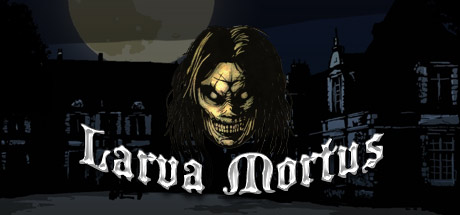
That same unmooring pulses through Larva Mortus: a top-down exorcist slashing through “randomly generated” dread, where “fast-paced hack and slash” means every corridor could collapse into the next one—not because of plot, but because the map itself refuses stability. The player review calls it a “fun gameplay loop,” but what sticks is the unease beneath the spectacle—the way “ominous” isn’t atmospheric wallpaper; it’s procedural, breathing down your neck each time the dungeon reshuffles. Like Druaga’s Tower, Larva Mortus doesn’t reward mastery so much as adaptive surrender: you learn to pivot mid-swing, trust nothing static, and treat every wall as temporary scaffolding.
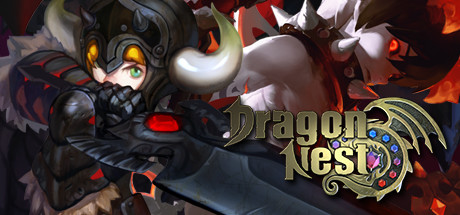
Then there’s Dragon Nest, whose description promises “blazingly fast combat” fused with “epic story”—but the real resonance hides in the player review: “can’t even log in. the login menu is just a white screen you can’t click on lmfao…” That glitch isn’t failure—it’s texture. It mirrors how Tower of Druaga: The Aegis of Uruk treats narrative cohesion: characters age backward mid-sentence, basketball appears without explanation like a non-Euclidean object dropped from orbit, and hetero romance stutters against asexual worldbuilding like two gears grinding mismatched teeth. The white screen isn’t broken—it’s the point. Both reject seamless immersion in favor of jarring, almost bureaucratic absurdity: systems failing on purpose, reminding you the architecture is haunted—not by ghosts, but by its own inconsistent rules.
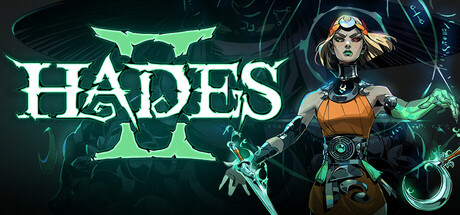
And Hades II, with its “Roguelike & Dungeon, Action Spectacle” DNA, lands hardest—not in its combat (though that’s razor-precise), but in its relentless recursion. Every run resets the Tower’s logic, yes—but also resets your understanding of causality, loyalty, even time’s arrow. Just like Gil waking up younger after surviving a floor he shouldn’t have, Hades II forces you to rebuild meaning from scratch each descent—not because you failed, but because the Tower requires forgetting to remember correctly. The “85” score isn’t for polish—it’s for how deeply it weaponizes disorientation as emotional grammar.
This pairing isn’t for fans of “dungeon crawlers” or “fantasy adventures.” It’s for the person who replays a boss fight not to win, but to watch how the camera lingers on a crack in the ceiling just before the third phase—and wonders if that crack was there last time. It’s for the viewer who smiles when a succubus critiques Gil’s posture mid-battle, not because it’s funny, but because it confirms the world operates on tone before taxonomy. It’s for players who reload after a crash not out of frustration, but curiosity: What new inconsistency just bloomed in the void? They don’t seek coherence. They seek the shiver when reality blinks—and catch the Tower, mid-wink, holding their gaze.
🎮9 Games That Match the Vibe
Match Dimensions Explained
❓Frequently Asked Questions
Why is Larva Mortus considered a top match for Tower of Druaga: The Aegis of Uruk?
Because both lean hard into tense, real-time dungeon crawling where positioning and timing matter—like dodging the Druaga’s spear thrusts or weaving through Larva Mortus’ swarming larvae while chaining exorcism shots. The top-down perspective, deliberate enemy patterns, and that ‘one-more-floor’ roguelike loop (with randomized floors and weapon pickups) mirror Druaga’s punishing-but-fair rhythm.
Is there a mobile or console port of Tower of Druaga: The Aegis of Uruk?
No official mobile or modern console port exists—but if you’re craving that same vibe on current hardware, Hades II nails it: tight combat with god-tier animation feedback (like Zagreus’ dash canceling into Styx strikes), layered lore drip-fed between runs, and dungeon layouts that reward memorization *and* adaptation—just like figuring out which floor in Druaga hides the Blue Key behind a fake wall.
How does Last Epoch compare to Tower of Druaga: The Aegis of Uruk in terms of progression?
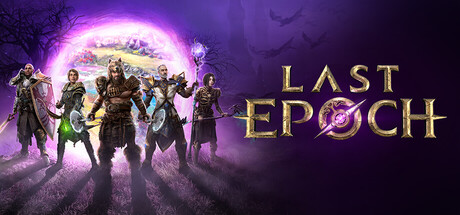
Druaga locks progression behind puzzle-solving and precise pattern recognition (e.g., needing to hit the same tile three times to open a door), while Last Epoch gives you deep skill-tree customization and loot-driven power spikes—but both make you *earn* each floor. You’ll feel that same dopamine hit when your Last Epoch Chronomancer finally clears Floor 32 with time-slowing runes, just like finally navigating Druaga’s 60th floor without dying to the Manticore’s timed leap.
What’s the best game like Tower of Druaga for that lonely, atmospheric dungeon crawl vibe?
Larva Mortus—it’s got that oppressive, candlelit dread right from the start: flickering torchlight, distant wails echoing off stone walls, and your exorcist character moving with weight as you cautiously clear rooms full of possessed dolls and shadow-wraiths. It’s not flashy like Dragon Nest or story-heavy like Hades II; it’s pure, moody, tactile dungeon tension—exactly what makes Druaga’s Uruk feel like stepping into a living myth.