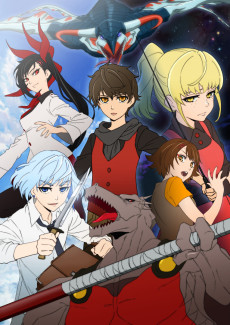
Tower of God
There is a tower that summons chosen people called "Regulars" with the promise of granting their deepest desires. Whether it be wealth, fame, authority, or something that surpasses them all—everything awaits those who reach the top.
Twenty-Fifth Bam is a boy who had only known a dark cave, a dirty cloth, and an unreachable light his entire life. So when a girl named Rachel came to him through the light, his entire world changed. Becoming close friends with Rachel, he learned various things about the outside world from her. But when Rachel says she must leave him to climb the Tower, his world shatters around him. Vowing to follow after her no matter what it takes, he sets his sight on the tower, and a miracle occurs.
Thus begins the journey of Bam, a young boy who was not chosen by the Tower but opened its gates by himself. They call his kind "Irregulars"—beings that have shaken the very foundation of the Tower each time they set foot inside it.
📺Anime Details
📝Editorial Analysis
The light isn’t warm. It’s cold, sharp, and impossibly distant — a sliver cutting through the absolute black of Bam’s cave, the only thing he’s ever known. He presses his palm against the damp stone wall, fingers trembling not from cold but from the sheer, vertiginous weight of that light — not as illumination, but as invitation, as judgment, as a door he’s never been allowed to open. When Rachel steps through it, her silhouette haloed in that same unforgiving glow, her smile doesn’t erase the darkness behind her — it deepens it. That moment isn’t hope. It’s the first tremor before the avalanche.
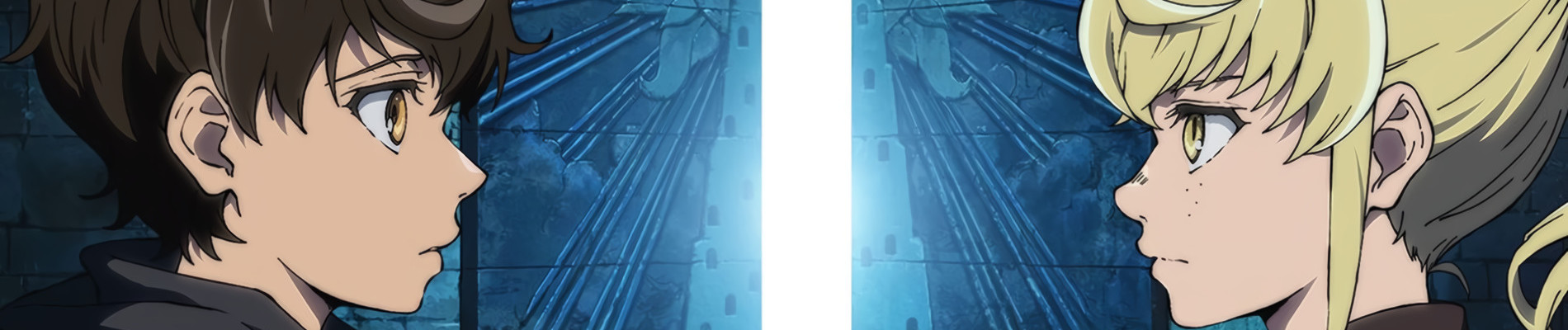
That’s the feeling Tower of God lives inside: isolation that hums with latent power, longing that curdles into suspicion, and a world so vast and architecturally cruel it makes every alliance feel like temporary scaffolding over an abyss. It’s not just mystery — it’s the dread of realizing the rules were written before you existed, and every stair you climb is also a floor collapsing beneath someone else. The tower isn’t a setting; it’s a sentient pressure system — compressing trust, distorting memory, turning friendship into a tactical variable. You don’t explore it. You endure its logic. And when Bam’s fists crack stone or his breath hitches mid-fall, it’s never triumph you feel — it’s the raw, scraping fragility of a boy trying to hold onto a name — Rachel — while the architecture itself seems to whisper that names are the first things erased on the way up.
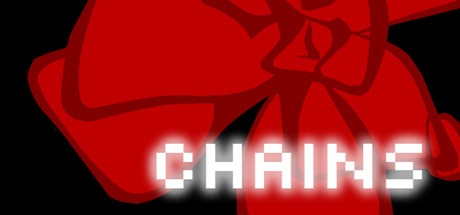
That emotional DNA — the quiet ache of survival wrapped in systemic indifference — pulses in Chains. Its description calls it “relaxing,” but the player review cuts deeper: “link adjacent bubbles… clear enough till you can proceed.” That’s Bam’s entire rhythm — not grand combat, but the hyper-focused, physics-defying precision of connecting three points just to buy one more breath, one more step, one more chance to remember who you were before the light changed everything. The “increasingly difficult physics-driven” challenge mirrors how the tower’s tests never shout — they tilt, they resist, they make your own momentum work against you. You don’t win Chains; you persist, pixel by pixel, chain by chain — exactly how Bam endures.
Then there’s Persona 5 Royal, where the player review praises its “seamless transition between daily life…” — but that seamlessness is the lie. In Tower of God, there is no daily life. Every conversation is reconnaissance. Every silence is a trapdoor. Yet Persona 5 Royal’s genius lies in how its emotional narrative forces you to live those mundane rhythms — school days, part-time jobs, rain-soaked walks — while knowing, bone-deep, that the real war is happening in the shadows between them. The Phantom Thieves wear masks not for power, but because authenticity is too dangerous to carry openly. Bam wears his loyalty like armor — and watches it shatter. Both understand that the most devastating betrayals aren’t shouted in battle arenas; they’re delivered over shared meals, in glances held half-a-second too long, in the way a name suddenly feels foreign on your tongue.
And Jade Empire™: Special Edition, with its stark choice between “open palm or closed fist,” lands with eerie precision. Its description frames martial mastery as a path — not just skill, but identity forged under unbearable weight. The player review calls it “fantastic,” but what lingers is the implied labor: the instructions copied from Reddit, the steam.dll workaround — a testament to how much effort it takes just to access the world’s heart. Bam’s cultivation isn’t about glowing energy; it’s about the brutal, unglamorous work of remaking your body and soul while being watched, while being tested, while forgetting. Jade Empire’s path isn’t chosen once — it’s reaffirmed in every parry, every stance, every time you choose mercy or might not as a strategy, but as a confession of who you refuse to become.
This pairing isn’t for fans of “cool powers” or “epic battles.” It’s for the ones who pause the anime when Bam stares at his own reflection in a cracked mirror — not to admire strength, but to wonder if the face looking back is still his. It’s for players who replay Persona 5 Royal’s rainy Tuesday not for the romance, but to hear the silence between the jazz notes — the same silence where Bam counts his breaths before stepping into Test 37. It’s for anyone who’s ever felt the crushing, beautiful weight of a promise made in darkness — and the terrifying, necessary courage it takes to keep walking toward a light that might not be waiting.
🎮13 Games That Match the Vibe







Match Dimensions Explained
❓Frequently Asked Questions
Why does Tower of God feel so different from Heroes of Might & Magic V even though both have tower climbing vibes?
Great question — HoMM V *does* have that vertical progression (like ascending the Citadel or conquering tiered strongholds), but it’s all turn-based strategy on hex grids, not a narrative-driven ascent like Bam climbing the Tower. You’re commanding armies and managing resources, not solving floor-specific trials with characters like Rachel or Rak Wraithraiser. It’s more about empire-building than emotional betrayal and stairway symbolism.
Is there a Tower of God anime or game adaptation I can actually play right now?
No official Tower of God game exists — but if you want that same blend of high-stakes vertical progression and intense character-driven stakes, *Persona 5 Royal* nails the emotional narrative weight (think Joker’s loyalty confessions mirroring Bam’s shifting trust in his allies) and JRPG structure, while *Jade Empire* delivers martial-arts mastery and moral choice echoes — like choosing Open Palm vs. Closed Fist instead of Light vs. Darkness in the Tower’s tests.
How does Chains compare to Tower of God in terms of puzzle difficulty and story pacing?
Chains is way more chill — it’s a relaxing match-3 arcade game where you link colored bubbles (no combat, no lore, no Bam crying mid-floor). The physics-driven chain mechanics are satisfying but light, unlike Tower of God’s escalating psychological and physical trials. Think ‘connect 4 meets bubble shooter’ rather than ‘Koon’s chess battle in Floor 43’. It’s got Emotional Narrative *dimension* in its score, but zero actual story — just pure, soothing pattern-linking.
What’s the best game like Tower of God if I’m craving that lonely, morally gray ascent vibe — not action, not comedy, just heavy atmosphere and quiet tension?
Go straight to *Space Trader: Merchant Marine*. Yeah, it sounds weird — but hear me out: it’s an open-world survival sim where you navigate hostile systems, make shady deals, and survive one precarious jump at a time. That slow-burn isolation, constant resource anxiety, and ‘one wrong move ruins everything’ dread? It channels the Tower’s oppressive verticality and moral ambiguity better than most RPGs. Plus, its Doom-engine grit gives it that same raw, unpolished intensity as early Tower arcs.