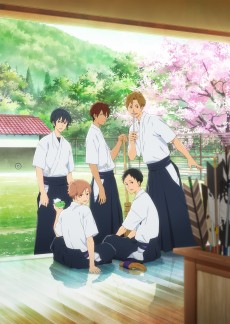
Tsurune
Minato played Japanese archery in middle school, but after a certain incident, he ran away from the sport. In high school, Minato meets new friends, and together as part of their school's archery club they aim to win the prefectural tournament.
(Source: Anime News Network)
📺Anime Details
📝Editorial Analysis
The thrum of the bowstring—sharp, clean, vibrating up Minato’s arm like a held breath finally released. Not the triumphant twang of victory, but the quiet, trembling resonance after he lets go: eyes closed, shoulders tight, chest rising slow as if he’s just surfaced from deep water. That sound isn’t just physics—it’s memory made audible. It’s the moment right after release, before the arrow finds its mark, when everything hangs—not in suspense, but in tenderness.
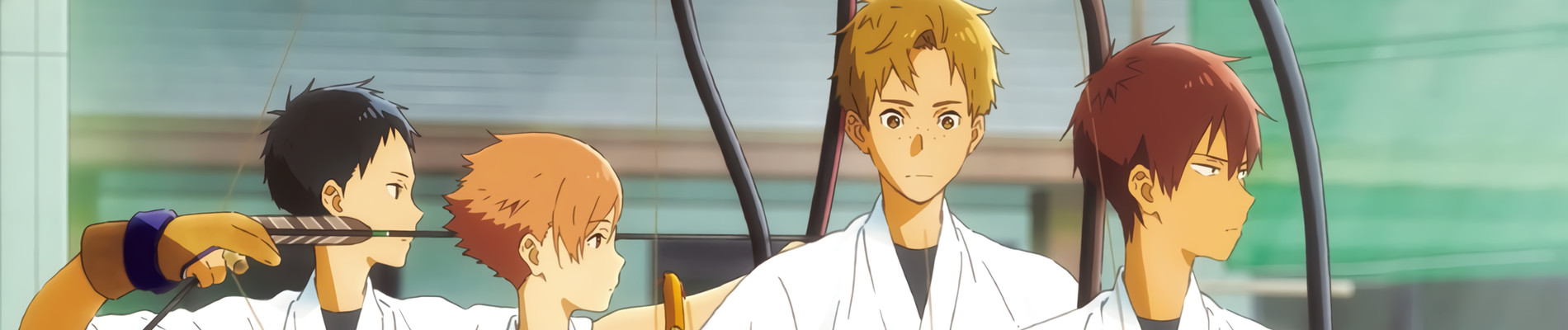
Tsurune doesn’t live in climax. It lives in the space between draw and release—the micro-tremor in a wrist, the way light catches sweat on a temple mid-practice, the silence that settles when the clubroom door clicks shut behind six boys who don’t yet know how to say I’m scared but do know how to adjust each other’s stance without looking up. This is archery not as spectacle, but as rehabilitation of attention: the sport forces stillness, demands presence, rewards patience over power. You feel it in your own ribs—the way your breath syncs with Minato’s, your jaw unclenching as he finally stops flinching at the string’s snap. It’s warm, grounded, quietly urgent. Not catharsis—but continuity. A slow, collective relearning of how to hold yourself in the world after something broke.
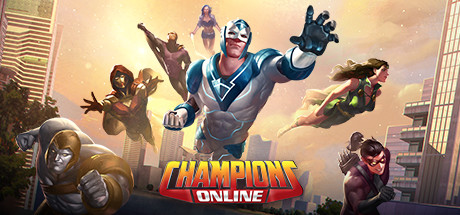
That emotional DNA—precision, repetition, shared focus—echoes in games where competition isn’t about domination, but about ritualized return. Take Champions Online: its description promises “defend[ing] Millennium City” and “design[ing] your hero… from thousands of costume pieces.” But the player review cuts deeper: “Its tailor might be the best case of character customization…” That meticulous, almost meditative act—choosing a boot texture, aligning a cape hem, adjusting a gauntlet’s angle—is kin to Minato adjusting his glove seam for the third time before practice. Both are acts of reassembly: rebuilding identity through deliberate, tactile choice. The emotional core isn’t saving the city—it’s the quiet pride in a costume you calibrated, just as Minato finds himself again one corrected stance at a time.
Then there’s Team Fortress Classic, described as enlisting “over nine character classes… in a unique style of online team combat.” The player review? “simply the best nostalgic game, i have dreams about this game. Ive played this since i was 9…” That devotion isn’t about maps or meta—it’s about the rhythm of role: Medic’s steady healing pulse, Spy’s patient waiting, Soldier’s explosive commitment. Like the archery club’s unspoken choreography—how Ryo automatically hands Minato a towel, how Takahashi times his encouragement to the exhale before release—TF2’s classes demand trust in function, not flash. You don’t win by outshining; you win because the Heavy’s minigun spin-up syncs with the Pyro’s airblast. It’s teamwork as resonance, not synergy—exactly how Tsurune frames camaraderie: no grand speeches, just synchronized breathing before a relay shot.
And Unreal Tournament 2004, with its “ten game modes—both team-based and…” (the ellipsis feels telling, like breath held). The review admits nostalgia, yes—but also “Wish I’d played the storyline version… Would have blown my mind at that time.” That wistfulness mirrors Minato’s own ache: not for what’s lost, but for the intensity of first encounter—the shock of velocity, the clarity of purpose when you’re sixteen and holding a bow for the first time in years. UT2004’s arenas aren’t backdrops; they’re fields of calibrated tension, where every jump, dodge, and rocket jump requires split-second recalibration—just like Minato learning to trust his body’s memory, not his fear. The “action spectacle” isn’t chaos. It’s control reclaimed, note by note.
This pairing speaks to someone who watches Tsurune and doesn’t just see archery—they feel the weight of the yumi in their palms, the burn in their shoulders after fifty draws, the way sunlight slants across tatami mats at 4 p.m. sharp. They play games not for loot or lore, but for the physical grammar of movement—the muscle memory of a perfect strafe, the satisfaction of a perfectly timed cloak-and-stab, the calm certainty of knowing exactly where your crosshair lands because you’ve done it a thousand times. They crave stories where healing isn’t magic—it’s showing up, adjusting a grip, breathing together. Where victory isn’t a trophy, but the quiet, shared exhale after the string sings—and you realize, for the first time in years, that your hands are steady.
🎮7 Games That Match the Vibe
Match Dimensions Explained
❓Frequently Asked Questions
Why does Tsurune's archery tension feel so different from Unreal Tournament 2004's combat pacing?
Great question — it’s all about *intentional stillness vs. constant motion*. Tsurune builds emotional weight through quiet focus (like Minato’s shaky breath before release in Episode 12), while UT2004 throws you into relentless, high-velocity chaos — think the frantic flag captures on Facing Worlds or the split-second dodges in Double Domination. That contrast is why UT2004 scores 81 in Competitive Spirit *and* Action Spectacle: it’s pure adrenaline, not contemplative precision.
Is there an anime adaptation of Team Fortress Classic?
Nope — no official anime exists for Team Fortress Classic, though fans have definitely imagined it! What *does* exist is that beloved 90s vibe: the Spy’s sly one-liners, the Medic’s chaotic healing, and the Heavy’s booming 'MEIN GOTT!' — all baked into the game’s irreverent, class-based teamwork. It’s the spirit of Tsurune’s team dynamics (like the Kitaoji squad’s banter during practice) but dialed up to cartoonish, over-the-top intensity.
Champions Online vs. Quake III Arena — which one captures Tsurune’s 'quiet determination' better?
Neither nails *quiet* determination — but Champions Online comes closer emotionally. Its Emotional Narrative dimension (score 82) shines in solo hero moments like confronting Dr. Destroyer alone on the rooftops of Millennium City — that lone resolve echoes Minato’s silent late-night training scenes. Quake III Arena? Pure spectacle: lightning-fast rocket jumps, arena-wide fragfests, zero downtime — it’s more like watching Tsurune’s *final match climax*, not the slow-burn buildup.
What’s the best game like Tsurune if I want that warm, nostalgic team-bonding vibe?
Team Fortress Classic — hands down. Think of how Tsurune’s characters grow through shared lunches, inside jokes, and post-practice exhaustion: TFC delivers that same grounded camaraderie. You’ll recognize it in the Medic’s ‘Heil!’ after reviving a teammate, or the Scout yelling ‘I’m on fire!’ mid-chaos — it’s messy, personal, and full of heart, just like Kitaoji’s archery club. Plus, its 81 score in Competitive Spirit means teamwork isn’t optional — it’s the whole point.