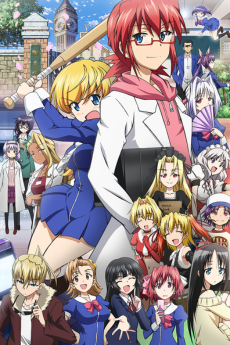
Ultimate Otaku Teacher
📺Anime Details
📝Editorial Analysis
The fluorescent buzz of a classroom after school, the faint scent of cheap ramen and printer toner clinging to the air — and there he is, Mr. Takaoka, adjusting his glasses while a student dressed as a Vocaloid idol belts out a pitch-perfect cover into a karaoke mic wired directly into the whiteboard. No one blinks. The physics teacher’s grading sheet doubles as fanart paper. A boy in a frilly blouse debates anime canon with the track captain, who’s wearing a custom-made Love Live! hoodie under his letterman jacket. It’s not chaos — it’s warmth, layered thick with inside jokes, zero judgment, and the quiet thrill of being seen exactly as you are: unapologetically, absurdly, alive in your niche.
That’s the feeling Ultimate Otaku Teacher lives inside — not just parody, but permission. It doesn’t wink at otaku culture; it breathes it like oxygen, treats cosplay as civic duty, and lets fandom be the grammar through which relationships form, lessons land, and identity unfolds. There’s no “getting over” your quirks here — there’s building with them. You don’t feel like you’re watching a show about nerds. You feel like you’ve walked into a lunchroom where every table has its own dialect, its own playlist, its own sacred ritual — and somehow, all the tables share the same snack tray. It’s safe, yes — but more than that, it’s electrically affirming, humming with the kind of joy that only comes when irony and sincerity collapse into one pulse.
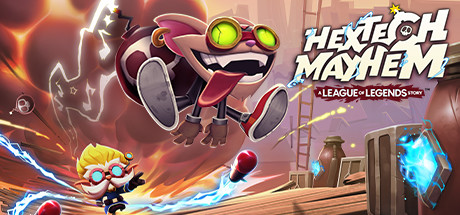
That same pulse thrums through Hextech Mayhem: A League of Legends Story™, where music isn’t backdrop — it’s engine, rhythm dictating movement, melody triggering transformations, and every boss battle unfolding like a hyper-stylized J-pop concert fused with bass-drop warfare. Its 85-score alignment on Music & Idol and Comedy & Parody isn’t accidental: like Ultimate Otaku Teacher, it treats performance as pedagogy, spectacle as substance. When Ziggs shreds a guitar solo mid-explosion, it’s not satire — it’s celebration, same as when Mr. Takaoka leads a class-wide choreography routine to an anime OP. Both refuse to separate “fun” from “meaning,” letting glitter, synths, and sheer audacity do the heavy lifting of emotional truth.
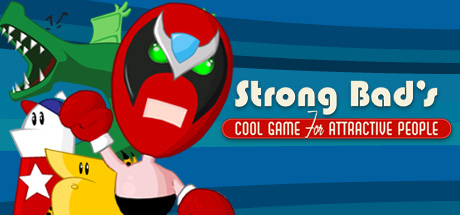
Then there’s Strong Bad's Cool Game for Attractive People: Season 1, whose description promises “wacky comedic adventures over 5 full episodes!” — and whose player review sighs, “With the recent remake of Poker Night, I hope Skunkape considers bringing this game back next…” That longing isn’t nostalgia for pixels — it’s for tone. Strong Bad’s world runs on the same logic as Class 3-B: reality bends around personality, authority figures are punchlines and lifelines, and absurdity isn’t escape — it’s infrastructure. When Strong Bad rewires a toaster to send passive-aggressive emails, it lands with the same delighted recognition as when Mr. Takaoka uses a Gundam model kit to demonstrate orbital mechanics. Both operate in a universe where competence and silliness aren’t opposites — they’re synonyms.
And Hi-Fi RUSH, also scoring 83 on those same dimensions, pulses with identical energy: combat synced to beat drops, villains who break into synchronized dance-offs, a protagonist whose entire worldview syncs to tempo. Its Music & Idol core mirrors how Ultimate Otaku Teacher frames learning — not as absorption, but as performance. Watching Chiharu practice choreography until her feet bleed feels kin to watching Asuka dodge lasers to the chorus of a synthwave anthem: effort isn’t grueling — it’s rhythmic, communal, radiant.
Even Grand Theft Auto: Vice City, with its 81-score match on Music & Idol and Comedy & Parody, resonates — not through crime, but through aesthetic conviction. Its description nails it: “Welcome to Vice City. Welcome to the 1980s. From the decade of big hair, excess and pastel suits comes a story of one man's rise to the top of the criminal pile.” That commitment to era-as-identity — the way neon, sax solos, and shoulder pads become moral architecture — echoes how Ultimate Otaku Teacher treats anime tropes: not as clichés, but as cultural grammar. Vice City’s Miami isn’t a setting — it’s a character with costume, soundtrack, and syntax. So is Class 3-B.
This pairing isn’t for people who “like anime and games.” It’s for the ones who still have their first doujinshi bookmarked in a battered notebook, who hum opening themes while waiting for the bus, who know the exact shade of pink used in a specific 2012 anime OP — and who crave worlds where that knowledge isn’t trivia, but currency. Where being deeply, weirdly, specifically into something isn’t a phase — it’s the foundation of everything that matters.
🎮4 Games That Match the Vibe


Match Dimensions Explained
❓Frequently Asked Questions
Why does Ultimate Otaku Teacher feel so similar to Hi-Fi RUSH even though one’s about anime teaching and the other’s a rhythm-action spy romp?
Both lean hard into over-the-top comedic timing, fourth-wall-breaking gags (like Taro’s absurd classroom antics vs. Chai’s cartoonish boss fights), and sync everything—dialogue, action, even cutscenes—to a pulsing music-driven beat. The shared 'Music & Idol' and 'Comedy & Parody' dimensions explain why they nail that same hyper-energetic, self-aware vibe—even if Taro’s grading pop quizzes while Chai’s dodging lasers to synthwave.
Is there an anime adaptation of Strong Bad's Cool Game for Attractive People?
Nope—no anime adaptation exists (and probably never will). It’s purely a Telltale point-and-click comedy rooted in Homestar Runner’s web-cartoon absurdity: think Strong Bad riffing on dating sims in Episode 3 or mocking '80s tropes while wearing sunglasses indoors. Fans have begged for it (one reviewer even linked it to the Poker Night remake hopes), but it remains gloriously, unadaptable weirdness.
How do Hextech Mayhem and Grand Theft Auto: Vice City compare as 'music-driven comedies'?
Hextech Mayhem is a tight, rhythm-platformer where you *are* the beat—Ziggs’ explosive solos literally trigger enemy patterns and stage hazards, all wrapped in League’s satirical tech-bro parody. Vice City, meanwhile, drowns you in licensed '80s radio chaos—driving around while 'Take On Me' blares while your character deadpans nonsense about pastel suits and cocaine deals. Both score 85 and 81 respectively in 'Music & Idol' + 'Comedy & Parody', but one’s a precision-timed idol fantasy, the other’s a chaotic, open-world satire.
What’s the best game like Ultimate Otaku Teacher if I just want something absurdly funny with zero stress?
Go straight to Strong Bad’s Cool Game for Attractive People—it’s pure, low-stakes, episodic silliness where failing a mini-game just triggers another ridiculous rant from Strong Bad ('YOU JUST LOST THE GAME!'). No grinding, no permadeath, just five tightly written episodes full of parody, meta-jokes, and that unmistakable 'Comedy & Parody' energy fans love—and it scores an 83, matching Hi-Fi RUSH and Hextech Mayhem in that exact same sweet spot.