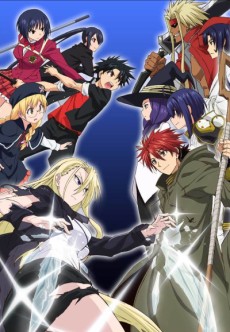
UQ Holder!
In the decade since the world became aware of the existence of magic, the world has undergone massive upheaval. However, a boy named Touta lives in seclusion in a rural town far removed from these changes. His ordinary life is highlighted by his magic-using female teacher and his supportive friends. When his tranquil daily life is disrupted, he embarks on a unique adventure.
(Source: Anime News Network)
📺Anime Details
📝Editorial Analysis
The scent of rain on hot asphalt. A quiet classroom window fogged at the edges. Touta watches his teacher—calm, composed, impossibly ancient—erase a chalkboard with one finger, leaving no dust, no trace. Outside, the world has fractured: magic is real, cities glow with floating sigils, governments have collapsed and reformed around arcane charters. But here, in this rural town, time moves like honey. That stillness isn’t peace—it’s suspension. Like the breath before a storm that never quite breaks.

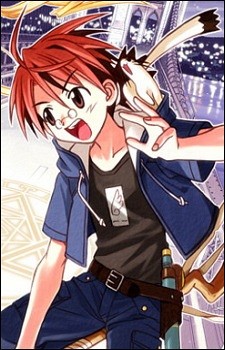



That’s the core feeling of UQ Holder!: dissonance. Not just between magic and mundanity, but between sincerity and absurdity, tenderness and visceral violence, youthful idealism and centuries-deep weariness. It doesn’t ask you to choose sides—it holds them all at once, like a hand cupping fire and water. You feel the weight of history in every glance from a character who’s lived 300 years, yet laugh when she trips over her own robe while chasing a runaway bento box. The gore isn’t shock for shock’s sake—it lands because the world feels so tenderly grounded first. The harem isn’t fan service as backdrop; it’s structural irony—the boy surrounded by immortal women who’ve outlived empires, yet still fumble over tea etiquette and unspoken affection. This isn’t urban fantasy as spectacle. It’s urban fantasy as memory: soft, fragmented, emotionally saturated, haunted by what’s been lost—and what refuses to stay buried.
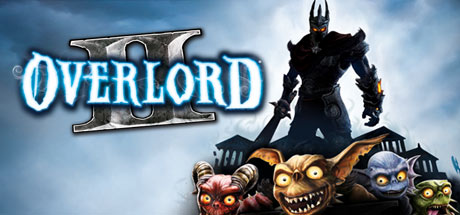
Which is why Overlord™, Overlord™: Raising Hell, and Overlord II resonate so deeply—not because they’re about vampires or magic schools, but because they share that same emotional architecture. Look at the description: “How corrupt you become depends on how you handle any given situation.” That’s Touta’s entire arc—not moral decay, but relational recalibration. He doesn’t gain power to dominate; he gains it to protect people who’ve already seen too much, who carry trauma like heirlooms. Just like the Overlord player choosing how “evil” to be, Touta’s choices aren’t binary—they’re tonal. A moment of mercy might cost him leverage; a brutal act might save a friend but fracture his own sense of self. And the player review nails it: “This game was so iconic… it give off Strong Fable vibes…” Yes—but not the bright, clean Fable of virtue points. The other Fable: the one where your good deeds rot quietly in the soil, where kindness is tactical, and legacy is always negotiated, never inherited.
Then there’s Overlord™: Raising Hell, with its tagline: “How evil can you get?” That’s the surreal comedy of UQ Holder! in a nutshell—not cartoonish villainy, but the exhaustion of being the only sane person in a room full of ancient, emotionally stunted immortals. When Touta’s teacher nonchalantly vaporizes a threat mid-sentence, then asks if he’d like extra pickles on his sandwich? That’s the same warped tonal whiplash as the Overlord ordering his minions to “flay the mayor… then fetch me tea.” Both treat cosmic stakes and domestic triviality as equally valid narrative weights. And the player review says it plainly: “the story the humor, it give off Strong Fable vibes…”—not as homage, but as kinship in emotional logic.
Even Overlord II, with its “Glorious E” (likely “Glorious Evil”) and chaotic Minions, mirrors UQ Holder!’s ensemble rhythm. The anime’s harem isn’t passive decoration—it’s a volatile, living ecosystem of clashing eras, ethics, and affections. So is the Overlord’s court: each minion, each lieutenant, each conquered lord brings their own warped morality, their own tragic backstory wrapped in slapstick. The review calls them “unique games. That really haven't had anything like them since their release.” Neither has UQ Holder!—it’s not shounen as escalation, but shounen as layering: every fight reveals another century of grief; every joke hides a wound that hasn’t scabbed over.
This pairing is for the person who cries during a cooking montage and rewinds a boss fight three times to perfect the timing of a single parry. For the one who keeps a notebook of character birthdays and underlines philosophical asides in light novels. For the reader who rereads the same quiet scene—Touta handing his teacher an umbrella, her fingers brushing his, rain falling just right—not for romance, but for the unbearable weight of that small, shared warmth in a world that’s forgotten how to hold it gently. They don’t want escapism. They want resonance: the kind that hums in your ribs long after the credits roll or the save file closes.
🎮7 Games That Match the Vibe


Match Dimensions Explained
❓Frequently Asked Questions
Why does Overlord feel so similar to UQ Holder! despite being a fantasy game?
It’s the tonal whiplash—like when UQ Holder! flips from Yukihime’s serene tea ceremonies to Touta unleashing a giant magical fist—that Overlord nails too. In Overlord II, you’re calmly negotiating with goblin tribes one minute, then gleefully ordering your minions to drop a boulder on a noble’s banquet hall the next—same chaotic charm, same 'wait, did they just do that?' energy. Both lean hard into absurdity wrapped in surprisingly competent worldbuilding.
Is there an anime or manga adaptation of Overlord that captures the same vibe as UQ Holder!?
No official anime or manga adaptation exists for Overlord (the game series)—it’s easy to confuse with the *Overlord* light novel/anime, but that’s unrelated. The games stand alone, and their humor, moral flexibility, and over-the-top villainy (like commanding your Minions to ‘decorate’ a castle with screaming peasants) feel like what UQ Holder! fans love—but it’s all native to the game’s own lore, not adapted from elsewhere.
How does Overlord compare to Pirates Vikings & Knights II for chaotic group fun?
Overlord is single-player mayhem where *you’re* the unhinged architect—think summoning a tidal wave of gremlins to drown a cathedral—while PVK II is pure multiplayer anarchy: three factions clashing in muddy, slapstick brawls where a Viking might yeet a pirate into a cannon mid-swordfight. If you loved UQ Holder!’s ensemble chaos (like the Kyoto arc’s massive magical free-for-all), PVK II delivers that energy live with friends—but Overlord gives you full control over the absurdity.
What’s the best game like UQ Holder! if I want something darkly funny with morally flexible power fantasies?
Overlord™ is your top pick—especially the first game, where you start as a skeletal tyrant resurrected by literal goblin worshippers, then escalate from petty theft to rewriting divine law. That ‘Fable meets twisted fairy tale’ vibe (as one player put it) mirrors UQ Holder!’s blend of cheeky fanservice, sudden emotional weight, and protagonists who casually break reality—just swap magic spells for minion-based demolition squads.