
Welcome to Japan, Ms. Elf!
📺Anime Details
📝Editorial Analysis
The steam rising from a bowl of miso soup in a tiny Tokyo apartment kitchen—just after the elf has carefully folded her long ears back to avoid brushing the ceiling fan. She watches the broth ripple, quiet, her expression unreadable but her fingers warm around the ceramic. The male protagonist sets down chopsticks beside her, not speaking, just breathing in the same air, same quiet hum of the city outside the window. No magic flares. No plot twist arrives. Just this: two beings from irreconcilable worlds sharing heat, salt, and silence.
That’s the core—not fantasy as spectacle, but fantasy as tenderness. Welcome to Japan, Ms. Elf! doesn’t lean on isekai’s grand dislocation or reverse-isekai’s fish-out-of-water slapstick for its weight. It leans on stillness. On the way an elf’s unfamiliarity with escalators isn’t played for laughs alone—it’s lingered on, her pause before stepping forward carrying the soft gravity of someone learning how to inhabit a world that wasn’t built for her. The magic isn’t in spellcasting; it’s in the careful translation of gesture, taste, rhythm—how she learns to hold chopsticks, how he learns to read the slight dip of her shoulders when she’s tired, not sad. This is iyashikei not as background ambiance, but as ethical posture: healing as daily practice, intimacy as quiet reciprocity, romance as shared domestic rhythm rather than confession or climax. It makes you feel held, not excited. It makes you think about how much love lives in the space between words—and how much courage it takes to stay present in that space, especially across difference.
DAVE THE DIVER resonates because its healing isn’t cosmetic—it’s baked into the dive rhythm: descend, gather, surface, cook, rest, repeat. Like the elf adjusting to subway schedules or the protagonist learning which tea calms her frayed nerves, Dave’s loop mirrors the anime’s insistence that care is procedural, tactile, repeated. The “Melancholic Exploration” dimension isn’t sorrow—it’s the gentle ache of moving through a world that’s vast, slightly alien, yet deeply livable if you pay attention to light filtering through water, or steam curling off soup. Player reviews don’t praise combat—they praise the weight of the dive timer, the relief of surfacing into the cozy dive shop, the way exhaustion and nourishment cycle without fanfare. That’s the same emotional cadence: safety earned not by victory, but by returning, again and again, to warmth.
Prince of Persia, per its real description, is “an all-new epic journey” built by Ubisoft Montreal—yet player reviews highlight how this reboot centers a new prince, new lands, a brand new story completely separate from past iterations. That deliberate reset echoes the anime’s emotional architecture: no inherited lore, no preordained destiny—just two people meeting in the unremarkable now, building meaning from scratch. Its “Melancholic Exploration” isn’t about ruins or loss, but about walking unfamiliar terrain with open senses—like the elf tracing raindrops on a Tokyo windowpane, or the prince pausing mid-leap to watch dust motes swirl in sunlit stone corridors. Both trust atmosphere over exposition; both treat time as something to be in, not race through. The melancholy isn’t despair—it’s the quiet awe of being small, temporary, and tenderly awake inside a world that keeps turning.
Bandle Tale: A League of Legends Story, scored for “Healing & Slow Life” and “Melancholic Exploration”, shares the anime’s refusal to rush emotional resonance. Its Yordle protagonist isn’t chasing power or legacy—she’s tending gardens, mending fences, listening. Like the elf learning to knead dough or the protagonist remembering to buy extra green onions “because she likes them crisp,” Bandle Tale’s healing emerges from micro-acts of attention. There’s no boss battle equivalent to a romantic confession—just shared meals, repaired tools, weather watched together. The melancholy here is the sweetness of impermanence: seasons change, friendships deepen quietly, magic hums at the edges of ordinary tasks. Exactly like the anime’s best moments—when the elf hums an old forest tune while folding laundry, and the protagonist doesn’t ask what it means, just folds his own shirt slower, matching her tempo.
This pairing sings to the person who saves screenshots of rain on train windows, who replays cooking minigames just to hear the sizzle, who reads subtitles twice to catch the pause before a character says “thank you.” Not the collector of lore or the optimizer of builds—but the one who feels relief when a game lets them sit on a bench for three minutes watching NPCs walk by, or who rewinds an anime scene just to watch steam rise from a bowl one more time. They don’t want escape. They want recognition: that kindness is slow, that wonder lives in the mundane, and that the most radical magic is choosing, again and again, to be gently, patiently, here.
🎮13 Games That Match the Vibe







Match Dimensions Explained
❓Frequently Asked Questions
Why does DAVE THE DIVER keep showing up in 'Games Like Welcome to Japan, Ms. Elf!' lists?
Because both games lean hard into that cozy-yet-wistful 'Healing & Slow Life' vibe—like running a tiny dive shop by day and exploring melancholic underwater ruins by night. DAVE THE DIVER’s rhythm of cooking for customers (like Mina or Rina), managing oxygen, and uncovering quiet lore mirrors the gentle pacing and emotional texture of Ms. Elf’s slice-of-life moments in Kyoto.
Is there an anime or manga adaptation of Welcome to Japan, Ms. Elf!?
No official anime or manga adaptation exists yet—but if you’re craving that same blend of grounded fantasy and bittersweet charm, Bandle Tale delivers it through Yuumi’s earnest journey across Runeterra’s whimsical-but-weathered landscapes, complete with hand-drawn dialogue scenes and quiet character beats that feel just as intimate as Ms. Elf’s tea ceremonies with Haru.
How does Prince of Persia compare to Stray Path for someone who loves the melancholic exploration in Welcome to Japan, Ms. Elf!?
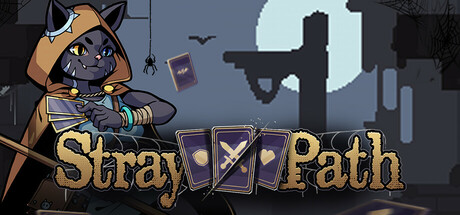
Both nail the 'Melancholic Exploration' dimension, but differently: Prince of Persia wraps it in sweeping desert vistas and weighty mythic silence—think walking alone through crumbling ziggurats at dusk—while Stray Path leans into fragmented, roguelike dungeon layers where every torch-lit corridor feels haunted by memory. Neither has Ms. Elf’s urban Japanese warmth, but both hit that same reflective, slow-burn emotional resonance.
What’s the best game like Welcome to Japan, Ms. Elf! if I want something healing but with light dungeon-crawling tension?
Go straight to Space Simulation Toolkit—it’s got the soothing rhythm of routine (calibrating modules, logging anomalies) layered over tense, procedurally generated derelict stations where every airlock creak and flickering console echoes Ms. Elf’s balance of calm and quiet unease. Reviewers specifically praise how its 'Roguelike & Dungeon' mechanics never overwhelm the 'Healing & Slow Life' core—just like managing elf paperwork while dodging a rogue shikigami.