
Your Name.
Mitsuha Miyamizu, a high school girl, yearns to live the life of a boy in the bustling city of Tokyo—a dream that stands in stark contrast to her present life in the countryside. Meanwhile in the city, Taki Tachibana lives a busy life as a high school student while juggling his part-time job and hopes for a future in architecture.
One day, Mitsuha awakens in a room that is not her own and suddenly finds herself living the dream life in Tokyo—but in Taki's body! Elsewhere, Taki finds himself living Mitsuha's life in the humble countryside. In pursuit of an answer to this strange phenomenon, they begin to search for one another.
Kimi no Na wa. revolves around Mitsuha and Taki's actions, which begin to have a dramatic impact on each other's lives, weaving them into a fabric held together by fate and circumstance.
(Source: MAL Rewrite)
📺Anime Details
📝Editorial Analysis
The taste of sour plum candy dissolves on your tongue—sharp, sudden, electric—and just like that, you’re no longer where you were. Mitsuha’s fingers brush the cool metal railing of Itomori’s shrine steps; Taki’s breath catches in a Tokyo apartment hallway. Neither remembers the other’s name, only the ghost weight of shared mornings: the sting of eyeliner applied wrong, the awkward grip on a coffee cup, the quiet panic of forgetting how to tie a girl’s hair ribbon—or how to walk without swaying. That candy isn’t just flavor—it’s the first tangible proof that time isn’t linear, memory isn’t reliable, and two lives have bled into each other like ink in rain.
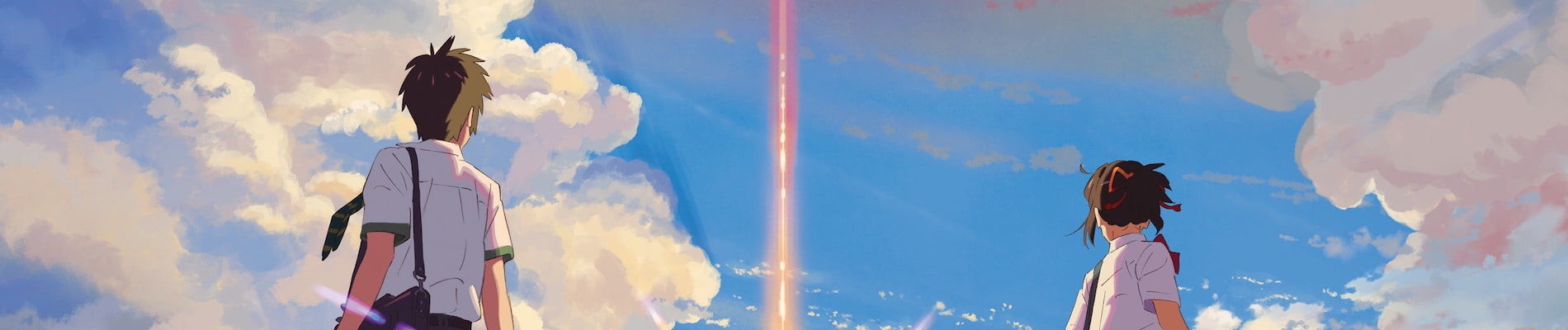
What makes Your Name. ache so deeply isn’t its body-swapping premise or even its comet-streak tragedy—it’s the melancholy of nearness. You feel the warmth of another person’s life as if it were your own, yet you’re barred from ever speaking their name aloud in their presence. The film doesn’t trade in grand declarations; it trades in glances held too long on crowded trains, in notebooks filled with half-remembered handwriting, in the devastating silence after a call drops—not because the line failed, but because time itself folded. This is urban fantasy not as spectacle, but as tactile sorrow: the way sunlight hits a rusted train platform at 5:47 p.m., the hum of a rural shrine bell at dusk, the hollow echo of footsteps in an empty high school hallway—all charged with meaning you can’t quite grasp, yet feel in your ribs.
That same resonance flickers in Prince of Persia—not in its acrobatics or sand magic, but in its healing & slow life dimension. Its player review calls it “an all-new epic journey,” yet the description emphasizes return, legacy, and quiet rebuilding—not conquest. Like Mitsuha tracing Taki’s sketches in his notebook, the Prince moves through ruins not to dominate, but to re-member: stones shift underfoot not as obstacles, but as echoes of what was lost. His world breathes with the same melancholic exploration that colors every shot of Itomori’s mist-wrapped hills—places where time hasn’t stopped, but settled, like dust on an old photograph.
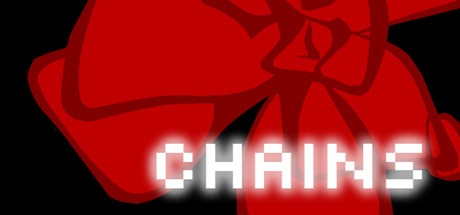
Then there’s Chains, a match-3 game whose description frames it as “relaxing” and “casual,” yet whose player review quietly confesses: “Reminds me of connect 4 in nutshell.” That phrase—in nutshell—holds the key. Just as Mitsuha and Taki reduce each other’s chaotic lives to tiny, manageable gestures (a lunchbox note, a corrected outfit choice), Chains distills emotional labor into clean, satisfying links: three bubbles, then four, then five—each connection a tiny act of intentional alignment. No lore, no stakes beyond the next stage—but the emotional narrative emerges in repetition, in rhythm, in the soft pop of color resolving into order. It’s the same comfort found in watching Mitsuha meticulously reorganize Taki’s desk—not for control, but for care.
Even Tank Universal, buried beneath tank combat and Tron aesthetics, carries a shard of this feeling. Its player review doesn’t praise mechanics—it recalls playing “with dad when you were 6,” then notes, “time goes on; loose access to game. Grew up dad passes away…” There’s no mention of lasers or AI allies—only absence, memory, and the physicality of sound (“cool sound effects, and the colors”). That’s the core vibration of Your Name.: not the scale of the comet, but the way a single voice—fading, misremembered, half-erased—can hollow out your chest years later. The game’s melancholic exploration isn’t in its sci-fi map—it’s in the player’s own past, mapped onto pixels they can no longer reach.
This pairing isn’t for fans of “romance” or “supernatural” as genres. It’s for the person who replays a voicemail just to hear the cadence of a loved one’s laugh—even though they know the words by heart. For the one who walks past their old high school and pauses, not to reminisce, but to feel the ghost shape of who they were standing there. For anyone who’s ever held a train ticket stub, a dried flower, a cracked phone screen—and known, with absolute certainty, that something real happened here, even if no one else remembers it. That’s the quiet, luminous ache both Your Name. and these games hold: not answers, but the sacred weight of almost.
🎮7 Games That Match the Vibe


Match Dimensions Explained
❓Frequently Asked Questions
Why does Prince of Persia keep showing up in 'Games Like Your Name' lists?
Because its 'Melancholic Exploration' and 'Healing & Slow Life' dimensions mirror the quiet, reflective pacing and emotional weight of Your Name—like wandering empty city streets at dawn or revisiting a half-remembered shrine. The new Prince’s journey through shifting sands and fractured time echoes Taki and Mitsuha’s disorientation and longing, especially in those long, wordless traversal sequences where the world feels both vast and intimately fragile.
Is there a Your Name anime game adaptation I can play right now?
No official Your Name game exists—but Chains nails the emotional intimacy you’re after: its gentle bubble-linking mechanic creates that same soothing, meditative rhythm as Mitsuha weaving kuchikamizake or Taki sketching in his notebook. Players call it 'connect 4 in a nutshell', and its 'Emotional Narrative' + 'Healing & Slow Life' vibe makes it the closest thing we’ve got to a playable version of the film’s tender, unhurried heart.
How is Jade Empire: Special Edition similar to Your Name, really?
Both lean hard into 'Emotional Narrative' and mythology-as-emotion—Jade Empire’s choice between the Open Palm (compassion) and Closed Fist (control) mirrors how Your Name frames identity, fate, and sacrifice through Shinto folklore. When you choose your path as the Spirit Monk, or witness the haunting beauty of the Spirit Realm, it hits with the same reverence and melancholy as Mitsuha’s ritual at the Itomori shrine—myth isn’t backdrop; it’s feeling made tangible.
What’s the best 'Your Name'-like game if I just want something peaceful and bittersweet?
Go straight to Prince of Persia—it’s the top match for 'Healing & Slow Life' *and* 'Melancholic Exploration', with score 72. Think of its sun-drenched ruins, the prince’s quiet voiceover as he walks alone through abandoned palaces, or the way time bends gently—not with flash, but with weight and memory. It’s not flashy combat; it’s the ache of returning somewhere familiar yet changed, just like Taki stepping onto the train platform in Itomori.