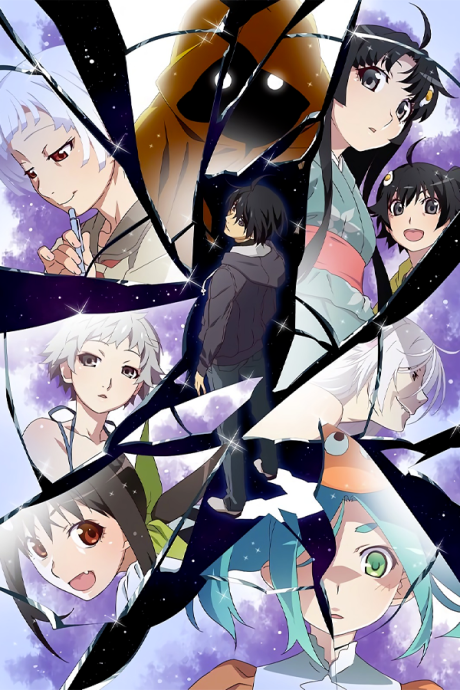
Zoku Owarimonogatari
Third season of the Monogatari Series, part 5/5. Contains the arc Koyomi Reverse from the Zoku Owarimonogatari light novel.
The morning after high school graduation, Koyomi is standing in front of the mirror above the sink to wash his face when he suddenly feels like his reflection is staring back at him. He instinctively reaches for the mirror, and upon touching it, his fingers sink in... When he comes to, Koyomi finds himself in a world where everything appears to be reversed.
(Source: Aniplex)
Zoku Owarimonogatari premiered in theaters across Japan in November 2018. It was later released as a 6-part OVA on Blu-ray/DVD from February to March 2019.
📺Anime Details
📝Editorial Analysis
The sink’s cold porcelain under Koyomi’s palms. The steam from the tap curling like breath in winter air. His reflection—still, too still—holds his gaze a half-second longer than physics allows. Then his fingertip sinks into the glass, not shattering it but parting it like water, and the world tilts—not with violence, but with quiet, devastating recognition. That moment isn’t horror. It’s vertigo dressed as routine. A mirror that doesn’t reflect—it replies.
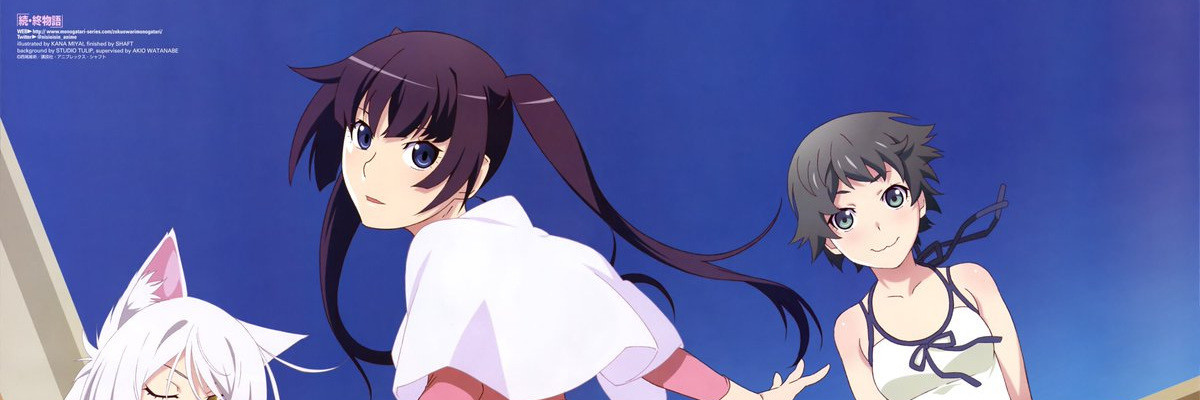
What makes Zoku Owarimonogatari ache so deeply isn’t its demons or gods or even its vampire lore—it’s how it treats identity as architecture you didn’t build but are forced to inhabit. Every conversation is a corridor. Every silence, a threshold. You don’t watch it; you lean in, because the air itself feels charged with unspoken weight—like standing just outside a room where someone has whispered your real name. It makes you feel unmoored, yes—but also attentive, hyper-aware of how fragile continuity is when memory, time, and self are all negotiable. It’s philosophy wearing sweatpants, delivered in hushed tones over lukewarm tea. There’s no grand battle cry—just the slow, chilling realization that the person staring back at you might be less you and more what you’ve been rehearsing.
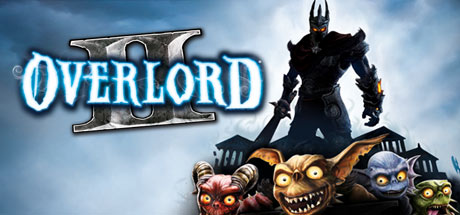
That emotional DNA—the quiet dread of self-erasure masked by banter, the surreal weight of choices echoing across fractured realities—finds eerie kinship in the Overlord trilogy. Not because of its dark fantasy trappings or minions (though those help), but because each game forces you to confront how easily agency curdles into performance. The description for Overlord™ says: “How corrupt you become depends on how you handle any given situation.” That’s not moral calculus—it’s identity drift. Like Koyomi negotiating with his own reflection, the Overlord doesn’t choose evil so much as discover he’s already speaking its grammar. A player review calls it “iconic” and praises how it “still feels fantastic”—not for spectacle, but for that lingering unease: Was I ever really in control, or just playing the role the world handed me?
Then there’s Overlord™: Raising Hell, whose description asks bluntly: “How evil can you get?”—a question that lands with the same hollow resonance as Koyomi’s mirror-touch. Evil here isn’t a label; it’s an accretion, layer by layer, like sediment in a slow river. The player review notes it “gives off Strong Fable vibes”, but what binds it to Zoku Owarimonogatari isn’t whimsy—it’s the shared fascination with consequence as identity. In both, power doesn’t corrupt; it clarifies. And what it clarifies is often lonely. You don’t level up—you unravel, then reweave yourself tighter around the new shape of your influence.
Even Overlord II, with its “Glorious E” (the description cuts off, but the ellipsis feels intentional), mirrors the anime’s structural playfulness—its refusal to let narrative stay linear, its love of nested perspectives. One review says it’s “unique… haven’t had anything like them since their release.” That’s the same feeling Zoku Owarimonogatari leaves you with: not “I saw something new,” but “I felt something I didn’t know I could feel—like remembering a dream I never had.”
This pairing isn’t for fans of “dark fantasy” as aesthetic. It’s for the person who pauses mid-sentence because they suddenly wonder who exactly is speaking. For the player who lingers at a dialogue choice not to optimize outcomes, but to test which version of themselves would pick that line. For the viewer who watches Koyomi stare into the mirror—not waiting for a monster to emerge, but wondering if the monster is just the part of him that finally stopped pretending to be solid. These aren’t stories about saving worlds. They’re about surviving yourself, one uncanny reflection, one morally slippery decision, one quiet, irreversible tilt at a time.
🎮7 Games That Match the Vibe
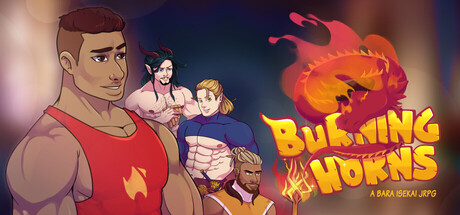


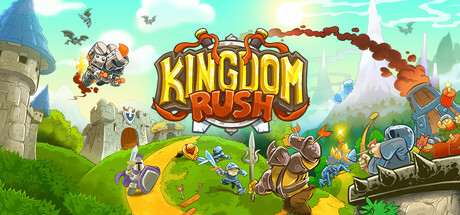
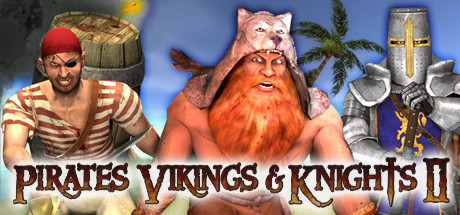
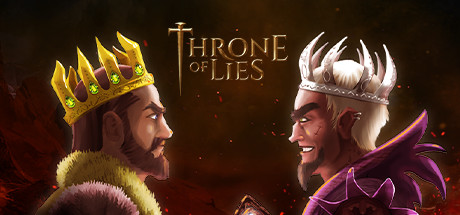
Match Dimensions Explained
❓Frequently Asked Questions
Why does Overlord feel so similar to Zoku Owarimonogatari’s tone despite being a fantasy action game?
It’s all about that deliciously self-aware, darkly comedic irony—like when the Overlord monologues over a pile of screaming villagers while his minions cheer, mirroring Araragi’s deadpan internal narration during absurdly grim moments. The series leans hard into parodying hero tropes (just like Zoku mocks anime conventions), and the morally slippery choices—say, sparing a town only to enslave it later—echo the show’s layered, unreliable character perspectives.
Is there an anime or visual novel adaptation of Overlord that captures Zoku Owarimonogatari’s meta-humor and tonal whiplash?
No—Overlord has a serious, lore-heavy anime adaptation that’s tonally *nothing* like Zoku’s rapid-fire wordplay and fourth-wall winks. If you’re craving that specific vibe, stick with the games: Overlord II’s ‘Glorious Evil’ cutscene—where the Overlord poses atop a crumbling cathedral as his minions chant nonsense Latin—is pure Zoku-style tonal whiplash, not the anime’s solemn worldbuilding.
How does Overlord II compare to Pirates Vikings & Knights II for someone who loves Zoku’s chaotic ensemble energy and sudden genre shifts?
Overlord II wins for narrative-driven chaos—you get a snarky, morally unhinged protagonist, scripted set-pieces like the ‘Burning Bridge’ siege where comedy and tragedy collide mid-explosion, and Minions who riff on your choices like a Greek chorus. PVKII delivers ensemble mayhem too, but it’s purely multiplayer slapstick (think Viking berserkers yeeting pirates off cliffs), with zero story or meta-commentary—so it nails the energy but misses Zoku’s layered voice.
What’s the best game like Zoku Owarimonogatari if I want that mix of intellectual snark, dark fantasy aesthetics, and sudden bursts of physical comedy?
Overlord: Raising Hell—it’s got the sharp, self-mocking script (like the Overlord dryly narrating his own descent into evil while turning peasants into chickens), the gothic-but-goofy art direction (goblin priests chanting in fake Latin beside flaming cathedrals), and gameplay that pivots from tactical minion-command to cartoonish slapstick—exactly like Zoku cutting from philosophical monologue to Araragi tripping down stairs mid-epiphany.