
A Gatherer's Adventure in Isekai
📺Anime Details
📝Editorial Analysis
The steam rises in slow, lazy curls from a ceramic bowl cradled between calloused hands—miso soup simmered with wild mushrooms foraged at dawn, garnished with a single frond of edible fern. A dragon curled around the hearth stirs, her scaled tail flicking once, warm breath fogging the windowpane where rain streaks down in quiet rhythm. No battle cry. No prophecy. Just this: the weight of the spoon, the scent of damp earth clinging to boots by the door, the quiet hum of magic—not as power, but as texture, like sunlight through stained glass in an elf’s sun-dappled apothecary.
That’s the heartbeat of A Gatherer's Adventure in Isekai: not conquest, but continuity. It’s the feeling of time expanding—not stretching thin, but thickening, like honey poured over warm bread. You don’t rush toward meaning; you knead it into dough, stir it into broth, coax it from soil or scale or song. The fantasy isn’t in escaping reality—it’s in re-enchanting the ordinary: a monster girl’s laugh echoing off mossy stone as she teaches you how to ferment berries; an elf’s quiet lesson on reading wind patterns before harvesting moon-lotus petals; the deliberate, unhurried way magic flows—not as spell-slinging, but as listening: to roots, to breath, to the low, resonant purr of a tamed drake dozing in afternoon light. This is fantasy that settles, not surges—rooted in care, curiosity, and the profound comfort of being known, not just seen.
Prince of Persia, despite its desert vistas and acrobatic leaps, shares that same melancholic exploration—a world worn soft by time, where ruins aren’t just backdrops but silent witnesses. Its description calls it “an all-new epic journey,” yet the player review notes it’s “completely separate” from past iterations—not rejecting legacy, but choosing slowness as narrative posture. Like the anime’s gatherer pausing to trace lichen on ancient dragon bones, the Prince moves through spaces heavy with memory, not urgency. Both ask you to feel the weight of history in your limbs, not just your mind—to walk, not sprint, through wonder.
Stardew Valley mirrors this in its tactile devotion to daily ritual: “Armed with hand-me-down tools and a few coins, you set out to begin your new life.” That line is the anime’s thesis—no grand title, no chosen-one fanfare, just beginning, again and again. The player review confesses exhaustion—“Days upon days of constantly running around”—but that’s the friction before grace: the moment you stop chasing “everything” and start tending: watering one crop, learning one villager’s favorite tea, watching a lizard hatch in your coop. Just like the anime’s protagonist, who doesn’t tame dragons to ride them into war—but to share quiet mornings, to understand their moods like weather patterns, to braid herbs into their mane while they nap in sun-warmed grass.
The Sims™ 4, though criticized for its DLC sprawl, pulses with the same healing & slow life dimension—its core promise is “Play with life and discover the possibilities.” Not mastery. Not victory. Possibility. The anime’s LGBTQ+ themes and creature-taming aren’t plot devices—they’re expressions of relational worldbuilding: love as shared harvest, kinship as cohabitation across species, identity as something tended, not declared. When a monster girl and elf trade recipes under twilight, or when the protagonist quietly adjusts his scarf after holding hands with another man beside a riverbank—those moments resonate with TS4’s unspoken truth: that joy lives in customization, in small acts of self-definition, in building a home exactly as it needs to be.
This pairing sings to the person who cries when their Stardew character finally unlocks the community center bundles—not because they “won,” but because they remembered to water the parsnips every morning for three seasons. To the player who walks Prince of Persia’s dunes at dusk, not to reach the next checkpoint, but to watch sand shift like breathing skin. To the viewer who feels their chest loosen when the gatherer laughs, unguarded, while peeling dragon-fruit with a friend who has scales instead of freckles—and knows, without words, that this is enough. Not escape. Not triumph. Just enoughness, tender and true.
🎮9 Games That Match the Vibe







Match Dimensions Explained
❓Frequently Asked Questions
Why does Prince of Persia keep showing up in 'Games Like A Gatherer's Adventure in Isekai' lists?
Because both lean hard into melancholic exploration—like wandering ruined temples in Prince of Persia’s ‘new lands’ while reflecting on loss, mirroring the quiet, introspective gathering and rebuilding moments in A Gatherer’s Adventure. The healing/slow life dimension is central to both: you’re not rushing to win, but savoring atmosphere, decay, and subtle emotional beats—exactly what reviewers praised in Prince of Persia’s ‘brand new story completely separate from the sands’.
Is there an anime or manga adaptation of A Gatherer's Adventure in Isekai?
No official anime or manga adaptation exists yet—unlike Stardew Valley, which inspired fan comics and unofficial webtoons, or STORY OF SEASONS: Pioneers of Olive Town, which has official manga tie-ins. All current adaptations are unofficial fan projects; the game remains standalone, much like Bandle Tale: A League of Legends Story, which also has no licensed anime despite its rich lore and Yordle characters.
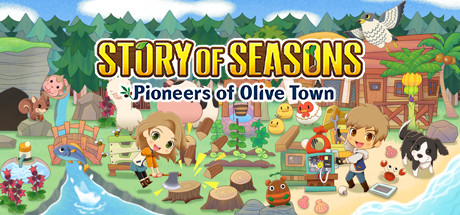
How does Stardew Valley compare to STORY OF SEASONS: Pioneers of Olive Town for someone who loves the cozy gathering vibe of A Gatherer's Adventure?
Stardew Valley leans more into time pressure and multitasking—reviewers mention ‘days upon days of constantly running around trying to find the town’—while Pioneers of Olive Town softens that pace with gentler stamina limits and deeper relationship-building with villagers like Elise or Kasey. Both hit the Romance & Shoujo and Healing & Slow Life dimensions, but if you loved the unhurried, tactile gathering (like harvesting dewberries at dawn), Pioneers’ seasonal crafting system and slower daily rhythm might feel closer to home.
What’s the best game like A Gatherer's Adventure in Isekai if I want something deeply soothing but with zero romance options?
Bandle Tale: A League of Legends Story is your best bet—it nails Healing & Slow Life and Melancholic Exploration *without* any romance mechanics. You play as Lulu and her friends rebuilding a broken world in Runeterra’s Bandle City, solving gentle environmental puzzles and uncovering quiet, bittersweet memories—no dating sim elements, just pure, unhurried wonder and soft melancholy, like watching twilight settle over a half-ruined shrine.