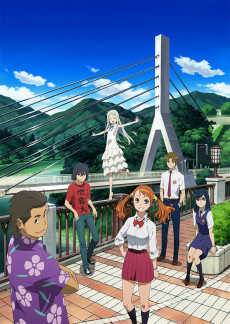
Anohana: The Flower We Saw That Day
Jinta Yadomi and his group of childhood friends have become estranged after a tragic accident split them apart. Now in their high school years, a sudden surprise forces each of them to confront their guilt over what happened that day and come to terms with the ghosts of their past.
(Source: NIS America)
📺Anime Details
📝Editorial Analysis
The cicadas scream. Not the gentle hum of summer evenings, but a thick, suffocating drone—pressing down on the empty baseball field where Jinta sits alone, knees drawn up, staring at the cracked dirt where Meiko once stood. Her ghost isn’t floating; she’s there, barefoot in her school uniform, humming off-key, flicking pebbles into the dry grass. He doesn’t flinch. He just breathes—shallow, uneven—and the weight in his chest isn’t fear. It’s recognition. Recognition of absence so deep it has taken physical shape. That’s the first truth Anohana: The Flower We Saw That Day gives you: grief doesn’t vanish—it waits. Patiently. Barely breathing. In the same place it began.
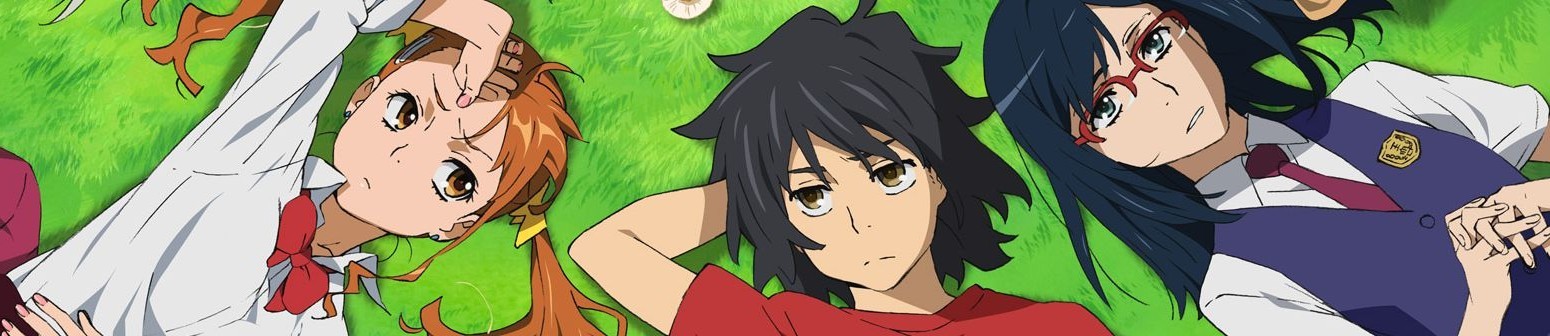
This isn’t supernatural horror. It’s supernatural stillness. The rural setting—the narrow roads, the overgrown shrine path, the low wooden bridge over the sluggish river—doesn’t feel like backdrop. It feels like memory made tangible: humid, sun-bleached, heavy with unspoken things. Time doesn’t move forward cleanly here. It pools. Characters don’t “get over” Meiko’s death—they circle it, stall at its edges, misstep, retreat, whisper apologies to air. The drama lives in the half-second before a hand pulls back from a touch, in the way a lunchbox is left untouched, in the silence that swells after someone says “I’m sorry” and no one answers—not because they’re angry, but because the words haven’t landed yet. It makes you feel the thickness of guilt, the exhaustion of carrying shame like wet laundry, and the quiet, terrifying hope that healing might look less like closure and more like learning how to hold space—for her, for each other, for yourself—without collapsing.
That fragile, suspended quality echoes in unexpected places. Take Chains, with its deceptively simple match-3 loop: link adjacent bubbles, clear enough to proceed, hit the next stage. Player reviews call it “connect 4 in nutshell”—a phrase that lands with startling accuracy. Like Jinta slowly reassembling fractured trust, one hesitant conversation at a time, Chains asks you to make small, deliberate connections—color to color, intention to intention—against physics-driven resistance. There’s no rush, no timer, no penalty for pausing mid-chain. You feel the weight of each bubble, the satisfying pop not as victory, but as release—a tiny, tactile sigh. It mirrors Anohana’s emotional rhythm: healing isn’t grand gestures. It’s linking three quiet truths, clearing just enough space to breathe again.
Then there’s The Sims™ 4, flawed and fragmented as player reviews describe—“awful,” “insanely expensive,” “broken with bugs,” “no fun without DLC.” Yet its core description remains potent: “Play with life and discover the possibilities. Unleash your imagination and create a world of Sims that’s wholly unique.” That’s the heart of Anohana’s found family—not perfection, but possibility. The group rebuilds not by erasing trauma, but by painstakingly customizing their shared reality: cooking meals together, fixing the old clubhouse, choosing which memories to speak aloud and which to leave tenderly unopened. Their slow life isn’t idyllic—it’s patched, inconsistent, sometimes glitchy—but it’s theirs. Like a Sim’s home built room-by-room despite buggy walls, their healing is an act of stubborn, loving curation.
Even Prince of Persia, rebooted and separated from its past, carries resonance. Its description promises “a new prince, new lands and a brand new story completely separate from the sands.” That deliberate severance—choosing to begin again without denying what came before—is exactly what Jinta and the others do. They aren’t reliving the accident; they’re stepping onto unfamiliar terrain, guided only by the faintest echo of who they were. The romance isn’t about grand declarations—it’s in the way the prince’s hand steadies a companion on a crumbling ledge, or how Jinta finally meets Anaru’s eyes without looking away. Both are stories about moving forward, not away—from pain, but with it, reshaping identity in real time.
This pairing sings for the person who cries quietly during grocery runs because a certain shampoo scent hits wrong. For the one who keeps old text threads open—not to reread, but to remember the weight of a voice before it changed. For the player who lingers in Chains long after the level ends, just watching bubbles drift; who builds a Sim family with mismatched furniture and names them after childhood friends; who pauses Prince of Persia not at the boss fight, but when the camera holds on a quiet courtyard at dusk—because that is where the real story lives: in the stillness between heartbeats, in the courage to link one fragile thing to another, and in the radical, tender belief that some flowers bloom only after the ground has been broken open.
🎮3 Games That Match the Vibe

Match Dimensions Explained
❓Frequently Asked Questions
Why does Chains keep coming up in 'games like Anohana' lists when it's just a match-3 game?
Because Chains leans hard into 'Healing & Slow Life'—its gentle physics, unhurried pacing, and soft color palette create the same quiet, reflective mood as Anohana’s memorial scenes. Players specifically mention how clearing chains feels meditative, like tending to memories—much like Jinta lighting incense for Menma in that abandoned clubhouse.
Is there an official visual novel adaptation of Anohana?
No—there’s no official visual novel adaptation of Anohana, but The Sims™ 4 (score 68) is often used by fans to recreate its emotional beats: you can build the old clubhouse, assign traits like 'Shy' or 'Loyal' to custom Sims mirroring Jinta, Naru, or Meiko, and roleplay healing arcs through slow-life gameplay—though it requires DLC to unlock meaningful relationship depth.
Chains vs. The Sims 4—which is better if I want that bittersweet, nostalgic Anohana feeling?
Go with Chains if you want focused, wordless melancholy—the way its bubbles drift and settle mirrors how Anohana lingers on small moments, like Menma’s hair blowing in the wind. Choose The Sims 4 only if you love crafting your own version of the group’s reconciliation, but be warned: without paid DLC, you’ll miss key romance/shoujo mechanics that help replicate Naru and Jinta’s fragile, unspoken tension.
What’s the best Anohana-like game for when I’m feeling emotionally drained and need something soothing but meaningful?
Chains (score 78) is your best bet—it’s built for exactly that: low-stakes, tactile calm with emotional resonance. Its 'Emotional Narrative' dimension isn’t about cutscenes, but how the rhythm of linking bubbles echoes Anohana’s pacing—like watching petals fall in slow motion during Menma’s final scene. No grinding, no bugs, just gentle cause-and-effect healing.