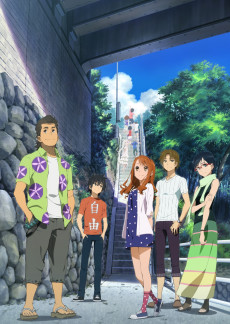
Anohana the Movie: The Flower We Saw That Day
The TV series is retold through the different main characters' points of view with new additional material from their childhood, during the original series, and one year after the conclusion of the series.
📺Anime Details
📝Editorial Analysis
The scent of crushed clover and damp earth rises as the camera lingers on a single dandelion puff drifting across an empty schoolyard—sunlight catching each fragile seed just before it vanishes over the fence. No dialogue. No music yet. Just that slow, breath-held suspension: the weight of what was, the ache of what couldn’t be said, and the quiet, unbearable tenderness of memory refusing to settle.
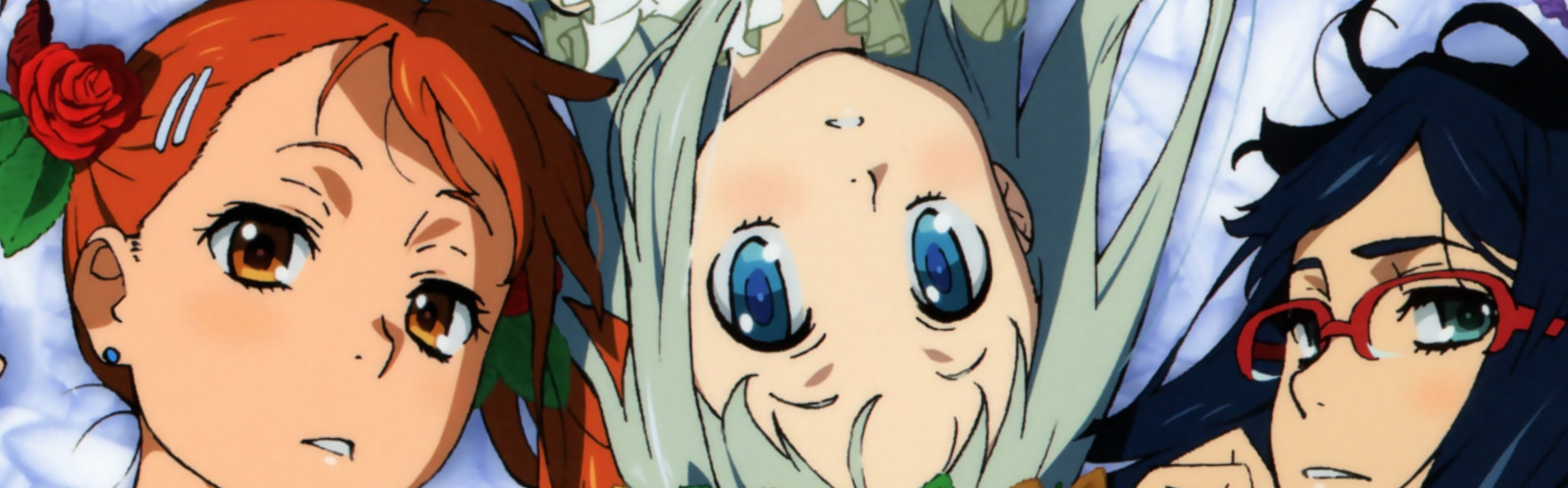
That’s the atmosphere of Anohana the Movie: The Flower We Saw That Day—not nostalgia as comfort, but nostalgia as pressure. It’s the feeling of standing barefoot on grass you haven’t touched in years, knowing the ground remembers your footprints even if you don’t. This isn’t about ghosts as specters; it’s about how grief lives in the body—in the way a character hesitates before opening a locker, or how silence between two people thickens like humid air before rain. The movie doesn’t retell the series—it re-skins time: childhood flashbacks aren’t exposition, they’re tactile—scraped knees, shared popsicles, the sticky heat of summer days that felt infinite until they weren’t. The one-year time skip isn’t narrative convenience; it’s the hollow space where healing should have happened—but didn’t, not cleanly, not quietly. You feel the weight of unprocessed love, the tremor in a voice trying to sound steady, the exhaustion of carrying someone else’s absence like a second spine.
Which is why Jade Empire™: Special Edition lands with such uncanny resonance. Its description promises “the path of the open palm or the closed fist”—a binary that mirrors Anohana’s core tension: confrontation versus containment, speaking versus swallowing, action versus stillness. The player review mentions needing to copy and paste "steam.dll" just to launch—a small, real-world friction that echoes the anime’s emotional labor: nothing here is frictionless. Healing isn’t unlocked; it’s hacked together, piece by fragile piece. And while Jade Empire’s martial-arts world seems distant from rural Japan, its Emotional Narrative, Romance & Shoujo dimension aligns precisely—not in tropes, but in how love is rendered as devotion that outlives logic, as loyalty that persists even when words fail.
Then there’s Dragon Age: Origins, whose description asks: “When history tells the story of the Fifth Blight, what will be said about the hero who turned the tide?” That question haunts Anohana too—not about saving nations, but about who gets to be remembered, who gets to speak for the dead, and whose guilt becomes the unofficial monument. The player review notes the “pause attack mechanic” helping “strategist your tactic”—a line that cracks open the parallel: both works treat emotion like a battlefield system. Grief isn’t background noise; it’s a mechanic you must pause, assess, redirect. Every hesitation before a confession, every avoided glance at a childhood photo—it’s all tactical, because vulnerability has consequences, and love demands positioning.
And Persona 5 Royal, with its seamless loop between “daily life” and “dungeon crawling,” mirrors Anohana’s structure almost uncannily. The anime moves between sunlit flashbacks (school festivals, bike rides), the muted present (empty rooms, half-finished conversations), and the liminal space of Meiko’s ghost—just as Persona 5 toggles between Tokyo’s neon rhythm and the surreal, rule-bent palaces of the psyche. Its Romance & Shoujo and Emotional Narrative dimensions aren’t about dating sims—they’re about how intimacy is built in stolen moments: sharing headphones, walking home in silence, choosing not to look away when someone cries. The player review praises the “stunning soundtrack”—and yes, Anohana’s score does the same work: music doesn’t underscore feeling, it is the feeling made audible, swelling exactly where words collapse.
This pairing isn’t for fans of “sad stories.” It’s for the person who keeps a text thread open for three years just in case, who replays a voicemail they shouldn’t, who knows the exact shade of blue in their childhood bedroom window and why it still hurts to see it in a film. It’s for those who understand that rehabilitation isn’t linear, that coming of age often means learning how to carry loss without dropping it—and that sometimes, the bravest thing isn’t moving on, but standing still long enough for the ghost to finally let go.
🎮27 Games That Match the Vibe



Match Dimensions Explained
❓Frequently Asked Questions
Why is Jade Empire recommended for Anohana fans despite being a martial arts game?
Because its 'Emotional Narrative' and 'Romance & Shoujo' dimensions hit the same tender, character-driven notes as Anohana—especially in quiet moments like your bond with Master Li or the bittersweet farewell scenes with Jiang. The game’s emphasis on personal loss, unspoken feelings, and moral ambiguity (open palm vs. closed fist choices) mirrors how Anohana explores grief through restrained dialogue and lingering glances—not action.
Is there a visual novel adaptation of Anohana the Movie that's actually playable?
No—there’s no official visual novel adaptation of *Anohana: The Movie*. But if you’re craving that same intimate, relationship-focused pacing and emotional weight, *Persona 5 Royal* nails it: think of Ann’s confessional rooftop scene or Futaba’s slow trust-building—both echo Menma’s fragmented presence and the group’s fragile healing, all wrapped in a daily-life rhythm that feels just as deliberate and poignant.
How does Disco Elysium compare to Persona 5 Royal for someone who loved Anohana’s melancholy tone?
Both dig deep into grief and identity, but *Disco Elysium* leans into raw, internalized despair—like when Detective Harrier stares at rain-streaked windows while his own mind argues with him—whereas *Persona 5 Royal* mirrors Anohana’s warmth-through-connection vibe: building Confidants like Makoto’s steady loyalty or Ryuji’s loud-but-loyal support feels like rewatching the gang slowly relearn how to hold space for each other after Menma’s absence.
What’s the best game like Anohana if I want something that makes me cry but also leaves me feeling quietly hopeful?
Go with *Dragon Age: Origins*—not for the epic battles, but for those small, human moments: Alistair’s goofy vulnerability during campfire chats, or Morrigan’s guarded confession about her fear of abandonment. Its pause-and-plan combat lets you sit with emotion instead of rushing past it, much like how Anohana lingers on a shared glance or an unfinished sentence—and the ending branches let you choose healing over closure, just like the movie’s final beach scene.