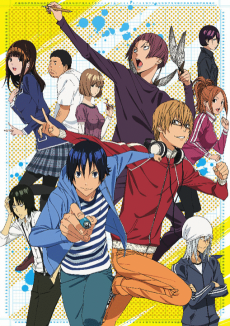
Bakuman. 2
After the decision to serialize Moritaka and Akito has been made, they are introduced to Miura, their new manager. At first, the two thought it was a joke, but Hattori gives them a pep talk before leaving. While Miura doesn't seem like a bad person, he is given to rudeness and seems to be worried about the duo's future. In addition, the duo are given three assistants to work on their manuscript, and with the assistance of Ogawa, an experienced assistant, their work progresses well.
At the start of the new year, Moritaka and Akito both attend Shonen Jack's New Year Party. There, they meet Hiramaru Kazuya, said to be a genius of a whole different level from Eiji.
📺Anime Details
📝Editorial Analysis
The smell of ink on cheap paper, the exhaustion in Moritaka’s shoulders as he leans over his desk at 3 a.m., red pencil smudging a panel for the third time—Akito’s quiet sigh from the next chair, not frustration but recognition, the kind that comes only after you’ve watched someone bleed into the same dream. That moment isn’t about success. It’s about the weight of a deadline breathing down your neck while your hands still shake from caffeine and doubt—and how, somehow, that weight feels honest. Real.
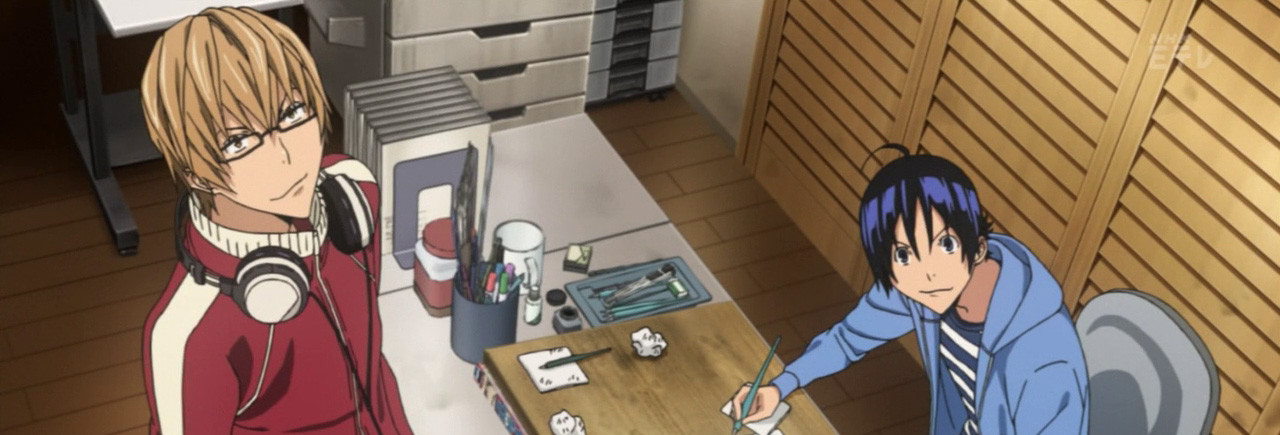
Bakuman. 2 doesn’t trade in grand battles or world-ending stakes. Its atmosphere is built on the hum of fluorescent lights in a cramped apartment, the rhythmic scratch of nibs on Bristol board, the way Miura’s sharp tone isn’t cruelty—it’s urgency, a mirror held up to their own unspoken fear: What if we’re not enough? This isn’t just coming-of-age; it’s the slow, tender, often awkward calibration of self-worth against external validation. You don’t feel heroic watching it—you feel seen, like someone finally named the quiet panic of creation: that your best work might still be invisible, that your love triangle isn’t melodrama but collateral damage of two people trying so hard to become something real together. It’s warm, yes—but warm like a studio radiator in winter: comforting, necessary, and just a little dangerous if you lean too close.
That emotional DNA—the tension between creative labor and human fragility—resonates sharply with Prince of Persia, whose description promises “a new prince, new lands and a brand new story completely separate from the sands…” That separateness mirrors Moritaka and Akito’s pivot after serialization: no longer chasing approval, but defining their voice anew, even when the ground shifts beneath them. The player review calls it a “reboot”—not erasure, but reinvention. Like Bakuman’s second season, it’s about stepping into unfamiliar terrain with old tools and newer intentions.
Then there’s The Sims™ 4, where the description invites you to “Play with life and discover the possibilities… customize every detail from Sims to homes.” That granular, almost obsessive attention to crafting a life—not just surviving it—is pure Bakuman. 2. Ogawa teaching Moritaka how to shade a background, Miura correcting pacing in a storyboard, the assistants debating panel flow—it’s all life as iterative design. And the player review’s bitterness about DLC scarcity? That’s the inverse echo: Bakuman shows the cost of not having resources—the stress of unpaid overtime, the fear of losing an assistant, the quiet dread of a rejected chapter. Both understand that creativity isn’t magic—it’s infrastructure, maintenance, negotiation.
Even Disco Elysium - The Final Cut, with its description framing you as “a detective with a unique skill system… and a whole city to carve your path across,” taps the same nerve. Not because it’s about manga—it’s not—but because its core tension is identity under pressure: every dialogue choice, every failed roll, every internal monologue fractures and rebuilds who you are. The player review quotes, “Capital has the ability to subsume all critiques into itself…” — that’s Miura’s worry made philosophical. It’s the fear that the industry won’t just reject your work, but reshape your values until you forget why you started drawing in the first place.
Who loves this pairing? Not just fans of shōnen or RPGs—but the person who keeps a sketchbook full of half-finished characters, who’s rewritten the same paragraph five times, who’s had a friendship strain under shared ambition. The one who knows love triangles aren’t about choosing between people—they’re about choosing which version of yourself you’ll bring into the room. They’re the ones who play Thrillville®: Off the Rails™, not for the coasters, but for the blueprint mode: dragging rails, testing physics, failing, adjusting, then watching something fly—not perfectly, but alive. That’s the feeling. Not victory. Velocity. The sheer, breathless, human motion of becoming.
🎮7 Games That Match the Vibe




Match Dimensions Explained
❓Frequently Asked Questions
Why does Prince of Persia keep showing up in 'games like Bakuman. 2' lists when it’s an action-adventure game?
It’s all about the shared 'Romance & Shoujo, Comedy & Parody' vibe—not the genre. Like Bakuman’s manga-creation hustle and playful rivalry between Moritaka and Akito, Prince of Persia leans into witty banter, stylized romance (think the Prince and Elika’s charged, almost shoujo-esque chemistry), and self-aware parody of hero tropes—exactly what reviewers mean when they call it 'a new prince, new lands and a brand new story completely separate' from expectations.
Is there a Bakuman. 2 anime or manga adaptation that’s actually a video game?
No—Bakuman. 2 is strictly a manga arc and anime season; there’s no official video game adaptation. But fans looking for that same creative-energy rush often land on The Sims™ 4, where building characters, writing stories (via custom traits, careers, and storytelling-focused CC), and navigating romantic tension (like Mashiro and Miho’s slow-burn dynamic) mirrors Bakuman’s emotional beats—despite TS4’s infamous DLC paywalls and bugs.
How does Disco Elysium compare to Thrillville: Off the Rails for capturing Bakuman’s 'creative grind' feeling?
Totally different flavors—but both hit Bakuman’s core tension between passion and pressure. Disco Elysium drops you into a broken detective’s head, wrestling with self-doubt and artistic integrity (like Moritaka agonizing over chapter deadlines), while Thrillville lets you *build* something wild—designing coasters with physics-defying jumps and launches, echoing how Mashiro and Akito iterate on manga concepts until they ‘click’. One’s cerebral, the other joyful—but both reward persistence.
What’s the best ‘Games Like Bakuman. 2’ pick if I want something uplifting and low-stress, not heavy or cynical?
Go straight to Thrillville®: Off the Rails™—it’s pure, fizzy joy with zero existential dread. You’re not solving murders or managing DLC budgets; you’re launching coasters through the air like cannonballs, customizing parks with cartoonish flair, and watching guests scream with delight. As one player put it, it ‘has aged really well’ and delivers that same warm, collaborative spark you feel when Moritaka and Akito finally nail a chapter together.