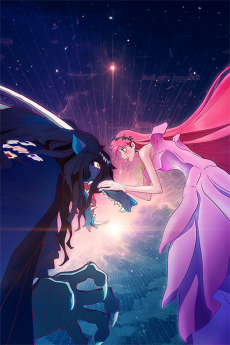
BELLE
The protagonist of this story, Suzu, is a 17-year old high school girl living with her father in a rural town of Kochi — their town is a textbook definition of depopulation in the Japanese countryside. Wounded by the loss of her mother at a young age, Suzu one day discovers the massive online world, “U,” and dives into this alternate reality as her avatar, Belle. Before long, all of U’s eyes are fixed on Belle (Suzu), when one day the mysterious and infamous Dragon-like figure appears before her.
(Source: Official Site)
📺Anime Details
📝Editorial Analysis
The first time Suzu sings in BELLE, her voice doesn’t just fill the virtual arena—it unfurls. Not as a polished idol track, but as something raw and trembling, vibrating through the pixelated air of “U” like breath catching mid-sob. Her avatar’s hands shake. The crowd holds still—not because she’s perfect, but because she’s breaking open. That moment isn’t spectacle. It’s surrender: a 17-year-old girl from a hollowed-out town in Kochi, voice cracked with grief and hope, letting sound become sanctuary.
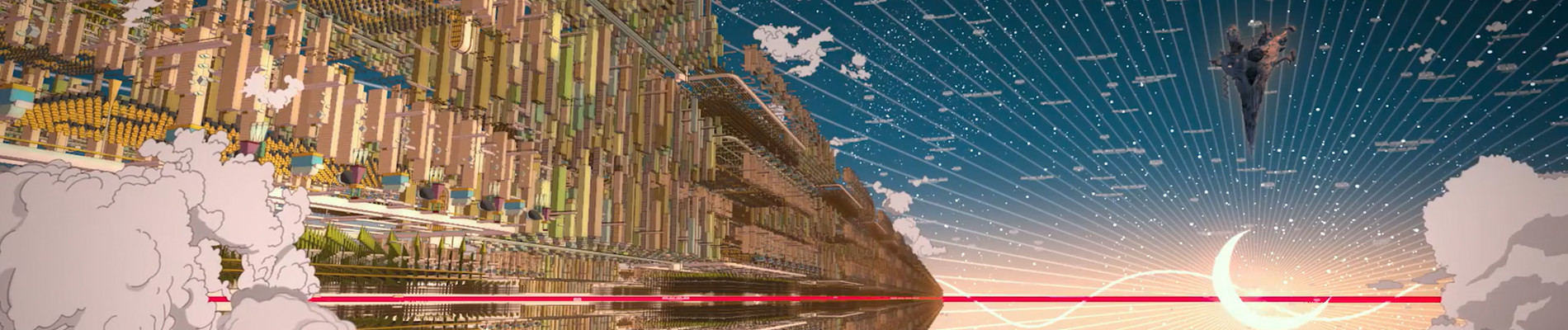
What makes BELLE’s atmosphere singular isn’t its CGI or its sci-fi scaffolding—it’s how it treats distance as both wound and bridge. Suzu lives in a world shrinking around her—empty classrooms, quiet train platforms, a father who speaks in half-sentences and steamed rice. Then “U” arrives: not as escape, but as amplification. Here, anonymity doesn’t erase her—it releases her. The virtual world doesn’t replace reality; it mirrors it with startling fidelity, turning loneliness into resonance, silence into chorus. You don’t feel distracted by the digital layers—you feel held by them. It’s tender, yes—but also aching, precise, unflinchingly gentle in how it maps inner life onto outer worlds.
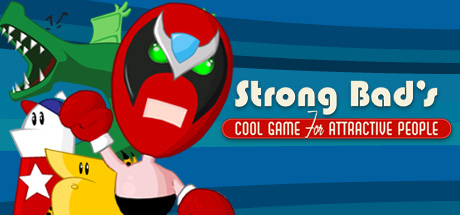
That emotional DNA—the way identity, trauma, and connection bloom through mediated space—echoes sharply in Strong Bad's Cool Game for Attractive People: Season 1. Its description promises “wacky comedic adventures,” but player reviews reveal something deeper: a longing for revival, for reconnection (“I hope Skunkape considers bringing this game back next…”). Like Suzu hiding behind Belle’s luminous eyes, Strong Bad performs relentlessly—but his humor is armor, his absurdity a lifeline. Both works understand that performance isn’t deception—it’s survival strategy made song, made joke, made visible. The music-and-idol dimension isn’t about fame; it’s about voice as vessel, even when the vessel wears sunglasses and delivers punchlines in all caps.
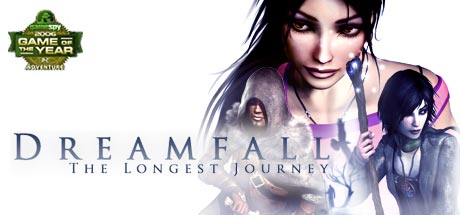
Then there’s Dreamfall: The Longest Journey, whose player review nails the shared pulse: “It’s less a long journey than a long drama. And somehow, the drama is compelling enough that you keep watching scene after scene…” That’s BELLE’s rhythm too—not propulsion, but lingering. Suzu doesn’t race to solve the Dragon’s mystery; she circles it, listens, hesitates, returns. Like Dreamfall’s dual-world structure (magic and machine), BELLE’s “U” and Kochi aren’t opposites—they’re dialectical halves of one wounded whole. Both ask: what does it mean to be real when your heart lives across dimensions? Neither answers neatly. They sit with the question—patiently, intimately, without judgment.
And though its score is lower, Beyond Good and Evil™ resonates in unexpected harmony. Its description casts Jade as an investigative reporter fighting a government conspiracy—but the player review cuts to the core: “Crazyyy game! Play the 20th Anniversary edition tho. The original is too buggy…” That casual, affectionate urgency—“Crazyyy”, the insistence on version fidelity—mirrors how BELLE fans talk about Suzu’s first duet with the Dragon: not as plot point, but as shared cultural heartbeat. Both works center young women navigating systems too large to name—surveillance states, grief economies, algorithmic indifference—and respond not with grand revolution, but with stubborn, glittering care: Jade protecting her community, Suzu singing not for virality, but for him. Their rebellion is relational. Their courage is quiet.
These pairings won’t land for someone seeking lore dumps or power fantasies. They’ll ignite for the viewer who cried during the school festival scene—not because of the fireworks, but because Suzu’s father finally hears her voice, unfiltered, and doesn’t look away. For the player who replayed Dreamfall’s rain-soaked alleyway dialogue three times, not to optimize choices, but to stay inside that fragile, humming silence between characters. For the person who still hums BELLE’s theme while walking past shuttered shops in their own hometown—feeling, for once, seen not despite the distance, but because of it.
🎮7 Games That Match the Vibe


Match Dimensions Explained
❓Frequently Asked Questions
Why does BELLE match with Dreamfall: The Longest Journey when they seem so different?
They both lean hard into Emotional Narrative—Dreamfall’s slow-burn character arcs (like Zoë’s quiet disillusionment in Casablanca or April’s emotional reckoning in the Nexus) mirror BELLE’s intimate, dialogue-driven pacing. Even though Dreamfall’s world is more overtly dystopian, players consistently call it 'a long drama' where scenes linger and feelings land—just like BELLE’s quieter, character-first moments.
Is there a BELLE anime or movie adaptation in the works?
Not that we know of—but interestingly, Strong Bad's Cool Game for Attractive People shares BELLE’s blend of Music & Idol dimension and self-aware, fourth-wall-bending charm. Fans have even joked in reviews: 'With the recent remake of Poker Night, I hope Skunkape considers bringing this game back next...'—so if an adaptation ever happens, it’ll probably feel more like Strong Bad’s ironic, music-infused comedy than a straight drama.
How does BELLE compare to Beyond Good and Evil in terms of tone and storytelling?
BELLE leans into quiet emotional intimacy—think hushed conversations and internal monologues—while Beyond Good and Evil thrives on kinetic energy: Jade’s investigative grit, Pey’j’s banter, and that urgent anti-authoritarian pulse. Both hit Emotional Narrative and Cyberpunk & Dystopia, but BG&E’s 20th Anniversary edition shines brightest in action-adjacent set pieces (like the Slaughterhouse raid), whereas BELLE lingers in stillness—more Nikopol’s moody Parisian rain than BG&E’s sun-baked Jade Valley.
What’s the best BELLE-like game if I want something melancholic but visually lush, like a rainy cyberpunk art film?
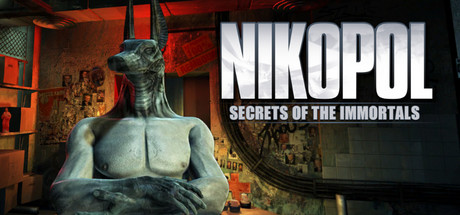
Nikopol: Secrets of the Immortals is your perfect match—it drops you into a 2023 Paris choked by religious authoritarianism and glowing pyramid ships, with hand-drawn cutscenes and animations that reviewers call 'a nice vibe.' Its emotional weight isn’t loud; it’s in the way Nikopol stares out over the Seine, or how the dystopian dread seeps into every pixel—exactly the kind of atmospheric, story-soaked melancholy BELLE fans crave.