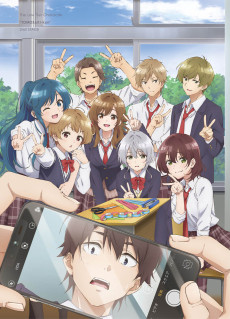
Bottom-Tier Character Tomozaki 2nd Stage
The second season of Jaku-Chara Tomozaki-kun.
📺Anime Details
📝Editorial Analysis
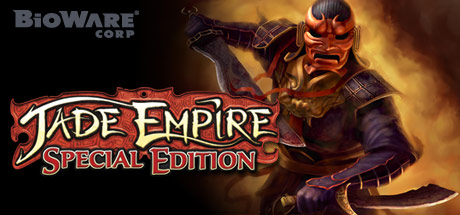
The fluorescent hum of the classroom after school—empty desks, dust motes drifting in the slanting light, Tomozaki sitting alone with his headset on, fingers hovering over a controller while Jade Empire™: Special Edition loads on his laptop screen. Not playing yet. Just watching the title screen breathe: the soft chime, the ink-wash mountains, the quiet weight of a world where every choice carries moral gravity—even when you’re too tired to lift your own hand. That stillness isn’t emptiness. It’s the breath before recalibration.
What makes Bottom-Tier Character Tomozaki 2nd Stage ache so precisely is how it treats growth not as triumph, but as repetition with variation: the same hallway walked three times a day, each time with a slightly different posture; the same lunchbox opened, but now with awareness of who packed it and why; the same game paused mid-boss fight—not to skip ahead, but to rehearse the timing one more time, because this time, the stakes aren’t points or XP—they’re whether he’ll flinch when Aoi speaks, or whether he’ll finally meet Nanami’s eyes without looking at his shoes. It’s tender, yes—but also exhausting, fragile, unromanticized. There are no montages. Just blinking. Swallowing. A pause button held just a half-second longer than last week.
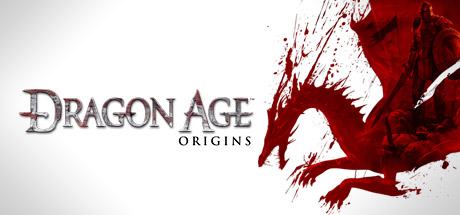
That emotional DNA pulses strongest in games where narrative isn’t delivered at you, but with you—where romance isn’t about grand confessions, but about listening, and where “rehabilitation” means learning how to hold space for your own contradictions. Dragon Age: Origins matches this not because of its dwarven nobles or darkspawn, but because of its pause attack mechanic—a literal, tactical suspension of momentum that mirrors Tomozaki’s constant self-interruption: Wait—what would she actually hear if I say that? What if I misread her expression? Let me stop. Breathe. Adjust. The player review calls it “amazing… help a lot to strategist your tactic”—and that’s Tomozaki’s entire second stage: strategizing relational tactics, not combat ones. Every dialogue choice in Dragon Age is weighted by consequence he can’t yet calculate—and neither can Tomozaki, standing frozen before Nanami’s locker, heart hammering like a failed save-scum.
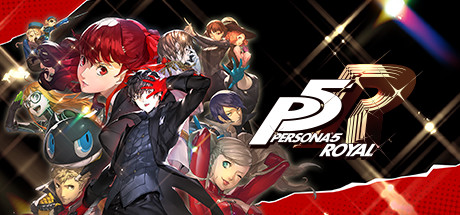
Then there’s Persona 5 Royal, whose description names what the anime lives in: “Explore Tokyo, build relations.” Not “win hearts,” not “unlock endings”—build relations. Slowly. Imperfectly. With friction. Its soundtrack doesn’t just swell—it pulses, like a nervous system syncing to rhythm. The player review praises the “seamless transition between daily life…”—exactly how Tomozaki’s world operates: no hard cuts between grinding a boss in Street Fighter, rehearsing lines for class presentation, and realizing, mid-sentence, that his voice didn’t crack this time. The game’s structure—days ticking down, social links deepening only through repeated, patient investment—is the anime’s skeleton. Even the word Royal feels right: not about crowning oneself, but about learning, painfully, how to inhabit dignity without performance.
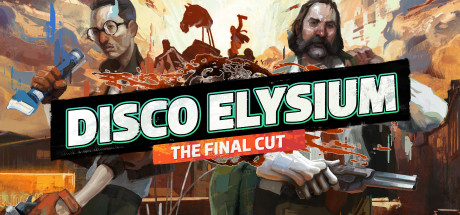
And Disco Elysium - The Final Cut, with its bruised, philosophical exhaustion—its review quoting capital’s cruel irony—lands with unsettling resonance. Tomozaki doesn’t fight darkspawn or phantom thieves. He fights the internalized logic that says you’re broken, so fix yourself quietly, efficiently, without burdening anyone. Disco Elysium’s detective stumbles through a city that refuses to let him heal cleanly, where every skill check is a negotiation with his own shame—and the review’s fragmented, disillusioned tone (“It’s a cruel iro…”) echoes Tomozaki’s quiet realizations when he sees how easily kindness can be mistaken for pity, or how often “support” masks condescension. Neither work offers catharsis. They offer witnessing.
This pairing isn’t for the player who wants to win. It’s for the one who’s sat through three failed attempts at a jump in Celeste, not to beat the level—but to understand why their hands shake before the first input. It’s for the viewer who watches Tomozaki rewatch the same 12-second clip of a pro gamer’s parry, not to copy the motion—but to borrow the calm in their exhale. It’s for people who know rehabilitation isn’t linear, romance isn’t climactic, and the most radical thing a bottom-tier character can do is pause, breathe, and choose—just once—to believe the next try might hold something softer than failure.
🎮11 Games That Match the Vibe

Match Dimensions Explained
❓Frequently Asked Questions
Why does Bottom-Tier Character Tomozaki 2nd Stage feel so much like Persona 5 Royal’s school life + heist structure?
Because both hinge on tight daily scheduling, social link-building with distinct, emotionally layered characters (like Ann Takamaki’s arc or Tomozaki’s growth with Aoi), and high-stakes personal transformation framed as a 'heist'—except in Tomozaki it’s stealing confidence instead of hearts. Persona 5 Royal nails that same rhythm: balancing part-time jobs, confidant hangouts, and dungeon runs just like Tomozaki juggles club duties, study sessions, and real-world social experiments.
Is there an anime or visual novel adaptation of Bottom-Tier Character Tomozaki 2nd Stage?
No — there’s no anime or official visual novel adaptation of *2nd Stage* (or the original light novel series). Fans often confuse it with games like *Persona 5 Royal*, which *does* have an anime (*The Animation*) and feels like the closest interactive adaptation in spirit—especially with its blend of romantic subplots, emotional narrative depth, and Tokyo-based coming-of-age pacing.
How does Dragon Age: Origins compare to Jade Empire™: Special Edition for emotional storytelling and romance options?
Both score 78 and share ‘Emotional Narrative’ and ‘Romance & Shoujo’ dimensions, but *Dragon Age: Origins* leans into morally grey, consequence-heavy relationships (like Morrigan’s ritual or Leliana’s faith arc), while *Jade Empire* offers more stylized, wuxia-infused romance with choices tied to your martial path—open palm (compassionate) or closed fist (ruthless). Neither has dating sims, but both let your decisions reshape how characters trust and love you.
What’s the best game like Bottom-Tier Character Tomozaki 2nd Stage if I want that quiet, introspective mood where small personal wins feel huge?
Disco Elysium – The Final Cut is your best bet — not because it’s flashy, but because it mirrors Tomozaki’s inner monologue spiral and slow-burn self-reconstruction. Like Tomozaki analyzing every awkward interaction, you’re constantly interrogating your own thoughts (via skill checks like Logic or Empathy), and victories—getting a witness to open up, choosing kindness over cynicism—land with the same quiet weight as Tomozaki finally holding eye contact with Aoi after weeks of practice.