Domestic Girlfriend
📺Anime Details
📝Editorial Analysis
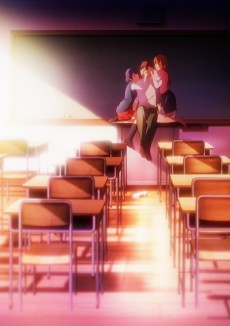
The first time Natsuo stumbles into his new step-sister’s room—door ajar, her back turned, uniform half-unzipped, breath catching mid-motion—it’s not lust that floods the frame. It’s dread. A slow, wet heat behind the eyes, fingers frozen mid-reach, throat tight like he’s swallowed glass. That moment isn’t about ecchi titillation; it’s the physical recoil of realizing your own heartbeat has become a trespass.
That’s the atmosphere of Domestic Girlfriend: a suffocating intimacy where every glance, every shared meal, every accidental brush of hands in the cramped kitchen carries the weight of unspoken consequence. It doesn’t thrill with fantasy—it aches. You don’t root for the harem; you wince at how easily love curdles into guilt, how quickly affection blurs into obligation, how deeply cohabitation can hollow out autonomy. It’s less about who Natsuo chooses and more about how each choice erodes him—not dramatically, but in quiet, accumulating fractures: a paused conversation, a delayed reply, a smile that doesn’t reach his eyes. The tension isn’t between girls—it’s between what he feels and what he’s allowed to feel, between desire and duty, between self and role. This isn’t shoujo sweetness or harem wish-fulfillment. It’s claustrophobic tenderness, where love feels less like liberation and more like slow, shared suffocation.
Baldur’s Gate 3 lands at 81—not because it mirrors the anime’s plot, but because its romance system lives in that same raw, morally porous space. Like Natsuo navigating shifting loyalties in his fractured household, BG3 forces choices where affection isn’t just about attraction—it’s entangled with loyalty, betrayal, trauma, and irreversible consequence. A single dialogue option with Shadowheart or Astarion can sever trust built over hours, echoing how Natsuo’s hesitation with Hina or Rui doesn’t just delay romance—it alters family structure, reshapes futures. The emotional narrative isn’t scripted spectacle; it’s emergent, heavy, and deeply personal—just like watching Natsuo sit across from his teacher at dinner, knowing every word risks collapsing two worlds at once.
Amnesia™: Memories scores 79 by weaponizing memory as both intimacy and instability—exactly what Domestic Girlfriend does with its timeline jumps and unreliable narration. When Natsuo flashes back to childhood moments with Rui—her hand small in his, her voice clear before years of silence and distance hardened into something unnameable—that’s not exposition. It’s amnesia in reverse: remembering too much, too vividly, while the present feels like walking through fog. The player review doesn’t mention combat or stats—it highlights emotional narrative, because this game, like the anime, treats memory as emotional architecture. Every recovered fragment reshapes motive. Every withheld truth bends relationship gravity. Both make you question whether love is built on truth—or on the fragile scaffolding of what you’ve chosen not to remember.
And then there’s Persona 5 Royal, scoring 69, where the player review nails it: “The seamless transition between daily life…” That phrase is pure Domestic Girlfriend DNA. Not the flashy heists or stylish UI—but the quiet, grinding rhythm of school days bleeding into late-night texts, part-time jobs overlapping with family dinners, confessions happening not under cherry blossoms but between subway stops, in rain-slicked convenience store aisles, after helping a sibling with homework. The Phantom Thieves fight shadows—but Natsuo fights time, fighting to be present in three relationships simultaneously, each demanding different versions of himself. The emotional narrative here isn’t in grand speeches. It’s in the exhaustion in his shoulders when he walks home past midnight, phone glowing with unread messages from two women who each believe he belongs only to them.
This pairing isn’t for fans of clean resolutions or wish-fulfillment fantasies. It’s for the viewer who watches Domestic Girlfriend and feels their chest tighten not at the kiss—but at the silence afterward, the way Natsuo stares at his reflection in a train window, already rehearsing an apology he hasn’t earned yet. It’s for the player who replays Persona 5 Royal’s rainy-day confessions not for the CG, but to hear how the protagonist’s voice cracks just once, betraying how thin the line is between devotion and deception. These are stories for people who recognize love not as arrival—but as persistent, trembling navigation: choosing who to hold, who to shield, who to let go—while knowing none of those choices leave you unchanged. They’re for those who understand that the most devastating romance isn’t forbidden—it’s familiar.
🎮11 Games That Match the Vibe










Match Dimensions Explained
❓Frequently Asked Questions
Why is Baldur's Gate 3 listed as similar to Domestic Girlfriend when it’s a fantasy RPG?
Great question—it’s not about the setting, but how deeply it handles messy, morally gray romance and emotional fallout. Like Natsuo’s tangled relationships with Rui and Hina, BG3 forces you to navigate love triangles with real consequences: choosing one companion can lock out others, and dialogue choices in scenes like the Underdark or campfire moments echo Domestic Girlfriend’s tension between duty and desire. That ‘Romance & Shoujo’ dimension in its match score reflects how seriously it treats emotional stakes—not just who you kiss, but who you hurt along the way.
Is there a Domestic Girlfriend visual novel adaptation?
No official visual novel exists—but Amnesia™: Memories is the closest *spiritual* fit fans keep mistaking for one. It’s got that same intimate, diary-style storytelling where your choices reshape memories and relationships, especially in scenes like the ‘Lost Memory’ route where you rebuild trust with characters like Shin or Toma—mirroring how Domestic Girlfriend uses flashbacks and emotional reveals to deepen bonds. Its 79-score and ‘Romance & Shoujo’ tag aren’t accidental; players consistently praise how it captures that tender, ache-filled vibe without anime tropes feeling forced.
How does Persona 5 Royal compare to Persona 3 Reload for Domestic Girlfriend fans?
If you loved Domestic Girlfriend’s balance of school life, quiet confessions, and slow-burn emotional weight, P3 Reload hits closer—especially with Yukari’s late-night rooftop talks or the ‘Dark Hour’ metaphor for inner turmoil mirroring Natsuo’s guilt. P5R leans flashier (think Joker’s stylish confessions in Shibuya) and prioritizes empowerment over melancholy, but both deliver that ‘Emotional Narrative’ dimension through daily life rhythms: checking stats, managing time, and watching relationships bloom in small, grounded moments like coffee dates or study sessions.
What’s the best game like Domestic Girlfriend if I want that bittersweet, rainy-day mood?
Amnesia™: Memories is your go-to—it nails that hushed, introspective vibe with rain-soaked memory sequences, soft piano melodies, and choices that linger like unspoken words. Think of scenes where you’re piecing together fragmented pasts with characters like Shin, or the quiet tension before a confession in a dimly lit café—very much like Natsuo staring out the window after a hard conversation with Hina. Its 79-score and ‘Romance & Shoujo’ focus mean it’s built for players who want emotional resonance over action or spectacle.