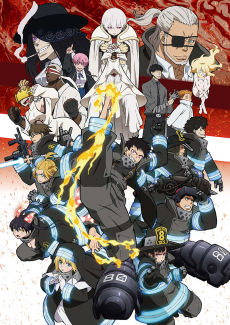
Fire Force Season 2
Shinra and Company 8 have figured out the Evangelist’s goal: to gather Adolla Bursts from Shinra and Shou. After learning more about his past from Captain Burns, Shinra becomes more motivated to discover the truth about his mother and save Shou again.
But a mysterious girl known as the “First Pillar” reveals the Evangelist’s master plan to start another Great Cataclysm!
(Source: Funimation)
📺Anime Details
📝Editorial Analysis
The smell of ash hangs thick in the air—not the clean burn of a campfire, but the acrid, clinging residue of something unmade. Shinra kneels in the ruins of a cathedral, his boots crunching over shattered stained glass that once depicted saints now fractured into jagged, bleeding halos. His hand trembles—not from exhaustion, but from the raw, unprocessed weight of memory: Captain Burns’ voice echoing in his skull, the Evangelist’s calm certainty, the First Pillar’s hollow eyes as she names the Great Cataclysm not as threat, but as inevitability. This isn’t just action—it’s grief wearing firefighter gear.

What makes Fire Force Season 2 vibrate at this frequency isn’t its pyrokinetic spectacle or even its conspiracy scaffolding—it’s the sacred exhaustion of fighting for meaning in a world that keeps burning its own foundations. It’s the quiet horror of recognizing your own bloodline as both weapon and wound. The urban fantasy isn’t decorative; it’s architectural—every scorched high-rise, every flickering emergency light, every whispered prayer in a bunker feels like a relic salvaged from collapse. You don’t just watch Shinra chase truth—you feel the weight of each unanswered question pressing down on your ribs. It’s heavy, yes—but also devoted. Devoted to saving Shou. Devoted to understanding his mother. Devoted, against all logic, to believing the Evangelist’s god is wrong. That devotion is the ember no inferno can fully extinguish.
That same stubborn, weathered devotion lives in Heroes of Might & Magic V. Its description calls it “a next-generation phenomenon, melding classic deep fantasy with next-generation visuals and gameplay”—but what fans feel is the slow, sacred labor of rebuilding a shattered realm, turn by turn, spell by spell. The player review shouts, “Best HoMM game ever made… this game nukes both HoMMIII and HoMMII from orbit”—not out of blind nostalgia, but because it earns that reverence through layered consequence and moral weight in every recruitment, every siege. Like Company 8 piecing together fragmented intel while sirens wail outside, HoMMV asks you to hold faith in systems—even broken ones—while navigating betrayal dressed as doctrine. Both demand you treat strategy not as abstraction, but as prayer in motion.
Then there’s Valheim, where the purgatory isn’t metaphorical—it’s procedural, brutal, and soaked in Norse myth. Its description frames it as “a brutal exploration and survival game… set in a procedurally-generated purgatory inspired by viking culture.” And the player review? “It’s like Minecraft but instead of punching trees you spend 40 minutes looking for the perfect tree, then a troll destroys your entire house, then yo…” That pause—then yo—is pure Fire Force Season 2. It’s the whiplash between meticulous preparation (Shinra calibrating his Adolla Link, Valheim players scouting biomes for iron ore) and sudden, world-shattering violation (the Evangelist’s agents breaching the base, a troll reducing your longhouse to splinters). Both make you build not for comfort, but for continuity—to assert this matters in a cosmos actively trying to unmake it. The mythology isn’t backdrop; it’s the gravity well pulling every choice downward.
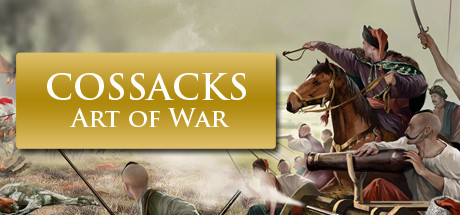
Even Cossacks: Art of War, with its laser focus on XVII–XVIII century authenticity, resonates—not through fire or faith, but through ritualized endurance. Its description anchors it in “the great battles,” and the player review sighs, “I love this game and thee authenticity…” That reverence for historical texture mirrors how Fire Force Season 2 treats religion—not as dogma, but as lived, contested, embodied history. The Evangelist doesn’t quote scripture; he re-enacts catastrophe as liturgy. Watching Company 8 move through smoke-choked streets feels like watching Cossack cavalry maneuver across a frozen river—every decision weighted by centuries of precedent, every victory haunted by the cost of precedent itself.
This pairing won’t speak to someone who wants clean catharsis or frictionless power fantasies. It’s for the viewer who watches Shinra’s knuckles bleed on a steel beam and thinks, Yeah—I’ve held onto something like that too. For the player who replays HoMMV’s Ashan campaign not for the win, but to hear that one melancholy flute motif one more time. For the person who logs into Valheim at 3 a.m., not to conquer, but to stand alone on a cliff edge, staring at the fog rolling in off the ocean—knowing the next storm is coming, and they’ll meet it with a hammer they forged themselves. Not hopeful. Not despairing. Just present. Just keeping the line.
🎮9 Games That Match the Vibe




Match Dimensions Explained
❓Frequently Asked Questions
Why does Fire Force Season 2’s Church of Holy Sol feel so much like the lore in Heroes of Might & Magic V?
Because both lean hard into grand, ritualistic fantasy worldbuilding—HoMM V’s ‘Cult of the Dragon’ and ‘Shadow Council’ factions mirror the Church’s secretive hierarchy and apocalyptic dogma. You’ll recognize the same weighty cutscenes, morally grey holy orders, and JRPG-style narrative pacing where lore drops during campfire interludes or cathedral sieges.
Is there a Fire Force Season 2 video game adaptation?
No official Fire Force Season 2 game exists—but Valheim nails the *vibe*: think Shinra’s explosive sprint triggering screen-shake like a boss-phase shift, or building your own fireproof bunker while dodging lightning-quick enemies (just like the Infernals’ ambushes in Episode 12). Fans keep modding Valheim with flame effects and anime-style armor for that exact reason.
Heroes of Might & Magic V vs. Cossacks: Art of War—which one captures Fire Force’s mix of tactical squad combat and fiery spectacle?
HoMM V wins hands-down: its turn-based battles let you command elite units like ‘Blazing Paladins’ (think Maki’s pyrokinetic precision) and unleash area-of-effect ‘Sunflare’ spells that visually echo the Season 2 finale’s cathedral explosion. Cossacks is historically grounded—great for realism, but no fire-breathing monks or gravity-defying kicks.
What’s the best game like Fire Force Season 2 if I want that intense, high-stakes ‘last stand’ mood after the Tokyo Inferno arc?
Valheim—it’s all about desperate survival against overwhelming odds: rebuilding your base after a troll smashes it (like the Fire Force team scrambling post-Arsonist attack), crafting flame-resistant gear before storming a boss lair (hello, Dragon Claws vs. the White-Clad fortress), and that constant tension where one misstep means losing hours of progress—just like Shinra’s ‘what if I fail *this* jump?’ energy.