
Fullmetal Alchemist
The rules of alchemy state that to gain something, one must lose something of equal value. Alchemy is the process of taking apart and reconstructing an object into a different entity, with the rules of alchemy to govern this procedure. However, there exists an object that can bring any alchemist above these rules, the object known as the Philosopher's Stone. The young Edward Elric is a particularly talented alchemist who through an accident years back lost his younger brother Alphonse and one of his legs. Sacrificing one of his arms as well, he used alchemy to bind his brother's soul to a suit of armor. This lead to the beginning of their journey to restore their bodies, in search for the legendary Philosopher's Stone.
Note: Episodes 11, 12 and 37 were adapted from the light novel "Fullmetal Alchemist: The Land of Sand."
📺Anime Details
📝Editorial Analysis
The clink of automail against cobblestone. Not the heroic shink of a sword being drawn, but the hollow, metallic tap-tap-tap of Edward Elric walking home—exhausted, shoulders slumped, one arm and one leg cold steel—and the weight in his chest isn’t just fatigue. It’s the echo of a transmutation circle flaring white-hot, then collapsing into ash and silence. It’s the memory of Alphonse’s voice, muffled and distant, speaking from inside armor that isn’t skin. That sound—metal on stone, not as machinery, but as grief made audible—is where Fullmetal Alchemist lives.
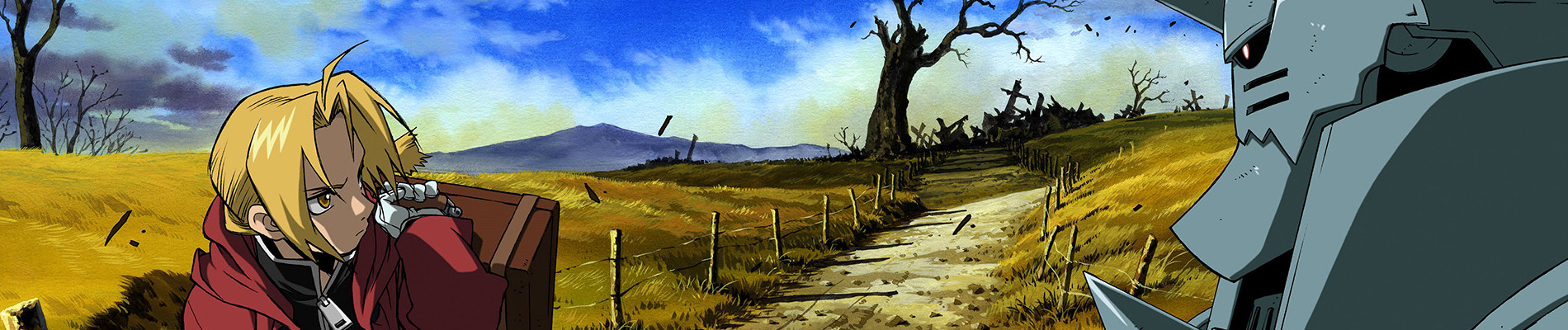
This isn’t fantasy dressed in military uniforms. It’s melancholy with a pulse. The world feels worn-in: steam hisses from pipes in Central City like slow, tired breaths; library dust motes hang suspended in afternoon light while Ed flips through crumbling alchemical texts; even battlefields carry the scent of burnt earth and something older—regret. The rules of equivalent exchange aren’t just plot mechanics—they’re emotional gravity. Every gain has its scar. Every truth uncovered costs a piece of innocence. You don’t just watch characters grow—you feel the resistance in their bones as they push forward anyway. It’s quiet tragedy, not spectacle. It’s duty worn thin, not glory earned.
That emotional DNA—the melancholic exploration of loss, the tactical weight of moral choice, the way war and wonder fold into each other like origami—is why Tank Universal, Tomb Raider: Legend, Tomb Raider: Anniversary, and Tomb Raider: Underworld resonate so deeply—not as action siblings, but as feeling cousins.
Look at Tank Universal: its description calls it an “action FPS tank wargame inspired by Tron and Battlezone,” but the player review cracks it wide open: “Play cool tank game with dad when you were 6… time goes on; loose access to game. Grew up dad passes away…” That’s not nostalgia—it’s melancholic exploration in human form. The game’s virtual sci-fi world isn’t just terrain—it’s a vessel for memory, just like Amestris is for Ed and Al. The tank isn’t power—it’s a shell, like Al’s armor. The sound effects aren’t audio design—they’re sensory anchors to a past now unreachable. Like Ed rebuilding a broken transmutation circle, the player rebuilds meaning from fragments: color, sound, absence.
Then there’s the Tomb Raider trilogy—Legend, Anniversary, and Underworld—all tagged with Melancholic Exploration and Tactical Warfare. Their descriptions emphasize globe-trotting, ancient artifacts, and “exotic locales designed with incredible attention.” But it’s the player reviews that reveal the kinship: one calls Anniversary “the best Tomb Raider game” because the original six are “too clunky to play”—a longing for coherence, for meaningful structure in chaos, just as Ed seeks order in alchemy’s brutal math. Another says Underworld is recommendable “not just” for gameplay—but for what it evokes: the quiet awe before ruins, the loneliness of pursuit, the way Lara’s quest for the Scion mirrors Ed’s hunt for the Philosopher’s Stone—not as treasure, but as atonement. These aren’t tomb raiders. They’re alchemists of memory, reconstructing identity from shattered history.
Who would love these pairings? Not just fans of “good stories” or “deep themes.” Specifically: the person who replays a childhood game not for fun, but to hear that one sound effect again—the one that still carries their father’s laugh. The reader who underlines passages about sacrifice in Fullmetal Alchemist, not to analyze plot, but because the sentence hurts like a bruise they forgot they had. The player who walks slowly through a ruined temple in Underworld, ignoring enemies, just to watch light fracture across cracked murals—because stillness, in these worlds, is where the real transmutation happens. They’re the ones who know grief isn’t loud. It’s the tap-tap-tap of metal on stone. It’s the hum of a tank engine fading into static. It’s the silence between Lara’s breaths as she stares at a wall covered in symbols she almost understands. They don’t seek escape. They seek recognition—and in these works, they find it: precise, unflinching, and achingly tender.
🎮6 Games That Match the Vibe


Match Dimensions Explained
❓Frequently Asked Questions
Why does Tomb Raider: Legend keep coming up in 'games like Fullmetal Alchemist' searches?
Because Legend’s core arc—Lara chasing an artifact tied to her father’s mysterious death, uncovering buried family trauma across hauntingly beautiful ruins—hits the same melancholic exploration and emotional weight as FMA’s quest for truth and redemption. The game’s quiet moments in abandoned temples or mist-shrouded fjords (like the Valhalla level) echo scenes where Edward stares at his reflection after a failed transmutation—same ache, same atmospheric storytelling.
Is there a Fullmetal Alchemist video game adaptation I should play?
No official FMA game exists that adapts the anime/manga faithfully—none are on this list or in major storefronts. What *is* here are spiritual matches: Tomb Raider: Anniversary mirrors FMA’s structure (a young prodigy navigating ancient lore, moral consequences, and legacy), but it’s not *about* alchemy or the Elric brothers—it’s about Lara Croft’s own origin myth told with similar gravitas.
How do Tomb Raider: Anniversary and Underworld compare for someone who loves FMA’s balance of action and sorrow?
Anniversary leans harder into focused, intimate melancholy—its tight pacing and claustrophobic tombs (like the lost city of Tihocan) feel like FMA’s quieter episodes where Alphonse remembers his body or Winry fixes automail in silence. Underworld expands scope with open hubs and Norse mythology, but its emotional beats—like Lara standing alone at her mother’s grave—are more diffuse; Anniversary’s tighter narrative hits closer to FMA’s precision.
What’s the best game like Fullmetal Alchemist if I want that bittersweet, reflective vibe—not just action?
Tank Universal, surprisingly. Its score (64) and dimensions (Emotional Narrative + Melancholic Exploration) come from how it frames tank combat as lonely ritual—driving through neon-drenched voids while remembering fragmented childhood memories with your dad, sound effects echoing like distant claps of thunder. It doesn’t have alchemy, but that same ache of loss, memory, and quiet awe? Yeah—it’s there in every glowing corridor and hollow engine hum.