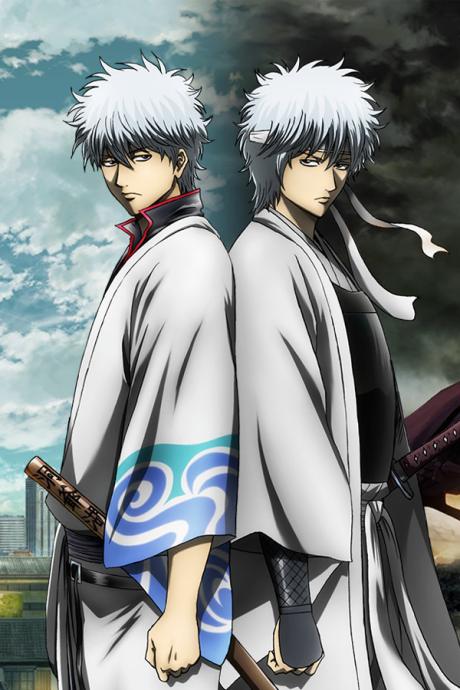
Gintama: The Final Chapter - Be Forever Yorozuya
When Gintoki apprehends a movie pirate at a premiere, he checks the camera's footage and finds himself transported to a bleak, post-apocalyptic version of Edo, where a mysterious epidemic called the "White Plague" has ravished the world's population. It turns out that the movie pirate wasn't a pirate after all—it was an android time machine, and Gintoki has been hurtled five years into the future! Shinpachi and Kagura, his Yorozuya cohorts, have had a falling out and are now battle-hardened solo vigilantes and he himself has been missing for years, disappearing without a trace after scribbling a strange message in his journal.
Setting out in the disguise given to him by the android time machine, Gintoki haphazardly reunites the Yorozuya team to investigate the White Plague, and soon discovers that the key to saving the future lies in the darkness of his own past. Determined to confront a powerful foe, he makes an important discovery—with a ragtag band of friends and allies at his side, he doesn't have to fight alone.
(Source: MAL Rewrite)
📺Anime Details
📝Editorial Analysis
The smell of burnt rice and old tatami hits before anything else—Gintoki’s hand trembling as he lifts the cracked lens of the android’s camera, the world dissolving not into light or sound, but silence: a hollow, wind-scoured Edo where cherry blossoms don’t fall—they float, suspended in ash-gray air above collapsed teahouses and rusted shogunate banners. No music swells. No dramatic pause. Just that quiet, suffocating weight of time unspooled, and him standing alone in the rubble of his own laughter.
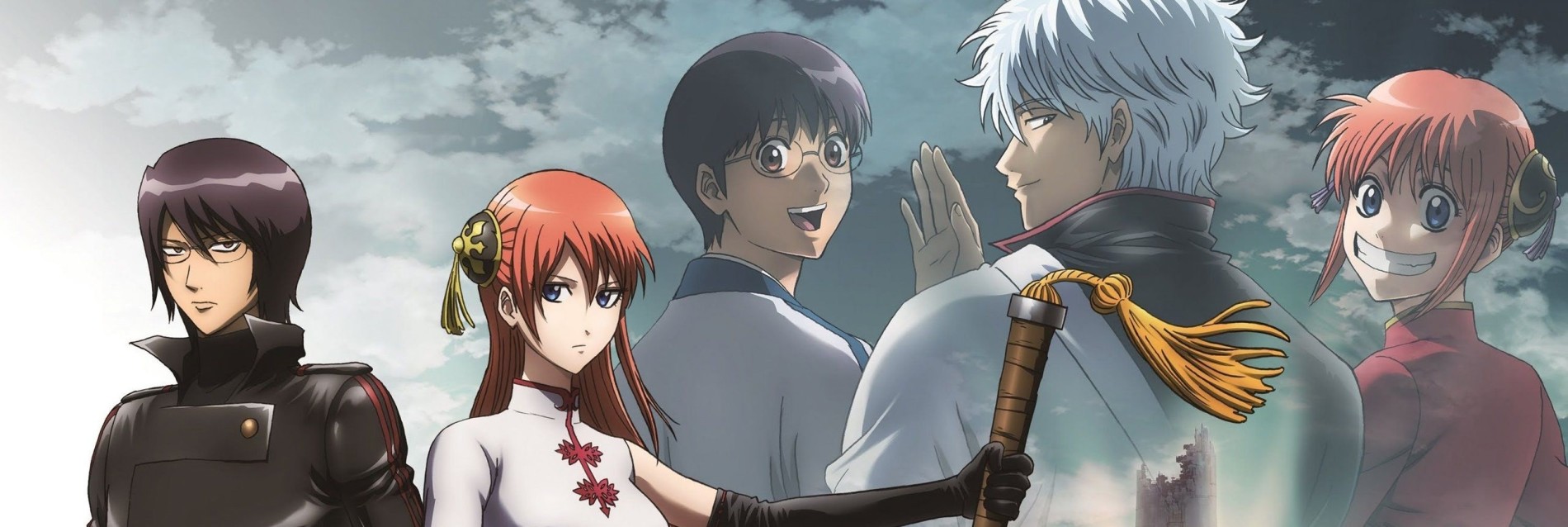
This isn’t dystopia as spectacle—it’s grief made geographical. Gintama: The Final Chapter - Be Forever Yorozuya doesn’t dress tragedy in grand speeches or heroic last stands. It wears it in Shinpachi’s calloused fingers tightening around a broken umbrella handle, in Kagura’s silence when she sees Gintoki’s face—not relief, but recognition of how much he’s aged in five years she lived without him. The post-apocalyptic setting isn’t about ruined skylines; it’s about the absence of shared jokes, the way a ramen stall’s empty counter echoes louder than any explosion. The White Plague doesn’t just kill bodies—it erodes continuity, turning “Yorozuya” from a silly name into a gravestone-shaped word you swallow hard before saying aloud. What lingers isn’t the swordplay or the sci-fi mechanics, but the ache of familiarity warped by time: a childhood home still standing, but with all the doors nailed shut.
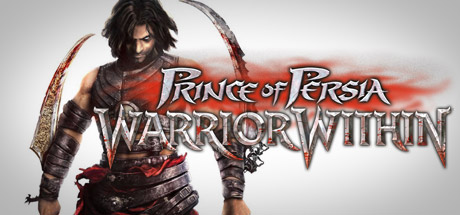
That same ache hums in Prince of Persia: Warrior Within™, where Dahaka isn’t just a pursuer—he’s time made vengeful, a physical manifestation of consequences you can’t outrun, only delay. The player review calls the Dahaka chase “goated”—and it is, not for its difficulty, but because it feels like memory catching up: relentless, inevitable, breathing down your neck as you vault across crumbling walls you once crossed carelessly. Like Gintoki sprinting through ruined Edo streets, knowing every alley used to hold a bet with Shinpachi or a stolen melon from Kagura, the Prince doesn’t flee terrain—he flees what he’s become. Both stories weaponize momentum to make time feel visceral, not abstract.
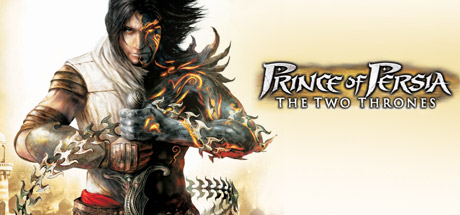
Then there’s Prince of Persia: The Two Thrones™, where the Prince returns to Babylon expecting peace and finds instead a kingdom infected by his own past choices—literally, through the Dark Prince’s whispering presence. The description notes he’s “a seasoned warrior” returning with Kaileena, only to find “his homeland ravaged by war.” That mirrors Gintoki stepping into a future where Shinpachi and Kagura aren’t just older—they’re fractured, their found family split along fault lines carved by grief and survival. The player review calls it “one of my best childhood games”—and that’s key: both works anchor devastation in intimacy. You don’t mourn Babylon’s towers; you mourn the courtyard where you first sparred. You don’t grieve Edo’s skyline—you grieve the exact spot where Kagura once buried her sandals in the dirt after losing a race.
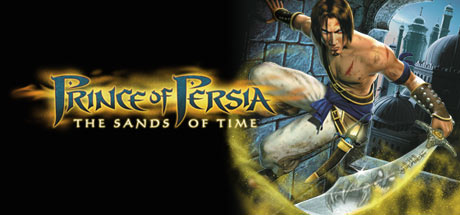
Even Prince of Persia®: The Sands of Time resonates—not for its puzzle-platforming, but for how the Dagger of Time rewinds personal failure. The review praises its “tactical platforming… satisfying due to the locked directions,” which sounds clinical until you remember Gintoki rewinding moments in his head: If I’d said this instead. If I’d held on tighter. The Sands of Time doesn’t let you erase consequences—it lets you reapproach them, just as Gintoki doesn’t get to undo the White Plague, but must relearn how to stand beside Shinpachi after years of silence, how to trust Kagura’s strength without pretending the fractures aren’t there.
Who lives in this overlap? Not the person who wants catharsis served neat. Not the one chasing power fantasies or tidy endings. It’s the viewer who keeps their old notebooks, who traces the coffee stain on a concert ticket from 2012 and feels something warm and sharp at once. It’s the player who pauses mid-combo not to admire the combo meter—but to watch dust motes hang in a sunbeam inside a ruined palace hall, remembering how that same light fell across their own floor when they were sixteen and thought forever was a thing you could lock in a jar. These are stories for people who understand that found family isn’t about never breaking—it’s about learning the exact pressure needed to press the shards back together without cutting your hands. And that sometimes, the most heroic act isn’t swinging a sword, but sitting down at a dented table, pouring tea, and saying, “Yeah. I missed this too.”
🎮8 Games That Match the Vibe

Match Dimensions Explained
❓Frequently Asked Questions
Why does Prince of Persia: Warrior Within feel like the closest match to Gintama: The Final Chapter’s tone?
Because both lean hard into chaotic, self-aware action with dark humor undercutting high-stakes chases—like when Dahaka hunts the Prince through crumbling ruins, mirroring Gintama’s tonal whiplash between absurd banter and Yorozuya’s desperate last stands. The game’s gritty art style, time-bending combat, and relentless pacing echo the film’s blend of sword-slinging spectacle and emotional weight.
Is there a Gintama mobile game adaptation that captures The Final Chapter’s story?
No—there’s no official mobile game adapting *Be Forever Yorozuya*. The closest is *Chains*, a match-3 arcade game with bubbly, lighthearted mechanics and zero narrative ties to Gintama; it only shares the ‘casual but escalating challenge’ vibe fans might associate with Gintama’s playful interludes, not its finale’s emotional gravity.
How does Prince of Persia: The Two Thrones compare to The Sands of Time in capturing Gintama’s mix of action and heart?
Both have Gintama-esque duality—but *Two Thrones* edges ahead with its split-personality mechanic (Prince vs. Dark Prince), mirroring Gintama’s tonal shifts: one moment you’re doing slick acrobatic combos in Babylon’s sun-drenched palaces (*Sands*), the next you’re snarling through morally gray choices and flashbacks to Kaileena (*Two Thrones*), just like Gintama flipping from slapstick to Shinsengumi farewells.
What’s the best game like Gintama: The Final Chapter if I want something cathartic and bittersweet but still action-packed?
Go straight to *Prince of Persia: The Sands of Time*—its rewind mechanic isn’t just a gimmick; it mirrors Gintama’s themes of regret and second chances, especially during quiet moments like the Prince reflecting on Farah while scaling ancient walls. The score (76), tactical platforming, and melancholic yet hopeful ending hit that same sweet spot of heartfelt action fans love in Yorozuya’s final stand.