
Gleipnir
Shuuichi Kagaya isn’t human. He has an unnatural sense of smell, and can transform into an incredibly powerful beast… of sorts. He does all he can to avoid standing out and being discovered, but no good deed goes unpunished, and his decision to use his power to save a girl spells the end for his quiet life.
📺Anime Details
📝Editorial Analysis
The alley smells like wet concrete and copper. Shuuichi Kagaya’s knuckles are split open, his breath ragged—not from exertion, but from the wrongness of his own body tightening around him, fur erupting not in triumph but in violation. He doesn’t roar. He whimpers, low and guttural, as the beast surges—not to dominate, but to contain something far more dangerous: the girl he just saved, whose eyes already flicker with memory that isn’t hers. That moment isn’t action—it’s exposure. A trembling, sweat-slicked surrender to a power that doesn’t belong to him, wielded not for glory or justice, but because silence would have meant her death—and his complicity.
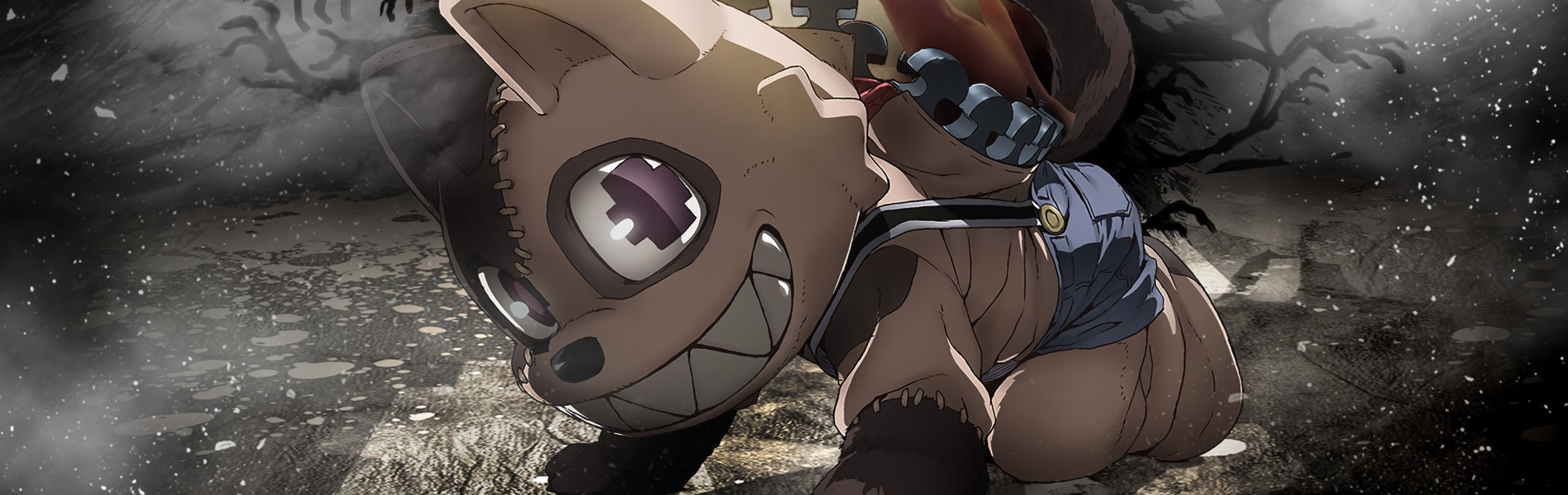
What makes Gleipnir’s atmosphere singular isn’t its ecchi framing or gore—it’s the claustrophobia of cognition. This is urban fantasy where the supernatural doesn’t expand the world; it compresses it—into narrow stairwells, flickering convenience store lights, the suffocating proximity of bodies that shouldn’t touch but do, because memory manipulation leaves gaps no one dares name. You don’t feel awe here. You feel dread of recognition: the slow, sickening click when you realize the “alien” isn’t out there—it’s in the way a classmate smiles too long, or how your own reflection blinks a half-second late. It’s psychosexual not through titillation, but through violation of interiority: when identity is unstable, consent becomes spectral, and intimacy feels like trespassing on borrowed time. The teen cast isn’t cute—they’re fragile vessels, their youth making the erosion of self all the more brutal. Every transformation is less metamorphosis, more unraveling.
That same destabilized sense of self pulses through BioShock Infinite. Its description names Booker DeWitt as “indebted… with his life on the line”—a man defined by debt, not desire, much like Shuuichi, whose power is a curse he owes to others. And Elizabeth? Not just a damsel, but a being whose very existence fractures causality—mirroring how Gleipnir’s memory manipulation doesn’t just erase events, but unwrites personhood. The player review admits bitterness about “the Bioshock Infinite we could have gotten”—a perfect echo of Gleipnir’s core ache: the horror isn’t the monster, but the version of yourself you weren’t allowed to keep. Both works make you question whether salvation is just another form of erasure.
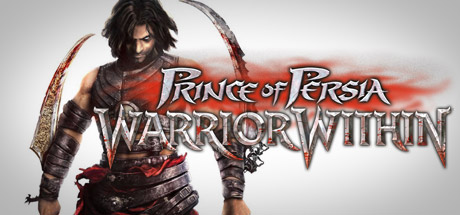
Then there’s Prince of Persia: Warrior Within, where the Prince is “hunted by Dahaka, an immortal incarnation of Fate.” That chase isn’t metaphorical—it’s physical, relentless, echoing Shuuichi’s constant dread of exposure: every alley, every glance, every breath risks triggering the beast or triggering someone else’s memory-wipe. The description calls it “dark underworld”—not mythic, but visceral, subterranean, like the basement lairs and rain-slicked rooftops of Gleipnir’s city. And the player review? “Dahaka chase is still as goated as it was before”—that raw, enduring thrill isn’t about victory. It’s about surviving the pursuit of your own consequence. Like Shuuichi running not toward safety, but away from the moment his humanity finally cracks.
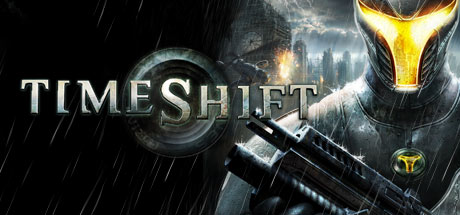
Even TimeShift™, with its “disturbing alternate reality” born from a “reckless act,” fits—not in scale, but in texture. Dr. Krone doesn’t bend time to win; he breaks it, and the fracture bleeds. That’s Gleipnir’s logic: every use of power warps perception, not physics. The player review calls it “a little 4 hour game… but it takes a little work to get it into a playable state”—a telling parallel. Both demand active, almost fiddly engagement with instability. You don’t settle into either world. You calibrate to its tremors.
This isn’t for fans of clean catharsis or heroic arcs. It’s for the ones who pause mid-episode when Shuuichi stares at his hands—not in wonder, but in recognition of foreignness—and feel their own pulse stutter. For players who replay Warrior Within not for the combos, but for the way Dahaka’s footsteps vibrate through the controller like guilt made audible. For those who read “memory manipulation” and don’t think puzzle mechanic—but grief protocol. They’re drawn to stories where power doesn’t liberate—it exiles. Where love isn’t safe harbor, but the most dangerous kind of exposure. Where the real horror isn’t the alien, the beast, or the time paradox—it’s the quiet, devastating certainty that you already forgot what you were supposed to protect.
🎮9 Games That Match the Vibe

Match Dimensions Explained
❓Frequently Asked Questions
Why does Gleipnir get compared to Prince of Persia: Warrior Within so much?
It’s all about that relentless Dahaka chase—where time manipulation isn’t just a puzzle tool but a survival mechanic tied to guilt and consequence, just like Gleipnir’s shifting realities and fragmented memories. Both games force you to *feel* time as pressure: in Warrior Within, you’re sprinting through crumbling sand-swept corridors while Dahaka closes in; in Gleipnir, every rewind or fracture echoes that same breathless, morally weighted urgency.
Is there a Gleipnir anime or manga adaptation?
Nope—no official anime, manga, or live-action adaptation exists yet. Unlike BioShock Infinite (which inspired deep fan theories and even academic essays on its Columbia lore), Gleipnir remains a self-contained game experience with no expanded universe media—so if you're craving more of its eerie, memory-bent world, your best bet is diving into TimeShift™’s fractured timelines or replaying Warrior Within’s haunting Dahaka sequences.
How is BioShock Infinite different from Gleipnir in terms of storytelling?
Gleipnir leans into intimate, psychological fragmentation—think quiet moments where dialogue glitches mid-sentence or rooms reassemble behind you—while BioShock Infinite uses grand, layered worldbuilding: Booker’s amnesia, Elizabeth’s tears, and the shocking reveal at Comstock House all hinge on *narrative* time loops, not just mechanics. Both score 84 and share the 'Time & Memory' dimension, but Infinite’s Columbia feels like a theme park built on ideology, whereas Gleipnir’s world feels like a dream you’re trying—and failing—to wake up from.
What’s the best game like Gleipnir if I want that oppressive, time-loop dread without sci-fi guns?
Go straight to Prince of Persia: Warrior Within—especially for the Dahaka chase scenes in the Island Caves and Hourglass Wastes, where every misstep resets your panic meter and the environment itself seems to breathe against you. It nails Gleipnir’s vibe of inescapable consequence and bodily fatigue, minus BioShock Infinite’s sky-cities or TimeShift™’s lab-coat tech—just sword swings, sand, and the sound of something ancient gaining on you.